
Combust Planets: When a Planet Sits Too Close to the Sun
In Vedic astrology a combust planet (asta graha) sits so close to the Sun that it would be lost in its glare. Common limits are about 12 degrees for the Moon, 17 for Mars, 14 for Mercury, 11 for Jupiter, 10 for Venus and 15 for Saturn. A combust planet is read as harder to express independently, not as ruined.
Key takeaways
- The Sun is overwhelmingly the brightest object in our sky.
- The distances most Vedic astrologers use come from the classical astronomical texts.
- Tradition reads this as a Moon with less independent light: feelings that may be private, a sensitivity that takes time to show, sometimes a strong bond with the father or with authority.
- Western astrology adds an interesting twist: a planet within a fraction of a degree of the Sun, called cazimi, is said to be strengthened rather than weakened.
- The most practical use of combustion is in choosing dates.
Go out on a clear evening by the lake in late winter and you may catch Venus blazing in the west after sunset. A few weeks later it is gone, swallowed by the twilight, and for a while it cannot be seen at all. Ancient sky-watchers noticed exactly this, and Jyotish gave the state a name: asta, setting, or in English, combustion. This post explains what it means for a planet to be combust, how close is "too close", and how astrologers actually read it.
The astronomy first
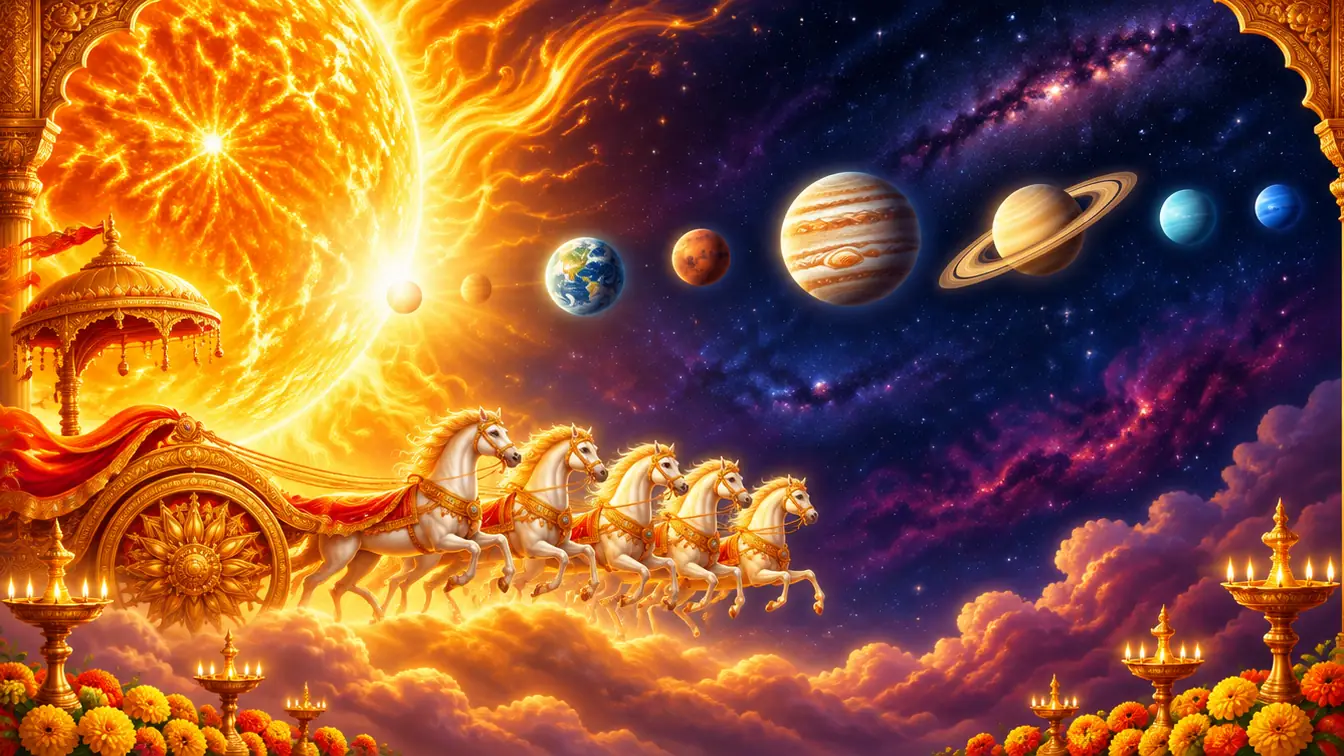
The Sun is overwhelmingly the brightest object in our sky. As NASA's Sun facts make plain, it outshines everything else in the solar system by a vast margin. When a planet, seen from Earth, lies close to the Sun's position, it rises and sets with the Sun and its light is lost in the glare. Astronomers call the planet's disappearance near the Sun its conjunction period; Jyotish calls the planet combust.
Mercury and Venus are a special case. They orbit inside Earth's orbit, so they can never appear far from the Sun. As EarthSky explains in its note on greatest elongation, Mercury never strays more than about 28 degrees from the Sun and Venus about 47. That is why Mercury in particular is combust for a large share of every year, and why so many charts contain a combust Mercury.
How close is too close?
The distances most Vedic astrologers use come from the classical astronomical texts. They differ by planet because each planet's brightness and orbit differ:
| Planet | Combust within about |
|---|---|
| Moon | 12 degrees |
| Mars | 17 degrees |
| Mercury | 14 degrees (12 when retrograde) |
| Jupiter | 11 degrees |
| Venus | 10 degrees (8 when retrograde) |
| Saturn | 15 degrees |
Rahu and Ketu are not included. They are calculated points where the Moon's path crosses the Sun's, with no light of their own to lose. Some astrologers use slightly different figures; what matters is consistency.
A detail worth knowing: Mars, Jupiter and Saturn are never retrograde while combust, because they turn retrograde when they are opposite the Sun. Mercury and Venus, on the other hand, turn retrograde when they pass between Earth and the Sun, so they can be both at once. That is why their limits shrink when retrograde.
A combust Moon
A Moon within 12 degrees of the Sun means a birth close to the new moon, amavasya, when the Moon is dark. Tradition reads this as a Moon with less independent light: feelings that may be private, a sensitivity that takes time to show, sometimes a strong bond with the father or with authority. As with every combust planet, the effect is softened or sharpened by the rest of the chart.
How combustion is read in practice
- Depth matters. A planet 2 degrees from the Sun is read as far more combust than one at 13 degrees. Readers often grade it rather than treating it as on or off.
- The planet's significations are absorbed. A combust planet's themes tend to merge into the Sun's: identity, authority, the father, public standing. Combust Venus may describe affection expressed through duty or status; combust Jupiter, wisdom that works behind a stronger personality.
- The houses it rules feel the strain. If a combust planet rules your 7th house, partnership matters may need more conscious effort; if it rules your 10th, career recognition may come later or through someone else.
- Sign strength helps. A combust planet in its own or exalted sign holds up better.
- Mercury gets leniency. Sun and Mercury together form Budha-Aditya yoga, which tradition reads as favorable for intelligence and communication. Many astrologers treat a combust Mercury gently unless it is very close to the Sun.
Western astrology adds an interesting twist: a planet within a fraction of a degree of the Sun, called cazimi, is said to be strengthened rather than weakened. Most Vedic practice does not use that exception.
Where combustion shows up beyond the birth chart
The most practical use of combustion is in choosing dates. Many wedding traditions avoid periods when Venus or Jupiter is combust, since they signify marriage, and these windows can run for weeks. Families planning a Chicago wedding season around them will find the details in our post on what makes a vivah muhurta auspicious. Mercury's frequent combustion also overlaps with its retrograde periods, which our post on the Vedic view of Mercury retrograde puts in proportion.
Seeing it in your own chart
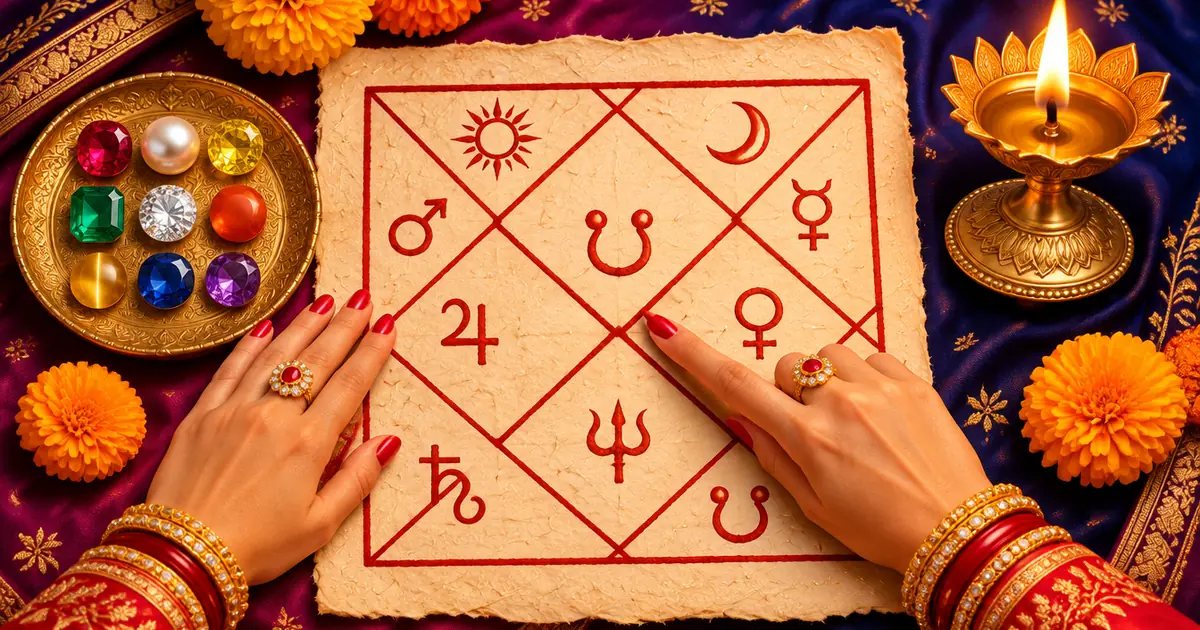
If you have found a combust planet in your chart, it is one detail among dozens. A birth chart reading with Astrologer and Psychic Vijayram, held by phone, WhatsApp or video, looks at how close it is, what it rules and how the rest of the chart supports it. Our post on Venus in your chart is a good companion if Venus is the planet in question.
A limit to keep in mind: combustion describes a traditional condition of a planet, not a verdict on a person. It cannot say whether your marriage will last or your career will flourish, and a combust planet in your chart is never a reason for fear or for an expensive remedy.
Common questions
Is a combust planet always bad?
No. It is read as weakened in its independent expression, and the effect depends on how close it is to the Sun, its sign and the rest of the chart. Combust Mercury in particular is common in capable, articulate people.
Can Rahu or Ketu be combust?
No. Rahu and Ketu are the Moon's nodes, calculated points rather than bodies that shine, so the idea of being hidden by the Sun's light does not apply to them.
Why are weddings not held when Venus or Jupiter is combust?
Venus and Jupiter are the main significators of marriage, and many muhurta traditions avoid wedding dates while either is combust. Families who follow this custom plan around those periods, which can last several weeks.
Does a gemstone fix a combust planet?
Not automatically. Strengthening a combust planet only makes sense if it rules good houses in your chart, and even then mantra and charity are equally traditional. Ask for the reasoning before buying anything.
Related service
Keep reading

Chicago's Trading Floors and the Chart: Mercury, Jupiter and Risk-Heavy Careers
Astrology for traders and finance workers in the Loop: how Mercury, Jupiter and Rahu are read for risk-heavy careers, with no market tips or financial advice.
Read article →
Born in Chicago Before 1967? Checking Old Birth Times for Daylight Saving
Old Chicago birth time and daylight saving: how the city's own clock rules before 1967 can shift a chart by an hour, and how to check yours before it is cast.
Read article →
Vivekananda in Chicago, 1893: How Vedic Thought Reached the Midwest
Vivekananda in Chicago, 1893: the Parliament speech in today's Art Institute, why Hindu families here honor it, and what he said about astrology.
Read article →Quick answers
Can a Western birth chart printout be turned into a kundli?
What is a kundli, and can a Western birth chart printout become one? Yes, from the same birth data. Here is what the sidereal shift and Indian layout change.
Read answer →How exact does my birth place need to be: city, hospital or village?
The birth chart reading details needed: date, clock time and town. Why the nearest city is usually close enough, and when a more exact birthplace helps.
Read answer →Talk to Astrologer and Psychic Vijayram
Tell us what you are facing. If a reading is unlikely to help, you will be told that plainly.