
Palm Reading (Hasta Samudrika)
The Indian tradition of hand reading, covering lines, mounts and markings, read from clear photos or live on video.
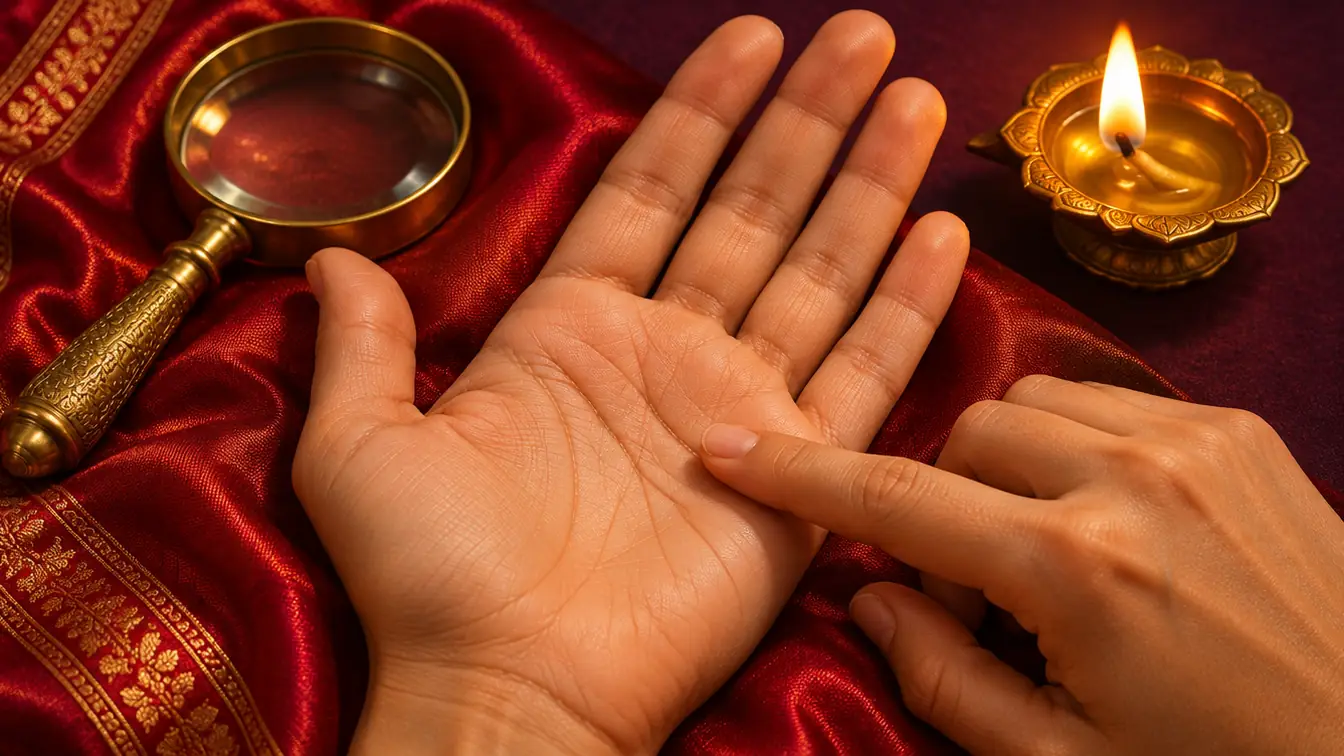
Palm reading, called Hasta Samudrika in the Indian tradition, interprets the lines, mounts, shape and markings of both hands as signs of temperament and life themes. Astrologer and Psychic Vijayram offers palm readings to Chicago clients over video or from clear photos sent by WhatsApp, as traditional guidance for reflection, never as a prediction of lifespan or health.
Key takeaways
- Chicago has palm readers in storefronts with neon hands in the window, and readers who work the room at parties.
- The palm's shape, the length of the fingers against the palm, the flexibility of the thumb and the texture of the skin are read first.
- Some older Indian schools read the right hand for men and the left for women.
- A remote palm reading depends on good pictures.
- Many Indian readers use the palm and the kundli side by side, each checking the other.
Indian palmistry, not a storefront act

Chicago has palm readers in storefronts with neon hands in the window, and readers who work the room at parties. Indian palmistry comes from a different place. Hasta Samudrika is one branch of Samudrika Shastra, the old Indian study of the body's features, and in many families it was practiced alongside the birth chart by the same person, with the same calm, practical tone. English readers met it more than a century ago through books like Mrs. J. B. Dale's Indian Palmistry, published in 1895, and Cheiro, one of the most famous palm readers of that era, said he had learned the art in India. The post on Indian palmistry or a storefront palm reading sets out the differences in more detail.
A reading here follows that tradition: careful observation, plain interpretation, and no theatrics.
What is read
Shape and proportion
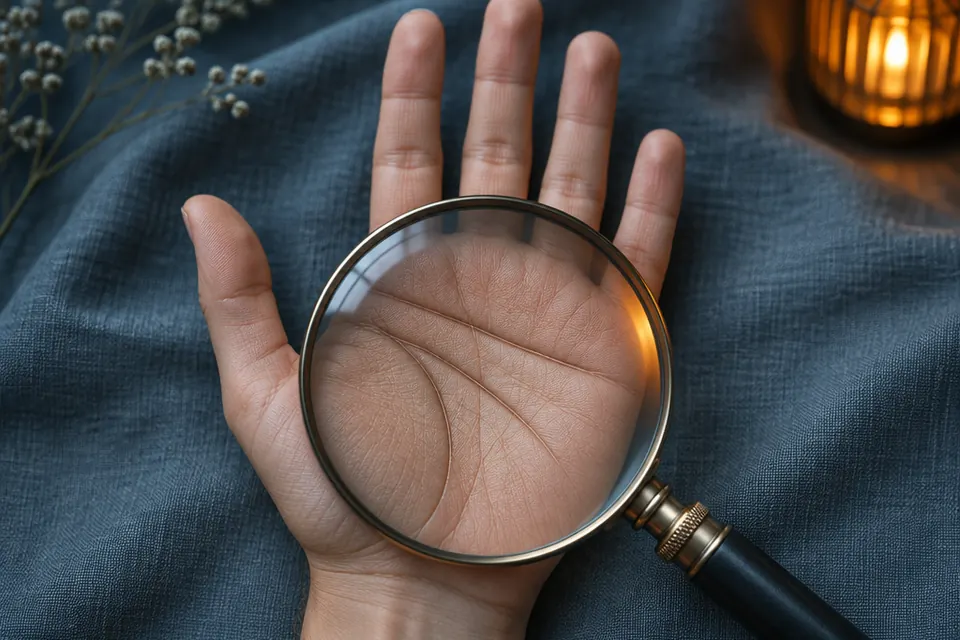
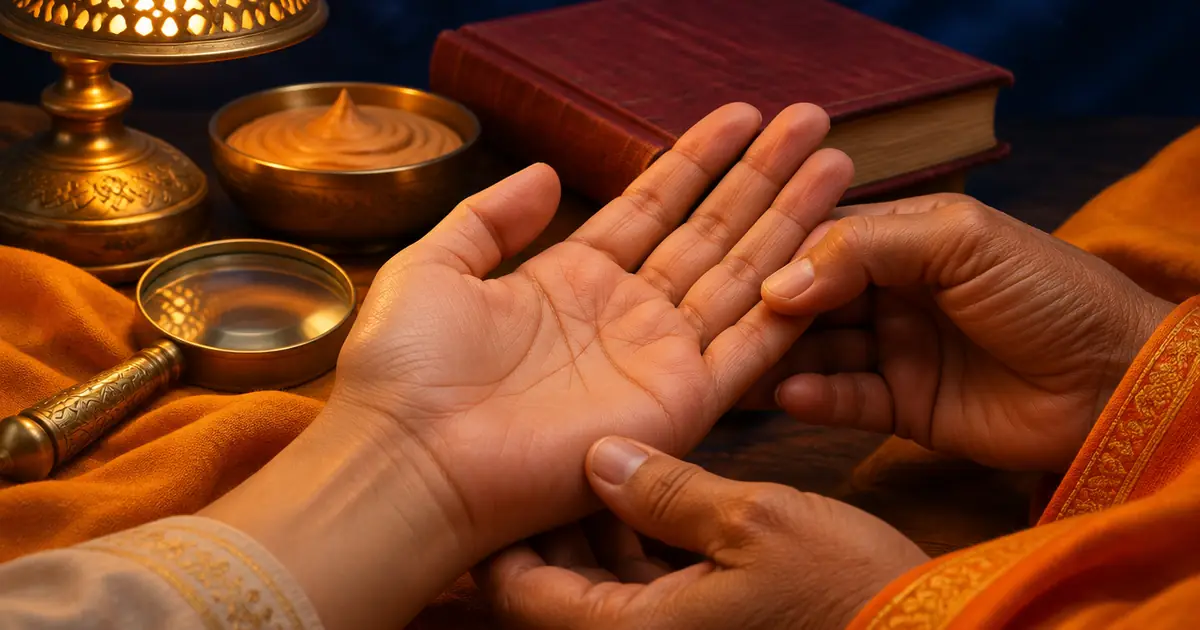
The palm's shape, the length of the fingers against the palm, the flexibility of the thumb and the texture of the skin are read first. Together they are taken to describe temperament: practical or imaginative, quick or deliberate, steady or restless.
The major lines
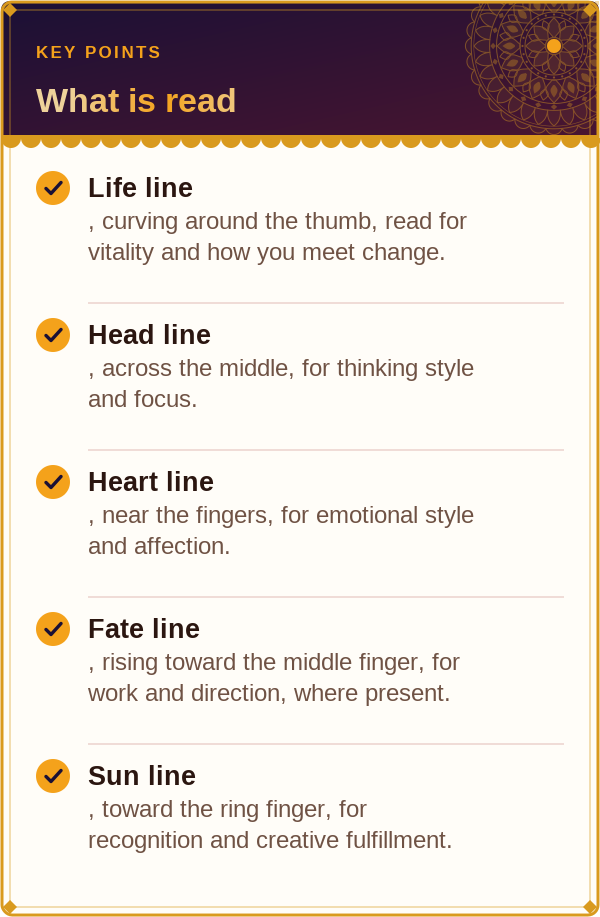
- Life line, curving around the thumb, read for vitality and how you meet change. It is not a measure of how long you will live.
- Head line, across the middle, for thinking style and focus.
- Heart line, near the fingers, for emotional style and affection.
- Fate line, rising toward the middle finger, for work and direction, where present.
- Sun line, toward the ring finger, for recognition and creative fulfillment.
Breaks, forks, islands and chains along these lines each have traditional readings, described in what palmists say about line markings.
The mounts
The fleshy pads of the palm are named for planets: Jupiter below the index finger, Saturn below the middle finger, the Sun below the ring finger, Mercury below the little finger, Venus at the base of the thumb, the Moon on the outer palm, and two areas for Mars. Their fullness is read as the strength of the qualities each planet represents. The post on the mounts of the palm and their planets goes further.
Auspicious signs
Samudrika texts give special weight to small shapes formed by lines, such as a fish, a lotus, a conch or a wheel, traditionally counted as fortunate marks. Relationship lines on the outer edge of the hand are covered in the marriage line in palmistry.
Both hands
Some older Indian schools read the right hand for men and the left for women. Most palmists today read both, treating the dominant hand as what you have made of your life and the other as what you were born with. Comparing them is often the most interesting part of a session; see what changes between your left and right hand.
How to photograph your palms
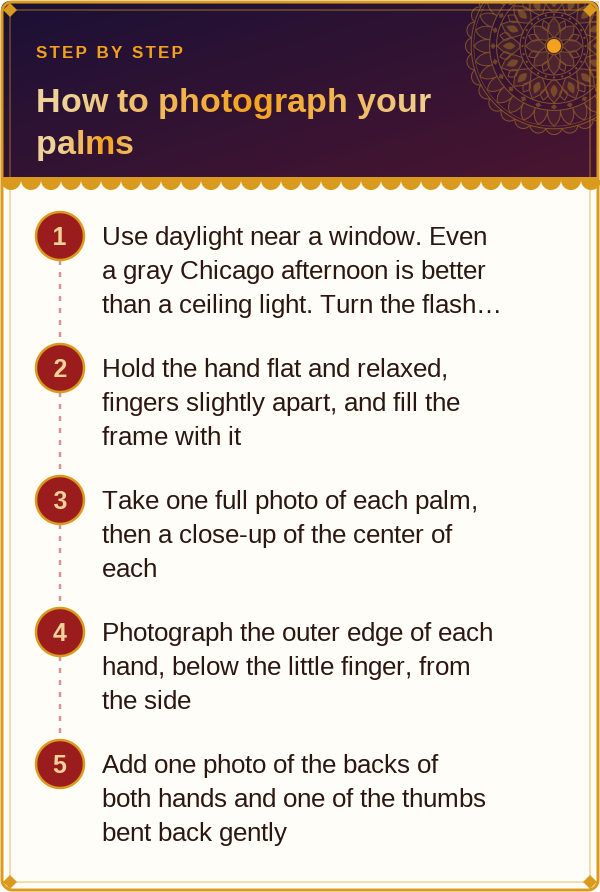
A remote palm reading depends on good pictures. They are easy to take at home:
- Use daylight near a window. Even a gray Chicago afternoon is better than a ceiling light. Turn the flash off.
- Hold the hand flat and relaxed, fingers slightly apart, and fill the frame with it.
- Take one full photo of each palm, then a close-up of the center of each.
- Photograph the outer edge of each hand, below the little finger, from the side.
- Add one photo of the backs of both hands and one of the thumbs bent back gently.
Send them by WhatsApp before your session. On the booking form, mention which hand you write with. During the video call the reader may ask you to cup or flex your hand to show a line more clearly.
Palm and chart together
Many Indian readers use the palm and the kundli side by side, each checking the other. If you know your birth time, a combined session can compare what the hand suggests with your Vedic birth chart. If you do not, the palm stands on its own, which makes it a good starting point for people whose birth records were lost. Some clients also like to add a numerology reading of their name and birth date.
Booking a palm reading online
Sessions are held by phone, WhatsApp or video, at a time agreed in Central Time. Video works best, but a phone or WhatsApp call is fine once the photos have arrived.
What a palm will not tell you
Hand reading is a traditional art offered here as faith-based guidance for reflection. It cannot predict how long you will live: researchers who compared life-line length with age at death found no reliable link, as the Flinders University study of the life line reports. Some features of the hands have medical meanings that only a doctor can assess, so any health worry belongs with a physician. Astrologer and Psychic Vijayram reads palms for character and reflection, not for verdicts.
Common questions
Do I need to send photos before the session?
Yes, ideally a day or two ahead. Clear photos let the reader study the fine lines in advance, and the video call is then used for questions and for any close-up that needs a second look.
Does a palm reading change if I am left-handed?
The dominant hand is read as the one you have developed, so for a left-handed person that is the left. The short answer on palm reading for left-handed people explains the details.
Can my palm show when I will marry?
Tradition reads the small lines on the outer edge of the palm for relationships, and some palmists estimate timing from them. These estimates are loose, and a reader here treats them as a talking point, not a date.
Do the lines on my hand change?
The major creases stay largely the same through adult life, but finer lines can fade or appear. Many palmists compare photos taken a few years apart, which is one reason to keep yours.
Can you read a palm without my birth details?
Yes. Palmistry needs no birth time, which makes it useful for people who do not know theirs. If you do have birth details, the palm and chart can be read together.
Related services
Numerology Reading: Name and Birth Numbers
A numerology reading in Chicago: your name and birth-date numbers read alongside your Vedic chart, including name spelling questions, by phone or video.
View service →
Private Psychic Reading by Phone
A private phone psychic reading for Chicago and the suburbs by phone or WhatsApp: no camera, no drive, useful in winter or a busy house. Honest about limits.
View service →Read more
Indian Palmistry or a Storefront Palm Reading? What Chicagoans Should Know
How Indian palmistry (Hasta Samudrika) differs from a quick storefront palm reading in Chicago: method, length, price clarity and what no palm can show.
Read article →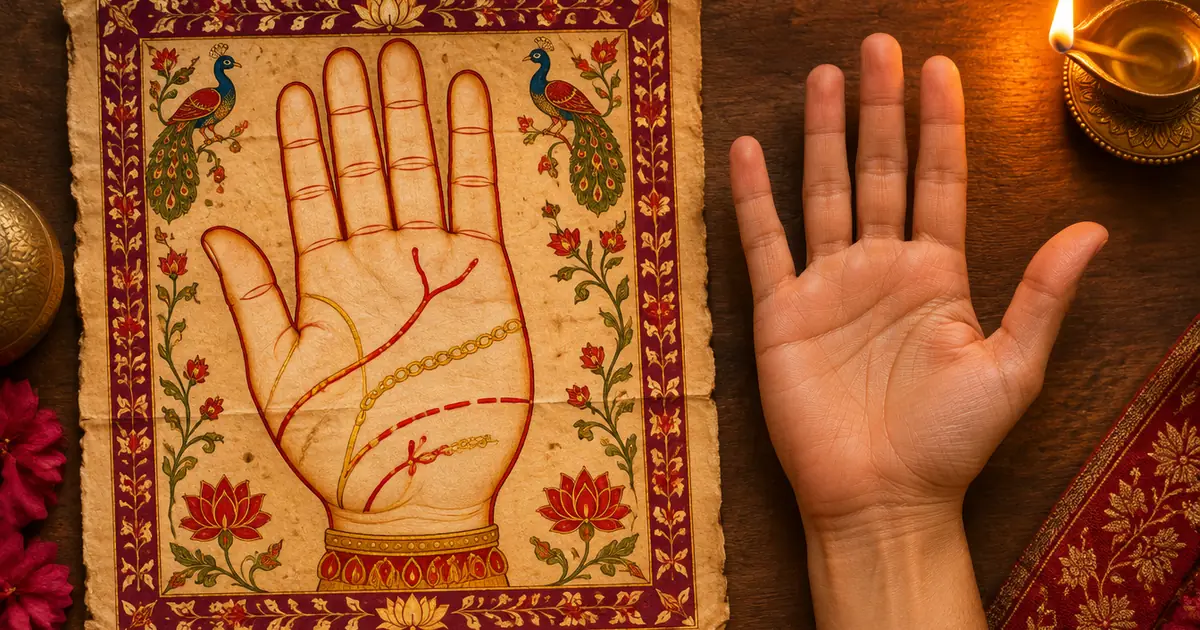
Broken, Forked and Chained Lines: What Palmists Say About Markings
Palm lines meaning, marking by marking: how palmists read breaks, forks, islands and chains on the heart, head and life lines, and the misreadings to drop.
Read article →
The Marriage Line in Palmistry
Marriage line palm reading explained: where the short lines under the little finger sit, what palmists take them to mean, and why they cannot count marriages.
Read article →
The Mounts of the Palm and Their Planets
Mounts in palmistry, mapped to the planets of Jyotish: what the Jupiter, Saturn, Sun, Mercury, Venus, Moon and Mars mounts are taken to show, and their limits.
Read article →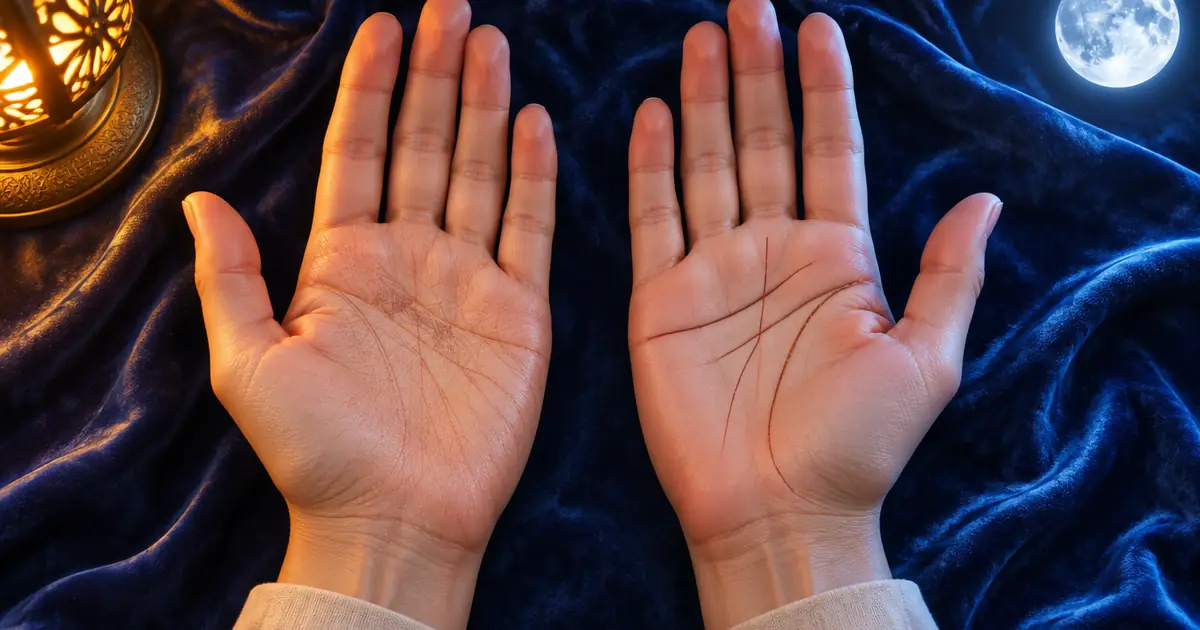
Comparing Both Palms: What Changes Between Your Left and Right Hand
Which hand does a palm reading use? Indian and Western conventions compared, what readers look for in the differences between your two palms, and photo tips.
Read article →Quick answers
Does a palm reading change if I am left-handed?
Which hand is used for palm reading if you are left-handed? How readers treat the dominant hand, the Indian convention, and why many look at both palms.
Read answer →Do I have to tell a psychic anything before the reading starts?
What happens in a psychic reading, and what must you share first? Often just your first name and question; you never need to tell more than you wish.
Read answer →Talk to Astrologer and Psychic Vijayram
Tell us what you are facing. If a reading is unlikely to help, you will be told that plainly.