
Vedic Astrologer in Chicago
A full Jyotish consultation, from your rising sign to the period you are living through now, explained without jargon.
A Vedic astrologer reads your birth chart using Jyotish, the Indian system based on the sidereal zodiac, the Moon's nakshatra and planetary periods called dashas. Astrologer and Psychic Vijayram offers full Vedic consultations to Chicago clients by phone, WhatsApp or video, in Central Time, as faith-based guidance for reflection rather than prediction.
Key takeaways
- Vedic astrology, or Jyotish, is the system of chart reading that grew up in India and is still part of family life for many Hindu and Jain households, as the history of Hindu astrology sets out.
- The Chicago area has one of the largest Indian American communities in the country, second only to the New York area according to the overview of Indians in Chicago .
- Couples and parents preparing for an engagement usually start with kundli matching instead.
- Send your date, time and place of birth when you book through the contact page , and say how sure you are of the time.
- Consultations are held by phone, WhatsApp or video, at a time agreed in advance and confirmed in Central Time.
What a Vedic astrologer actually does

Vedic astrology, or Jyotish, is the system of chart reading that grew up in India and is still part of family life for many Hindu and Jain households, as the history of Hindu astrology sets out. Three features set it apart from the horoscope column most Americans know. It uses the sidereal zodiac, which is tied to the fixed stars, so for most people the Sun and Moon fall one sign earlier than in a Western chart; this explanation of sidereal and tropical zodiacs shows why. It gives the Moon as much weight as the Sun and reads the Moon's nakshatra, one of 27 lunar mansions. And it times life through planetary periods, called dashas, that run for years at a stretch.
A consultation puts those pieces together for one person. The astrologer calculates the chart, reads its structure, identifies the period you are in, and then works through the questions you bring.

Who asks for a Jyotish consultation in Chicago
The Chicago area has one of the largest Indian American communities in the country, second only to the New York area according to the overview of Indians in Chicago. Some clients grew up with a family astrologer in Gujarat, Punjab or Andhra Pradesh and want someone in their own time zone now. Others are second-generation Chicagoans raised in Naperville, Skokie or Schaumburg who have a kundli in a drawer and no idea how to read it. And a fair number have no Indian background at all: they read that their sign changes under the sidereal zodiac and want the system explained by someone who uses it.
The questions cluster around a few moments: a job offer or a layoff, a match suggested for marriage, a house purchase in the suburbs, a new baby, an aging parent, or a run of years that has felt heavier than it should. Families near Devon Avenue often bring several charts at once; the Vedic astrologer page for the Devon Avenue area covers the questions that come up there, and the Naperville page does the same for the western suburbs. Indian thought has a long history in this city, too: Swami Vivekananda spoke at the World's Parliament of Religions here in 1893, a story told in how Vedic thought reached the Midwest.
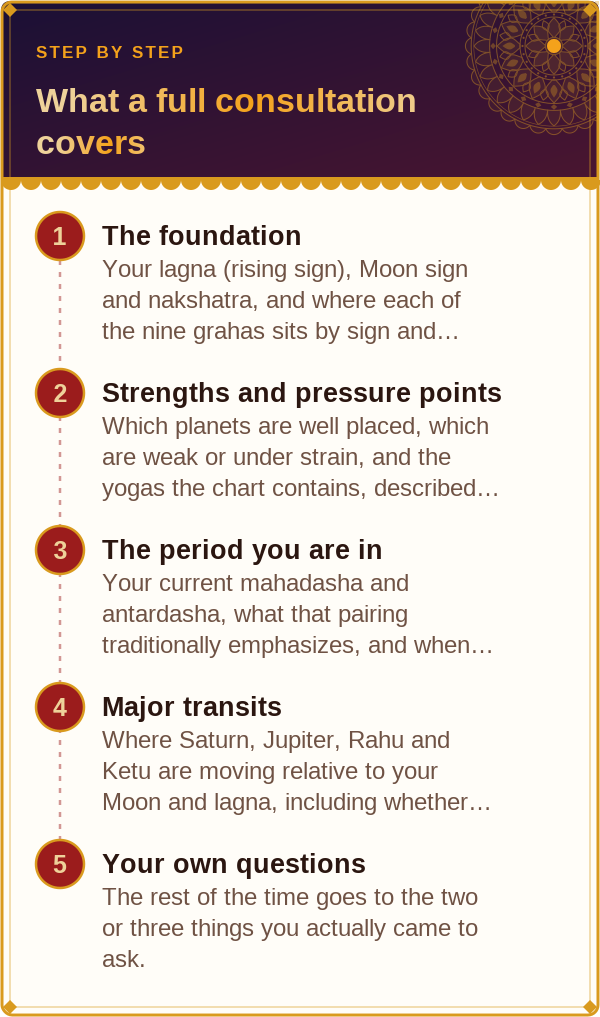
What a full consultation covers
- The foundation. Your lagna (rising sign), Moon sign and nakshatra, and where each of the nine grahas sits by sign and house.
- Strengths and pressure points. Which planets are well placed, which are weak or under strain, and the yogas the chart contains, described as tendencies rather than verdicts.
- The period you are in. Your current mahadasha and antardasha, what that pairing traditionally emphasizes, and when it changes. If timing is your main concern, the dasha and transit reading goes much deeper.
- Major transits. Where Saturn, Jupiter, Rahu and Ketu are moving relative to your Moon and lagna, including whether Sade Sati applies.
- Your own questions. The rest of the time goes to the two or three things you actually came to ask.
If you would rather have every house read in detail, the kundli reading, house by house is the better fit; this consultation is broader and more conversational. Couples and parents preparing for an engagement usually start with kundli matching instead.
How to prepare
Send your date, time and place of birth when you book through the contact page, and say how sure you are of the time. A hospital record beats family memory, and family memory beats a guess. If you were born in Chicago before the late 1960s, mention it, because daylight saving was not yet uniform across the country and a one-hour slip can change the rising sign. Write your questions down in order of importance, and keep any older horoscope from India or elsewhere ready to share.
How the session runs
Consultations are held by phone, WhatsApp or video, at a time agreed in advance and confirmed in Central Time. On video, the chart can be shown on screen while it is discussed, which helps if you want to learn to read it yourself. On a phone or WhatsApp call, each placement is described aloud and you can ask for anything to be repeated. Nobody has to drive in from Aurora or Arlington Heights in January sleet. If parents in India want to join, an early Chicago morning usually meets an Indian evening: India is 11 hours 30 minutes ahead of Chicago in winter and 10 hours 30 minutes ahead in summer. The answer on short versus full sessions will help you pick a length.
Choosing an astrologer, this one included
A search for the best Indian astrologer in Chicago, Illinois, or anywhere else in the USA returns directories, marketplace listings and storefront ads. A few plain tests are worth more than any ranking. A careful astrologer explains the reasoning behind each statement so you can follow it, tells you what the chart cannot show, and is comfortable saying "I don't know." Be wary of anyone who uses fear, insists on an expensive remedy without stating the fee first, or pushes you to book again and again. The post on honest signs to look for in an astrologer has a longer checklist.
What a reading cannot do
Jyotish is a faith-based tradition of interpretation, not a forecast, and controlled studies have not shown that it predicts events. A reading can help you think about timing, temperament and choices through an old and careful framework. It cannot make a decision for you, and it does not replace a doctor, lawyer, accountant or counselor. Astrologer and Psychic Vijayram will say so plainly whenever a question belongs with one of them.
Common questions
Is Vedic astrology the same as Indian astrology or Jyotish?
Yes, the three names usually describe one system. Regional schools differ in details, such as how the chart is drawn in North and South India, but the sidereal zodiac, the 27 nakshatras and the dasha periods are shared by all of them.
Do I need to be Hindu to book a consultation?
No. The tradition comes from Hindu texts and many clients are Hindu or Jain, but people of any faith or none are welcome. Nobody is asked to perform a ritual or adopt a belief.
My Western sign and my Vedic sign are different. Which one is right?
Each is consistent on its own terms; they simply measure from different starting points. A Vedic reading uses sidereal positions throughout. The short answer on Vedic or Western astrology for timing questions explains where each is usually preferred.
Can you read a kundli my family had made in India?
Yes. Send a clear photo of it. The positions are checked against a fresh calculation, because older hand-drawn charts sometimes used a rounded birth time or a different ayanamsa setting.
Will the reading tell me what is going to happen?
No reader can know that. You will hear what the chart traditionally suggests about a period and its themes, offered as guidance to weigh alongside your own judgment and the advice of the people who know your situation.
Related services

Vedic Birth Chart (Kundli) Reading
A Vedic birth chart reading for Chicago clients: your kundli read house by house, then tied to the dasha period you are in now, by phone, WhatsApp or video.
View service →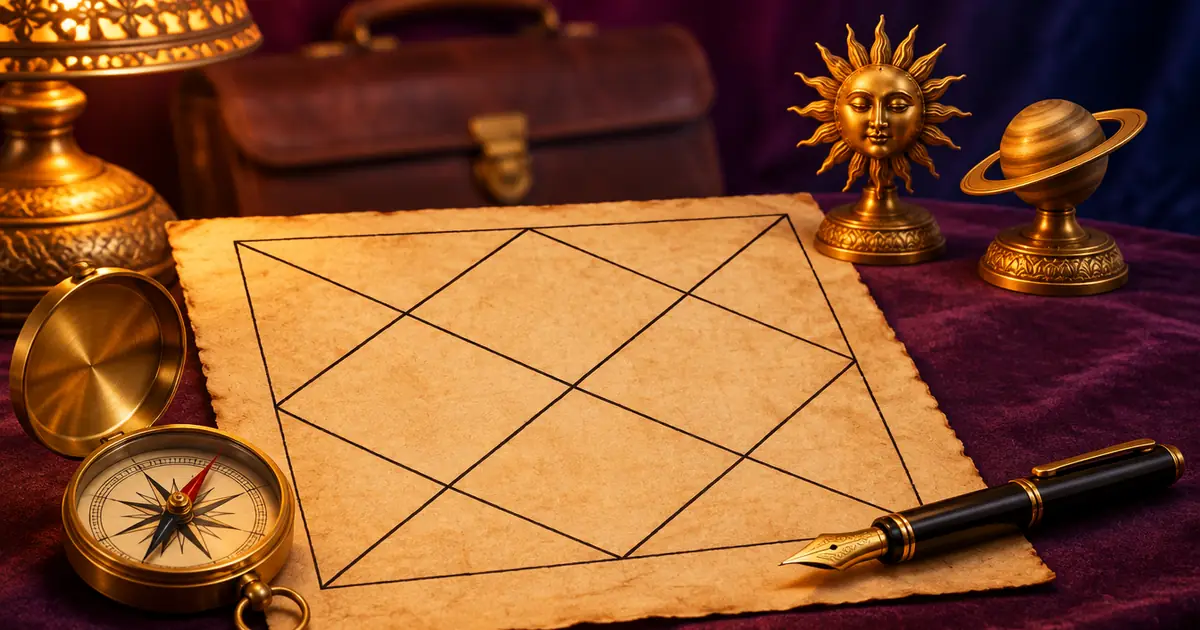
Career and Business Astrology Reading
A career astrology reading in Chicago for job offers, promotions, layoffs and business plans: the 10th house, D10 chart and current dasha, by phone or video.
View service →Read more
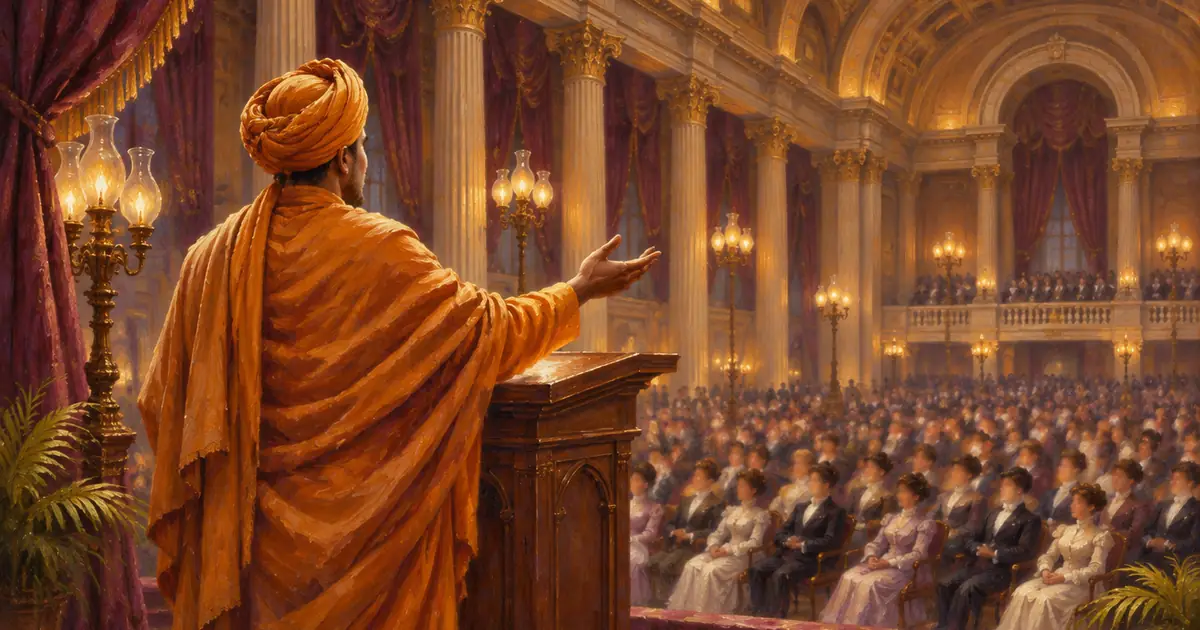
Vivekananda in Chicago, 1893: How Vedic Thought Reached the Midwest
Vivekananda in Chicago, 1893: the Parliament speech in today's Art Institute, why Hindu families here honor it, and what he said about astrology.
Read article →
Devon Avenue Questions: What Chicago Families Ask an Astrologer
What families around Devon Avenue ask an Indian astrologer: marriage matches, visa waits, shop openings and children's charts, and where a chart's answer stops.
Read article →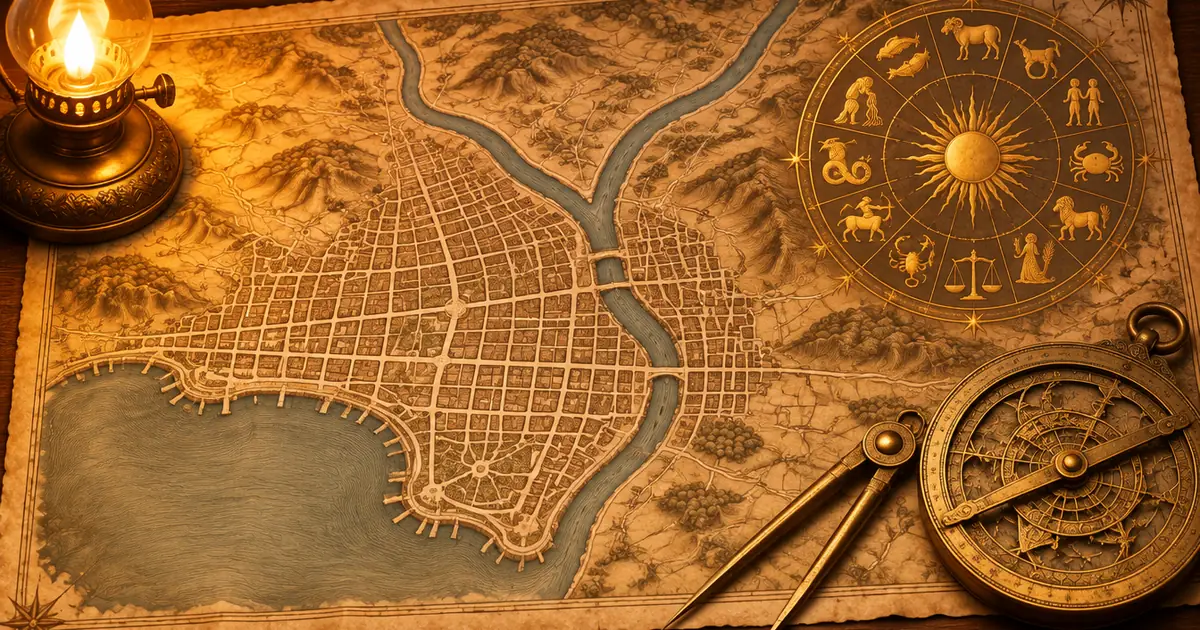
The Chart of Chicago: A Playful Look at March 4, 1837
A playful Chicago birth chart: reading the city's incorporation on March 4, 1837 the way mundane astrologers read a founding chart, with Saturn exalted.
Read article →
Before Your First Astrology Session: Checking Your Birth Details Twice
Getting ready for a first astrology reading: how to confirm your birth date, time and place from documents or family memory, and which questions to bring.
Read article →
How to Choose an Astrologer: Honest Signs to Look For
How to choose a good astrologer: clear fees, no fear, no promises and a willingness to say "I do not know". Red flags to avoid and where to report a scam.
Read article →Quick answers
Which is better for timing questions, Vedic or Western astrology?
Vedic vs Western astrology for timing questions: dasha periods against transits and progressions, plus the sidereal zodiac and the Moon-sign emphasis.
Read answer →What fits into a short reading versus a full astrology session?
How long is an astrology reading? What fits into a short single-question session versus a full chart review, and how to pick the format for your question.
Read answer →Talk to Astrologer and Psychic Vijayram
Tell us what you are facing. If a reading is unlikely to help, you will be told that plainly.