

Five Ways to Lay Out a Three-Card Spread
A three card tarot spread can be laid in several ways, and the positions matter more than the cards. Past-present-next suits a situation that is unfolding; situation-action-outcome suits a problem; you-them-the-bond suits a relationship; two options plus a hidden factor suits a choice; keep-release-try suits a reset. Decide the positions before you shuffle.
Key takeaways
- In tarot reading , a card's meaning depends heavily on where it lands.
- Use it for: a situation that has been unfolding for a while, such as a friendship that has cooled or a project that has stalled.
- Use it for: a problem you want to do something about.
- Use it for: any relationship, romantic or not.
- Use it for: a reset at the start of a month, after a hard stretch, or when you feel stuck in general.
Three cards is the most useful spread most people will ever learn. It is short enough to read in ten minutes and long enough to show a situation from more than one side. The catch is that "three cards" is not one spread. It is a shape that holds many different questions, depending on what you decide each position means.
Here are five layouts, with what each is good for and an example of how one might read. Whichever you choose, set the positions before you shuffle. Deciding afterward lets you bend the cards to fit what you hoped to see.
Why the positions matter more than the cards
In tarot reading, a card's meaning depends heavily on where it lands. The Five of Pentacles in a "past" position describes a hard time you have come through. In an "action" position it might suggest asking for help instead of struggling alone. The wider tradition of cartomancy, reading ordinary playing cards as well as tarot, has always leaned on small layouts like these, because a few well-defined positions make a reading easier to follow than a crowded table.
A useful habit: say the positions out loud, or write them on a slip of paper, before the first card turns over.
1. Past, present, next
Use it for: a situation that has been unfolding for a while, such as a friendship that has cooled or a project that has stalled.
The third position is "next," not "future." It describes where things seem to be heading if nothing changes, which keeps the reading honest: you can still change the direction.
Example: Three of Cups, Four of Cups, Page of Cups. A circle of friends who used to celebrate together, then boredom and withdrawal, then a tentative invitation. The likely next step is a small gesture, and it may need to come from you.
2. Situation, action, outcome
Use it for: a problem you want to do something about.
The middle card is the hinge. It answers "what could I do?" and the third card shows how that action might play out. If the outcome card looks discouraging, look again at the action card: it may be pointing to a different approach.
Example: Seven of Wands, Temperance, Six of Wands. You are defending your position against pushback at work; patience and a measured tone are the action; recognition follows. The cards suggest calm persistence rather than a fight.
3. You, them, the bond
Use it for: any relationship, romantic or not.
The second card describes the other person as they appear to you. It cannot reveal their private thoughts, and it is worth remembering that when the card is surprising. The third card describes the space between you: what you have built, or what is getting in the way.
Example: Knight of Wands, Queen of Pentacles, Two of Swords. You are restless and eager to move; they are steady and practical; the relationship is stuck in a standoff where neither wants to bring up the subject. The reading points to a conversation about pace. For more relationship layouts, see the post on love tarot spreads for singles, couples and the undecided.
4. Option A, option B, what I am not seeing
Use it for: a choice between two paths.
Lay the two options side by side and the third card below them. That third card is often the most useful: a factor you have left out, a fear, a person, or a practical detail.
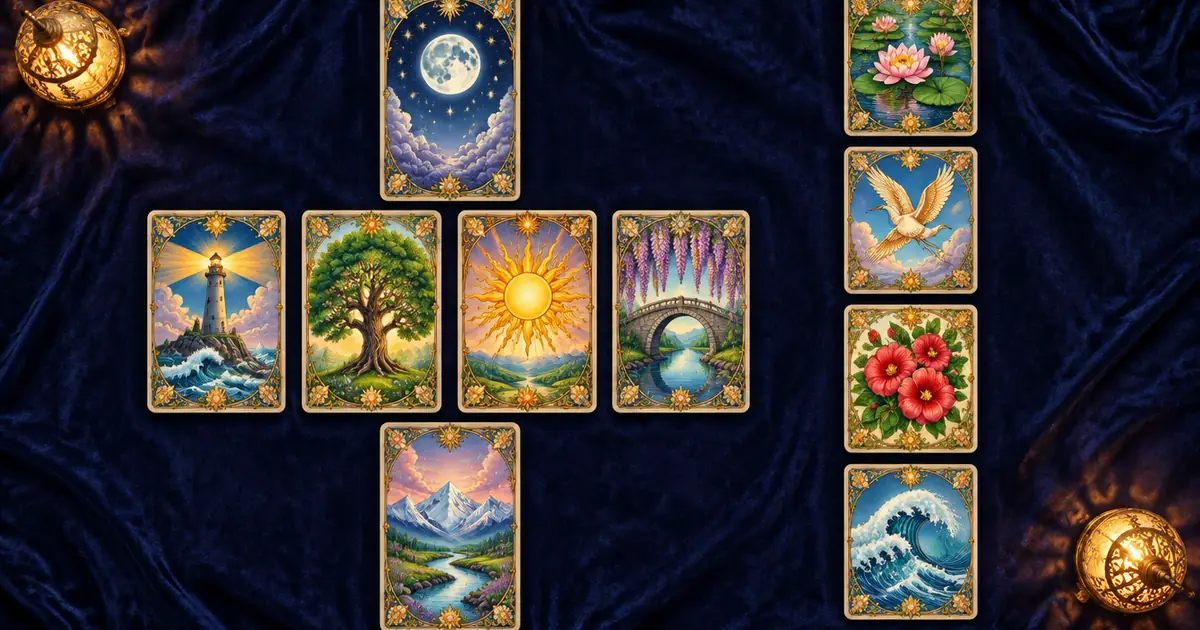
Example: Eight of Pentacles for staying in a current role, the Chariot for taking a new one, and the Five of Pentacles below. The new role pulls hard, but something about money or security is being overlooked. Check the numbers before deciding. Larger decisions, such as renting or buying a home, can use a fuller version of this layout like the two-path spread for Chicago renters.
5. Keep, release, try
Use it for: a reset at the start of a month, after a hard stretch, or when you feel stuck in general.
The first card names something worth keeping, the second something to let go of, and the third something new to try. It is a gentle layout that works well in a journal.
Example: Ten of Cups, Nine of Swords, the Star. Keep the warmth at home; release the late-night worrying; try trusting that things can improve. If you like this kind of reflection, the post on a daily card for reflection, not prediction offers single-card prompts in the same spirit.
Reading three cards as a sentence
Once you have read each card in its position, read the line again as one sentence. "I have been celebrating less, I am bored, and an invitation is coming" is easier to remember than three separate meanings. Look for links between the cards too:
- Same suit twice or three times: the situation lives in that area of life. Three Cups means feelings; three Swords means thoughts and conflict.
- A Major Arcana card among Minors: that position carries extra weight.
- Figures facing each other or away: some readers notice whether the people in the pictures look toward or away from one another.
Common mistakes
- Asking a yes-or-no question. Three cards answer "how" and "what" far better than "will it." The guide to turning prediction questions into better tarot questions shows how to reword.
- Changing positions after seeing the cards. If the outcome card is the Tower, it is tempting to decide that position meant "what to avoid." Do not.
- Drawing again and again. One clarifier, at most.
When three cards are not enough
Some questions have too many moving parts for three positions: a family situation with several people involved, or a decision tied to money, timing and other people's choices. That is when a larger layout helps, and the ten-step worked example of the Celtic Cross shows how one fits together. For a single focused decision, a one-question decision reading often uses a three-card layout like the ones above.
In a full tarot card reading by phone, WhatsApp or video, Astrologer and Psychic Vijayram will tell you which layout is being used and why before laying any cards. The usual limit applies to every layout here: three cards can help you see a situation more clearly, but they cannot fix events in place, read anyone's mind or replace professional advice.
Common questions
Which three-card layout is best for a beginner?
Situation, action, outcome is the easiest to read, because the middle card always answers a practical question: what could I do? Past, present, next is a close second.
Can I add a fourth card if the three are unclear?
You can draw one clarifying card for a confusing position. Stop there. If you keep adding cards, you are usually looking for a different answer rather than a clearer one.
Should I use reversed cards in a three-card spread?
That is up to you, but decide before you shuffle and stick to it. With only three cards, some readers prefer upright meanings so that each position carries the full range of the card.
How often can I lay a spread for the same question?
Once is usually enough. Wait until something has actually changed, such as a conversation, a decision or a week of new events, before laying it again.
Related service

Keep reading
The Celtic Cross in Ten Steps: A Worked Example
The Celtic Cross tarot spread explained position by position through one sample question, showing what each of the ten cards means and how they speak together.
Read article →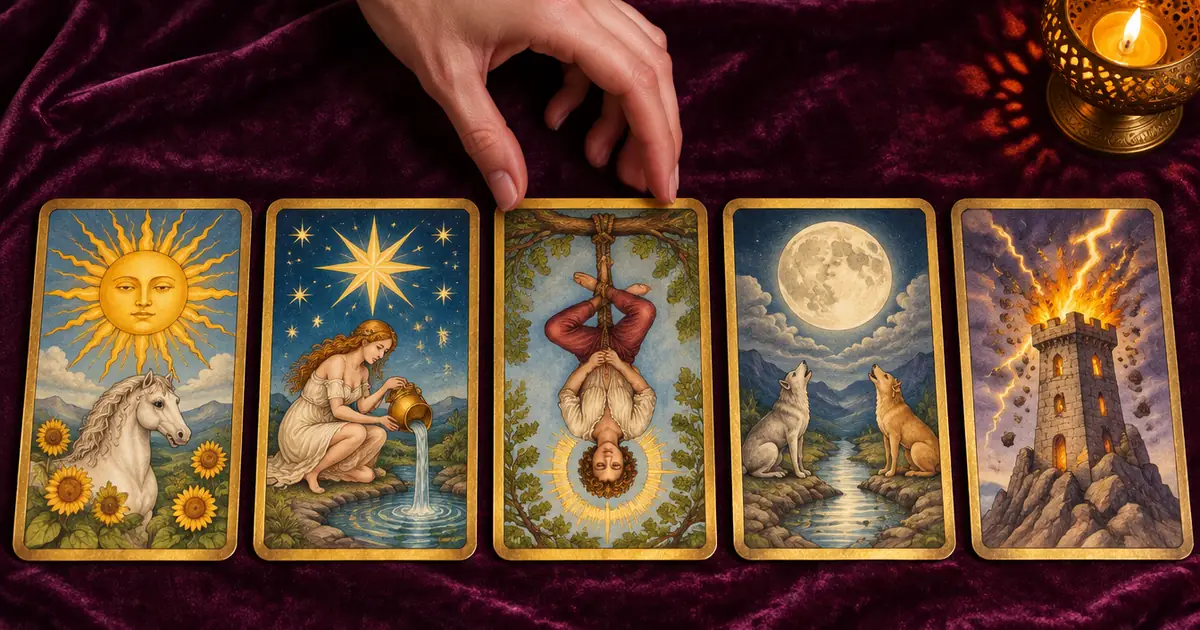
To Reverse or Not: Why Some Readers Never Use Reversals
Reversed tarot cards explained: reading upright only against using reversals, the five common ways to read an upside-down card, and how each handles delays.
Read article →
Single-Card Answers: Why Yes-or-No Tarot Struggles With 'Should' Questions
Why yes or no tarot rarely settles a 'should I' question, how single-card answers are drawn, and how to reframe it into a question the cards can help with.
Read article →Quick answers
Does it matter who shuffles the tarot deck?
How does a tarot reading work, and does it matter who shuffles the deck? Shuffling customs in person and at a distance, and what matters more than hands.
Read answer →Is a tarot reading a forecast or a mirror?
Can tarot predict the future? Why readers use tarot to reflect on a situation and its likely direction rather than to fix events, and how to use it well.
Read answer →Talk to Astrologer and Psychic Vijayram
Tell us what you are facing. If a reading is unlikely to help, you will be told that plainly.