
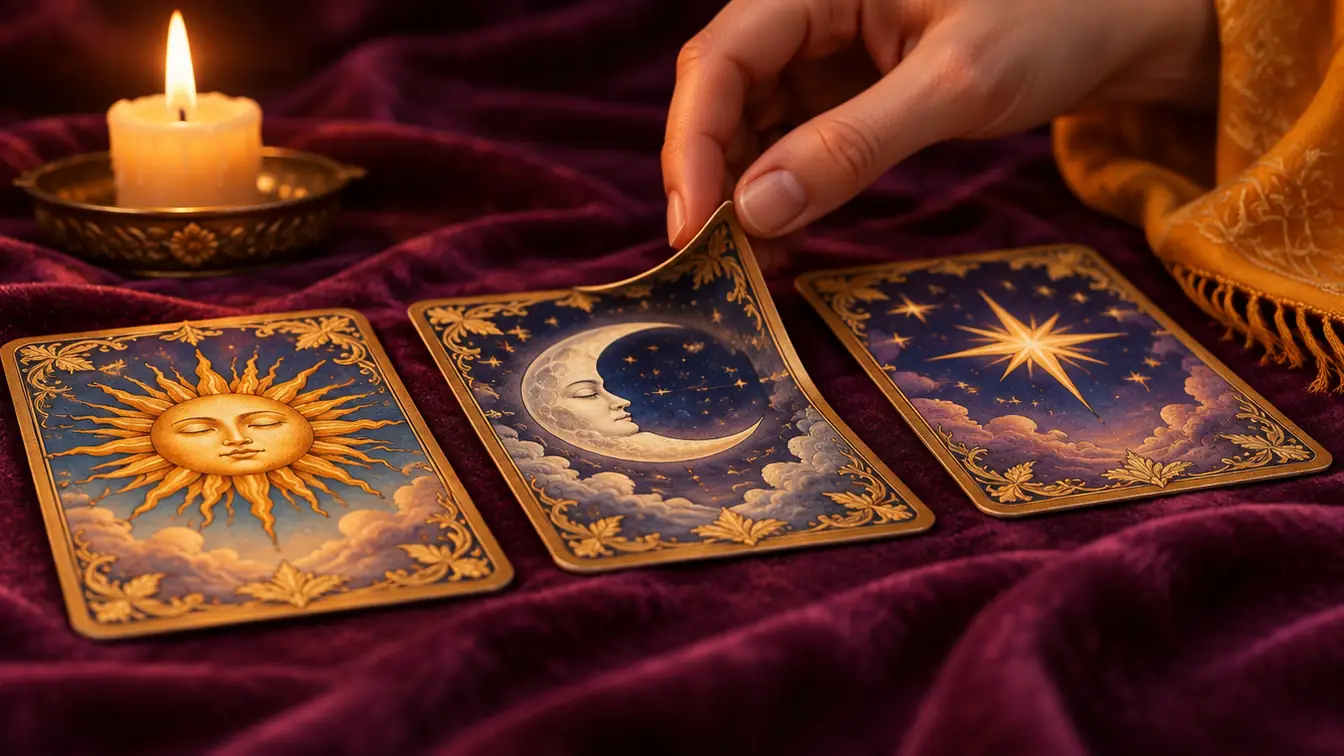
Tarot Card Reading
One situation, a spread you can watch being laid, and a plain account of what the cards suggest.
A tarot reading with this practice looks at one situation you are facing. You describe it, the cards are shuffled and laid on camera or described by phone, and each card is read in plain language as a prompt for reflection. It suits Chicago clients who want a fresh angle on a choice, not a forecast.
Key takeaways
- Many people picture tarot as a storefront with a glowing hand in the window and a reader who speaks in riddles.
- A spread laid for "my whole year" tends to produce a scatter of general themes.
- Most sessions use a three-card spread for a narrow question or the ten-position Celtic Cross for a layered one; the worked example of the Celtic Cross shows how its positions build on each other.
- Tarot needs no birth time, which makes it a good fit if your birth record is missing or uncertain.
- Because the reading happens by phone, WhatsApp or video, anyone in Chicago, IL can book one that fits around their week instead of the other way round.
A reading without the neon sign

Many people picture tarot as a storefront with a glowing hand in the window and a reader who speaks in riddles. The session here is quieter: you, the reader, a deck and the situation on your mind. There is no incense routine, no dramatic pause before each card and no announcement about destiny. The cards are treated as a set of pictures that help you look at a problem from angles you may have skipped, which is how many careful readers use them today.
Tarot began as a card game. Decks were painted for noble families in northern Italy in the fifteenth century, and Yale Library's account of a rare fifteenth-century tarocchi deck shows how far back that history runs. Reading the cards for meaning came much later, in eighteenth-century France, and most readers now work with the Rider-Waite-Smith imagery first published in London in 1909. Knowing this keeps the cards in proportion: a tool for reflection with a long and interesting past, not a direct line to fate.
Why one situation works better than "tell me everything"
A spread laid for "my whole year" tends to produce a scatter of general themes. A spread laid for "I have been offered a team lead role in Oak Brook and I am not sure I want it" gives every card something to say. Before the session, write a sentence or two about the situation: what is happening, who is involved and what you would like to understand better. You do not need to share private details you would rather keep. The cards can work from an outline.
Good starting points include a relationship that has gone quiet, a choice between two jobs, a strained friendship, a move out of the city or a creative project you keep putting off. If several topics are pressing, choose the one costing you the most sleep, or book a longer session and take them one at a time.
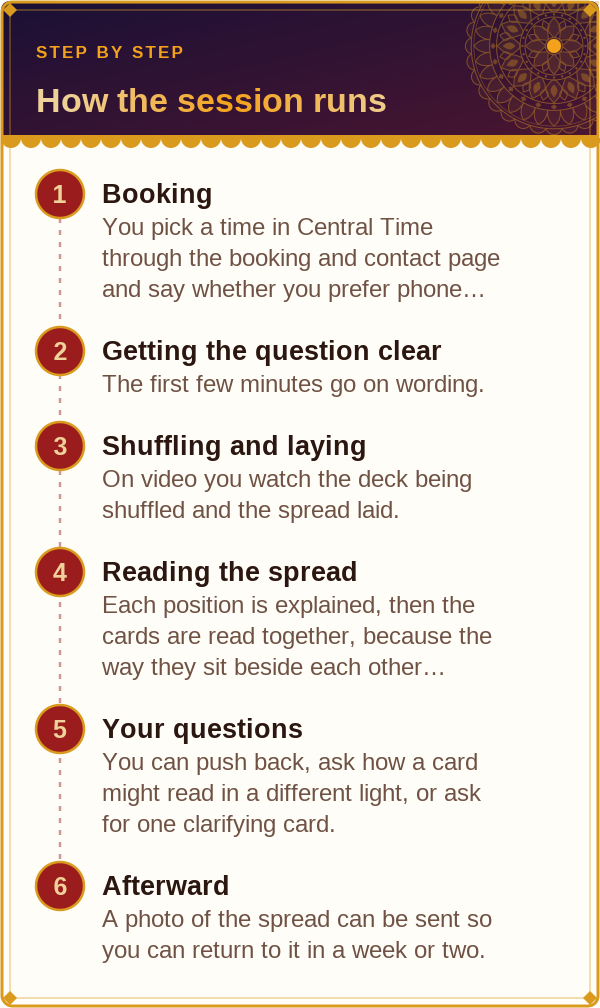
How the session runs
- Booking. You pick a time in Central Time through the booking and contact page and say whether you prefer phone, WhatsApp or video.
- Getting the question clear. The first few minutes go on wording. That conversation is often useful by itself.
- Shuffling and laying. On video you watch the deck being shuffled and the spread laid. By phone, each card is named and described as it turns over.
- Reading the spread. Each position is explained, then the cards are read together, because the way they sit beside each other often says more than any single card.
- Your questions. You can push back, ask how a card might read in a different light, or ask for one clarifying card.
- Afterward. A photo of the spread can be sent so you can return to it in a week or two.
Spreads, reversals and the cards people fear
There are many ways to do a tarot reading, and the choice of spread comes first. Most sessions use a three-card spread for a narrow question or the ten-position Celtic Cross for a layered one; the worked example of the Celtic Cross shows how its positions build on each other. Some readers give upside-down cards their own meaning and some do not. You are told which approach is being used before the first card is laid.
If Death, the Tower or the Ten of Swords turns up, take a breath. In the standard tradition these cards point to endings, upheaval and exhaustion, not literal disaster, and a reader who uses them to frighten you is misusing the deck. The short answer on whether a tarot reading is a forecast or a mirror looks at this from another side.
Tarot, astrology or a psychic reading?
Tarot needs no birth time, which makes it a good fit if your birth record is missing or uncertain. If your question is about timing over months or years, a Vedic birth chart reading usually says more, because it works from the planetary periods in your chart. If you would rather have an intuitive conversation without a deck, a psychic reading may suit you better. Plenty of clients start with cards and move to the chart later, or the other way round.
For a narrower focus there are separate sessions for relationship questions read through tarot, for job offers and workplace decisions, and a short one-question decision reading.
A tarot reading online from anywhere in Chicagoland
Because the reading happens by phone, WhatsApp or video, anyone in Chicago, IL can book one that fits around their week instead of the other way round. Clients take the call on a lunch break downtown in the Loop, from a parked car before school pickup in the western suburbs, or from the couch during a January cold snap when nobody wants to go out. Video suits tarot well because you can see every card; phone suits people who would rather close their eyes and listen. WBEZ has reported on Chicago readers adding phone and video sessions as demand for them grew, and many clients now prefer reading this way.
What a tarot reading cannot do
The cards cannot tell you what another person is thinking, whether a test result will be good, how a court case will end or which stock to buy. They do not fix events in place: a reading reflects how things look now, and your choices can change the picture. A tarot session is faith-based guidance for reflection, not a prediction, and it does not replace a doctor, lawyer, therapist or financial professional. Astrologer and Psychic Vijayram will tell you plainly when a question is one the cards should not be asked.
Common questions
Do I need to shuffle the cards myself?
No. On a remote reading the reader shuffles while you hold your question in mind, and you can say when to stop. Some people like to pick cards by number from a fanned deck on camera. The short answer on who shuffles the deck and why it matters explains the different habits.
Is tarot against my religion?
That is your decision, and many people of faith use tarot only as a reflective tool. If you come from a Hindu family and feel unsure, the article on how tarot sits beside Hindu belief sets out the questions people usually ask.
How long is a session?
A short session covers one narrow question. A standard session leaves room for a larger spread and follow-up questions. The exact length and fee are confirmed in writing before you book.
Can I record the reading?
Yes. You are welcome to take notes or record your side of the call, and a photo of the spread can be sent afterward so you can look at it again later.
What if I do not like what the cards show?
Say so. A reading is a conversation, and a difficult card is a prompt to talk about what worries you, not a verdict. You are never asked to pay for anything to change what a card means.
Is there a tarot reading near me open now?
Not as a walk-in: there is no storefront with opening hours, and readings are booked ahead so your question gets full attention. Because sessions run by phone, WhatsApp or video, the reader is as near as your phone. Send a request through the contact page and you will be offered the next open slot in Central Time.
Related services

Love and Relationship Tarot Reading
Love tarot reading in Chicago by phone, WhatsApp or video: cards laid on one relationship question, centered on your own choices, never on controlling anyone.
View service →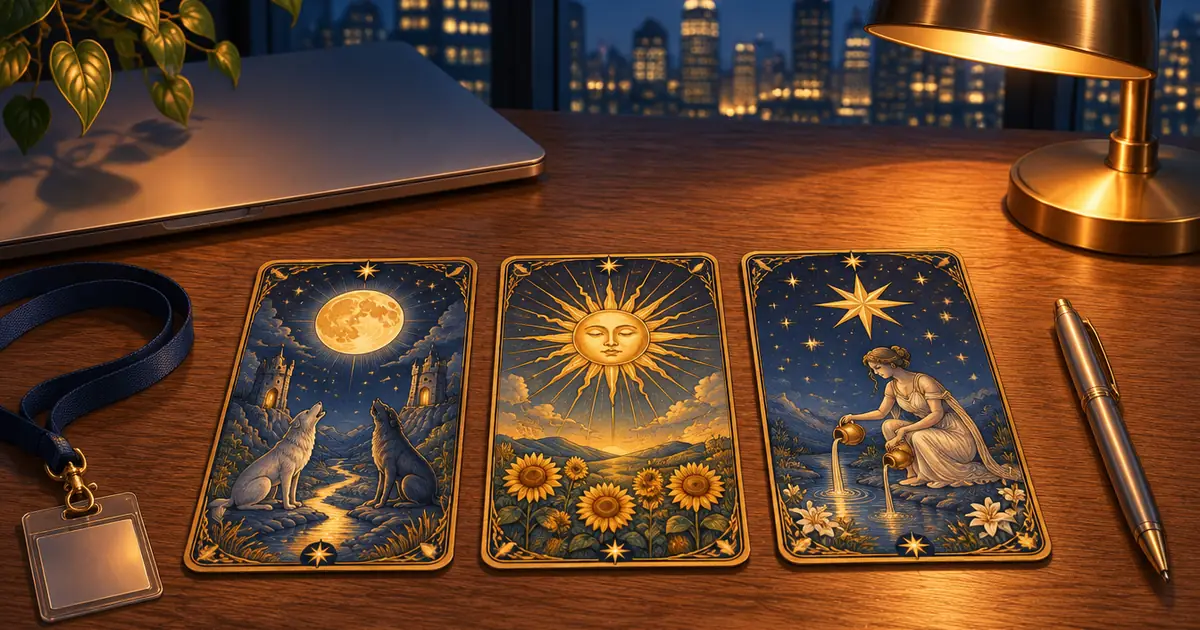
Career and Job Tarot Reading
Career tarot reading in Chicago by phone or video: job offers, transfers, layoffs and workplace tension laid out card by card, beside the practical facts.
View service →Read more

Booking a Tarot Reader in Chicago: Length, Spreads and Price Explained
Booking a tarot reading in Chicago: how long sessions run, which spreads suit which questions, how fees work, recording etiquette, and party versus private.
Read article →
Snowed In With a Deck: Tarot Spreads for a Chicago Blizzard Weekend
Winter tarot spreads for a snowed-in Chicago weekend: a one-card check-in, a three-card shovel spread, a solstice layout and a five-card deep-winter review.
Read article →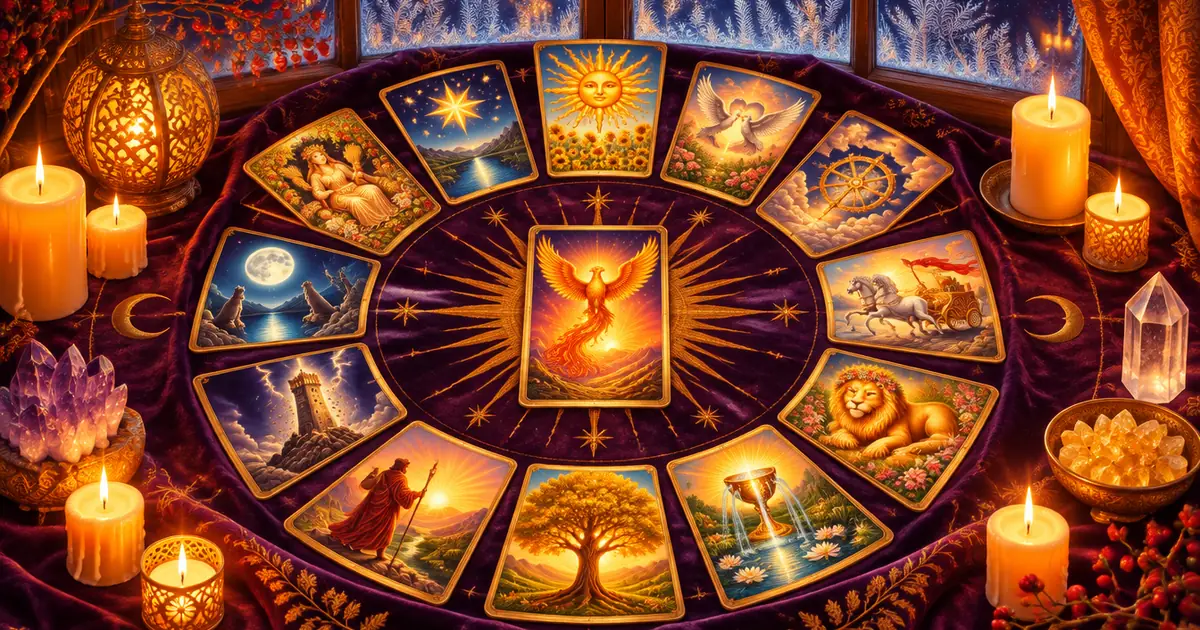
The Twelve-House Tarot Spread: A January Layout Borrowed From the Birth Chart
A new year tarot spread borrowed from the birth chart: one card for each of the twelve houses, read as themes for the year, not month-by-month forecasts.
Read article →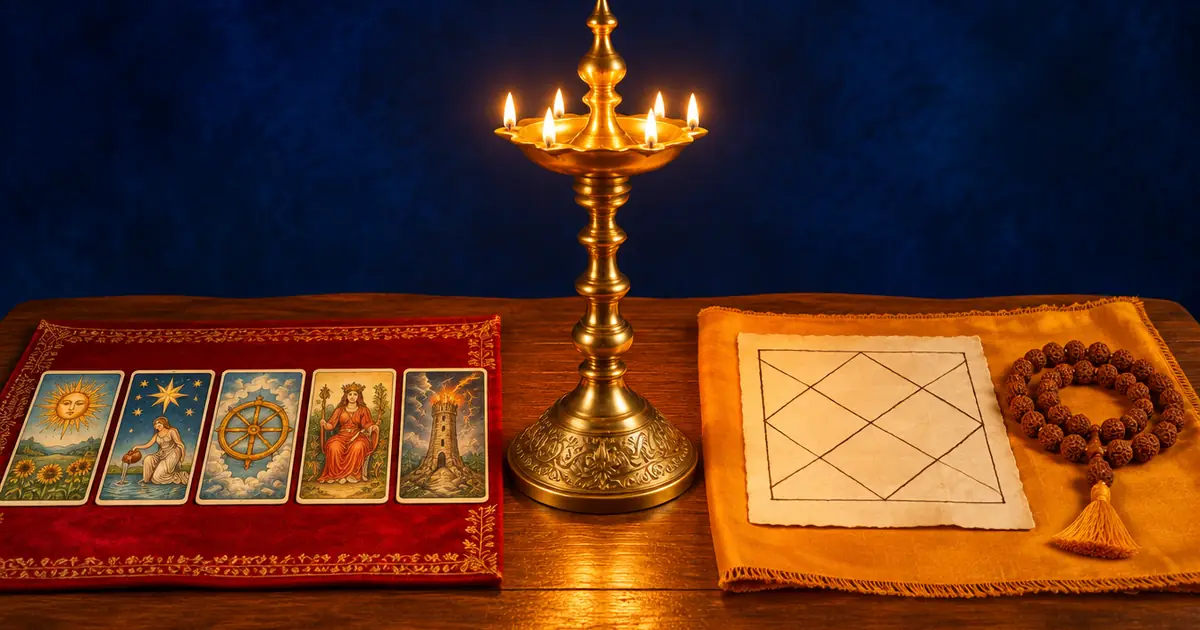
Tarot or Vedic Astrology? How Chicago Clients Choose
Tarot vs astrology for Chicago clients: tarot answers the situation in front of you, Vedic astrology maps timing across years. When to use which, or both.
Read article →
Tarot Readings for Naperville and the Western Suburbs
How a tarot reading works for Naperville and western suburbs clients by phone, WhatsApp or video: what to prepare, the questions people bring, and the limits.
Read article →Quick answers
Does it matter who shuffles the tarot deck?
How does a tarot reading work, and does it matter who shuffles the deck? Shuffling customs in person and at a distance, and what matters more than hands.
Read answer →Is a tarot reading a forecast or a mirror?
Can tarot predict the future? Why readers use tarot to reflect on a situation and its likely direction rather than to fix events, and how to use it well.
Read answer →Talk to Astrologer and Psychic Vijayram
Tell us what you are facing. If a reading is unlikely to help, you will be told that plainly.