
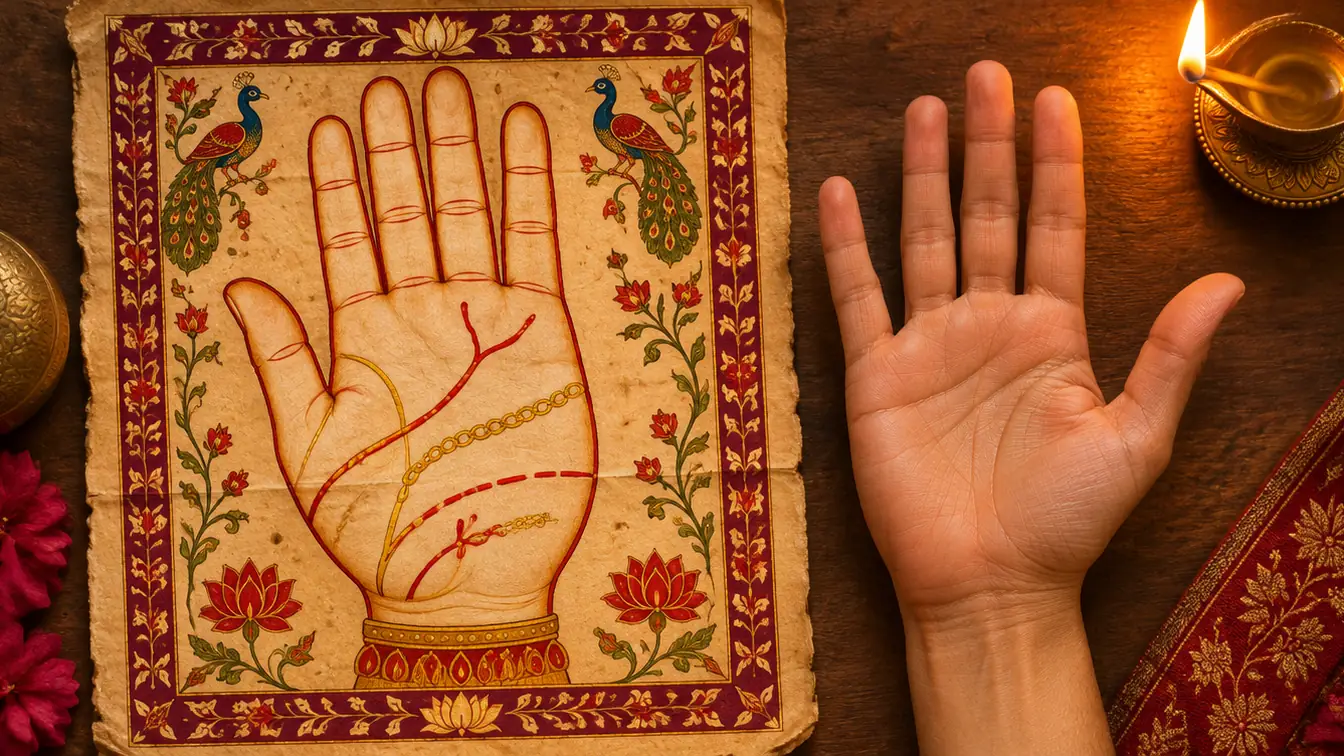
Broken, Forked and Chained Lines: What Palmists Say About Markings
In traditional palmistry, a break on a major line is read as a change of direction, a fork as a choice or a widening of interests, an island as a period of strain, and a chain as scattered energy. These are symbolic readings for reflection. None of them predicts illness, accidents or the length of a life.
Key takeaways
- Older Western texts describe these markings in very dramatic language.
- A break in the heart line is traditionally linked with an emotional turning point: the end of a relationship, or a change in how you trust people.
- A fork at the end of the head line, sometimes called the writer's fork, is traditionally read as imagination joined to practical sense.
- A careful modern reading treats an island as a stretch of divided attention or tiredness, and a chain as restlessness or a mind pulled in several directions.
- A 2019 study measured the life line on sixty donated bodies and compared it with age at death, finding no significant correlation; see the study on predicting longevity from the line of life .
Look at your palm under a good light and you will rarely see three clean, unbroken lines. Most hands have small gaps, little branches, tiny loops and fuzzy stretches. Palmistry has a name and a traditional meaning for each of these markings, and they cause most of the worried questions palm readers hear. Here is what palmists say about them, and where the old books are most often misread.
The three major lines in brief
- Heart line: the upper horizontal line, starting under the little finger. Read for emotional life and how you attach to people.
- Head line: the middle horizontal line, often starting close to the life line. Read for thinking style, focus and decision-making.
- Life line: the curve around the base of the thumb. Read for vitality, routine and big changes of circumstance, not for lifespan.
Indian palmistry, part of the wider tradition behind a Hasta Samudrika palm reading, reads the same lines under names such as hriday rekha, mastishk rekha and jeevan rekha, always alongside the mounts and the shape of the hand.
The markings at a glance
| Marking | What it looks like | Traditional reading | Common misreading |
|---|---|---|---|
| Break | A gap in a line, often with the two ends overlapping | A change of direction or a fresh start; overlapping ends soften it | "Something terrible happens at that age" |
| Fork | A line splitting into two branches, usually at its end | Versatility, a choice, interests pulling two ways | "Two marriages" or "two careers" as fixed fact |
| Island | A small oval loop where the line splits and rejoins | A stretch of strain, divided focus or low energy | A sign of a particular disease |
| Chain | A run of tiny linked loops instead of a clean line | Restless or scattered energy in that part of life | A weak heart or a weak mind |
| Square | Small lines forming a box over or beside a line | Protection or recovery around a hard stretch | Proof that danger is coming |
Older Western texts describe these markings in very dramatic language. Cheiro's Palmistry for All, published in 1916, tells students that islands "must be considered as showing a weakness in any line" and links a chained head line to mental weakness. Modern readers who learned from such books tend to soften them, and for good reason.
Breaks
A break in the heart line is traditionally linked with an emotional turning point: the end of a relationship, or a change in how you trust people. A break in the head line is read as a change of thinking or study, sometimes a change of career. On the life line, a break is read as a shift in circumstances, such as a move, a new household or a new routine. Where the two ends overlap, palmists read continuity through the change. Where a small square encloses the gap, they read protection.
What a break does not show is the date of a disaster. Palmists who time events along a line divide it by rough proportion, and schools divide it differently, so any age read from a break is approximate at best.
Forks
A fork at the end of the head line, sometimes called the writer's fork, is traditionally read as imagination joined to practical sense. A fork at the start of the heart line is read as a balance of feeling and reason. A fork near the base of the life line is often read as a life spent between two places, which plenty of people who grew up between Gujarat and Schaumburg, or Lahore and West Ridge, find apt. That is symbolism, not geography.
Islands and chains
These are the markings people worry about most, because older books tie them to illness. A careful modern reading treats an island as a stretch of divided attention or tiredness, and a chain as restlessness or a mind pulled in several directions. If you are actually unwell, that is a matter for your doctor, not a palm reader. No line on the hand can diagnose anything.
Misreadings worth dropping
"A short life line means a short life"
This is the most stubborn myth in palmistry, and the evidence does not support it. A 2019 study measured the life line on sixty donated bodies and compared it with age at death, finding no significant correlation; see the study on predicting longevity from the line of life. Many traditional palmists never read the life line that way in the first place.
"A single line across the palm is an omen"
When the heart and head lines run together as one line, palmists call it a simian line and give it striking meanings. Medically it is a single palmar crease. It appears in many healthy people and is sometimes noted by doctors alongside other findings. It is not a sign of fate. Questions about it belong with a physician.
"Your lines are fixed for life"
Minor lines change over the years, and many readers compare the two hands to see what has developed; the post on comparing your left and right palms explains how.
How a careful palmist reads a marking
- Look at the whole hand first: shape, fingers, mounts and both palms.
- Note which line the marking sits on, where along it, and whether it is deep or faint.
- Look for repair signs nearby: overlapping ends, sister lines, squares.
- Read it as a theme to reflect on, then ask whether it fits your life.
- Never attach a fearful prediction to it.
The mounts under each finger change how a line is read, as the post on the mounts of the palm and their planets explains. If you are curious about the short lines under the little finger, the marriage line has a post of its own.
Palmistry is a traditional art of reflection. It cannot see your health, the name of a future partner or the year of any event. Astrologer and Psychic Vijayram reads palms from clear photos or live on video for clients across Chicago, and states that limit at the start.
Common questions
My life line is broken on one hand only. Should I worry?
No. A break on one hand is common, and palmists read it as a change of circumstances, not danger. Many breaks have overlapping ends, which the tradition reads as continuity through the change.
Do palm lines change over time?
Fine lines and small markings can change over the years, and the major lines can deepen or fade slightly. That is one reason careful readers compare both hands and avoid treating any marking as fixed.
Can a palm reader see illness in the lines?
No. Older books tied islands and chains to illness, but that is not a responsible reading. Health questions belong with a doctor, and a careful palm reader will say so before you ask.
How do I photograph my palms for a reading?
Use daylight from a window, hold the hand flat so it fills the frame, and take one photo of each palm plus a side view of each hand. Skip the flash, which washes out fine lines.
Related service
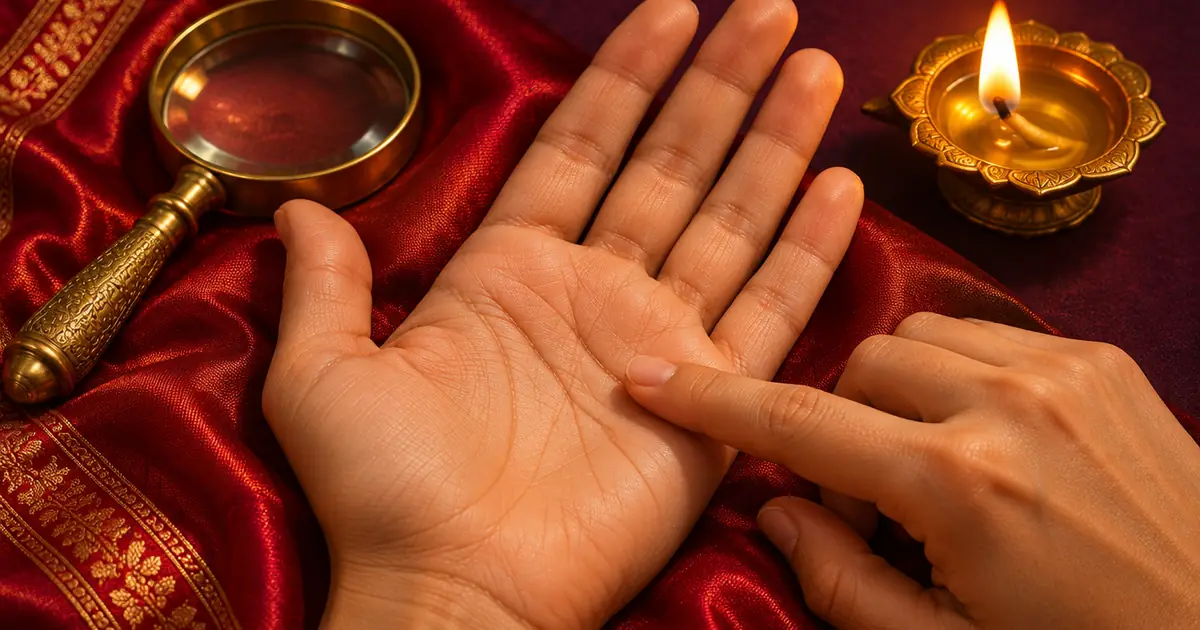
Keep reading
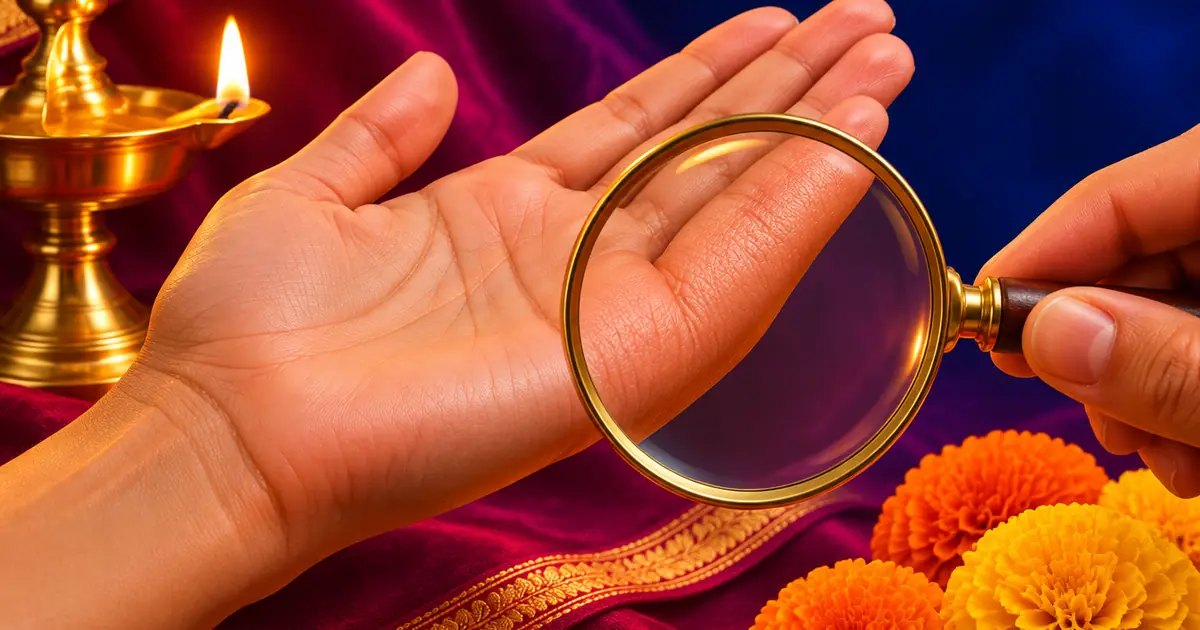
The Marriage Line in Palmistry
Marriage line palm reading explained: where the short lines under the little finger sit, what palmists take them to mean, and why they cannot count marriages.
Read article →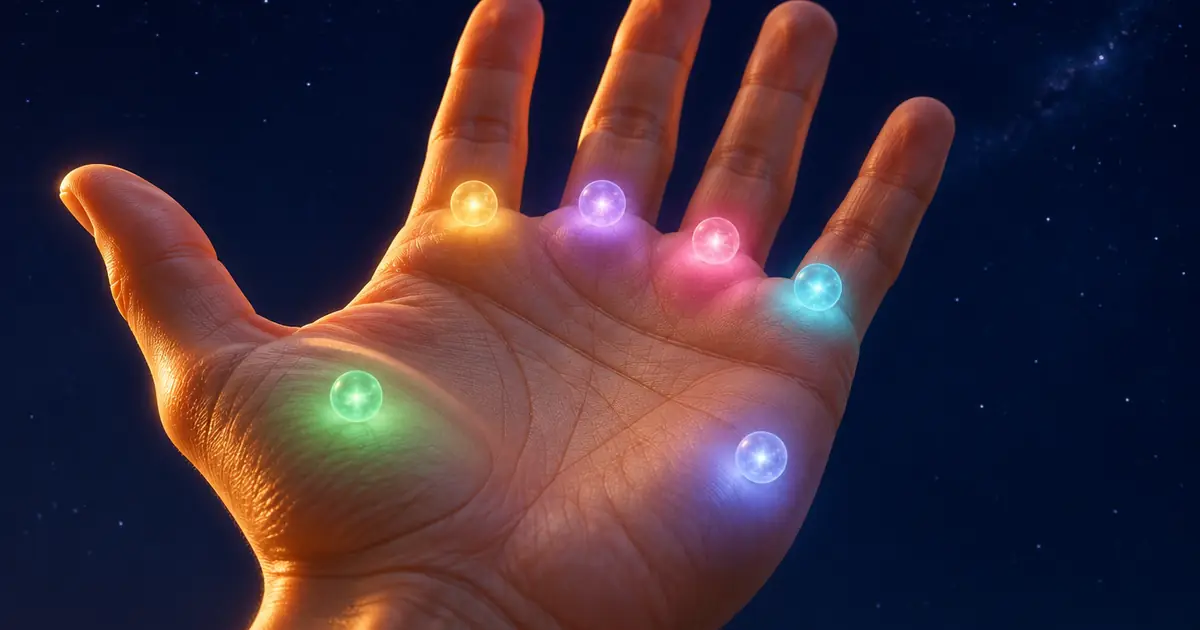
The Mounts of the Palm and Their Planets
Mounts in palmistry, mapped to the planets of Jyotish: what the Jupiter, Saturn, Sun, Mercury, Venus, Moon and Mars mounts are taken to show, and their limits.
Read article →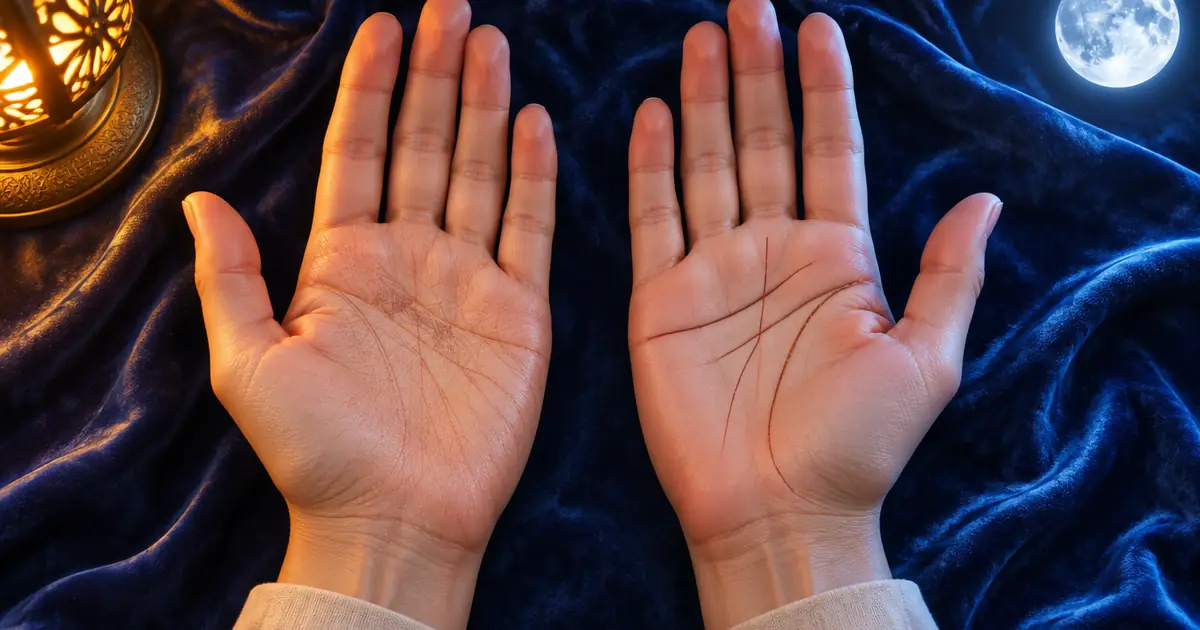
Comparing Both Palms: What Changes Between Your Left and Right Hand
Which hand does a palm reading use? Indian and Western conventions compared, what readers look for in the differences between your two palms, and photo tips.
Read article →Quick answers
Does a palm reading change if I am left-handed?
Which hand is used for palm reading if you are left-handed? How readers treat the dominant hand, the Indian convention, and why many look at both palms.
Read answer →Do I have to tell a psychic anything before the reading starts?
What happens in a psychic reading, and what must you share first? Often just your first name and question; you never need to tell more than you wish.
Read answer →Talk to Astrologer and Psychic Vijayram
Tell us what you are facing. If a reading is unlikely to help, you will be told that plainly.