
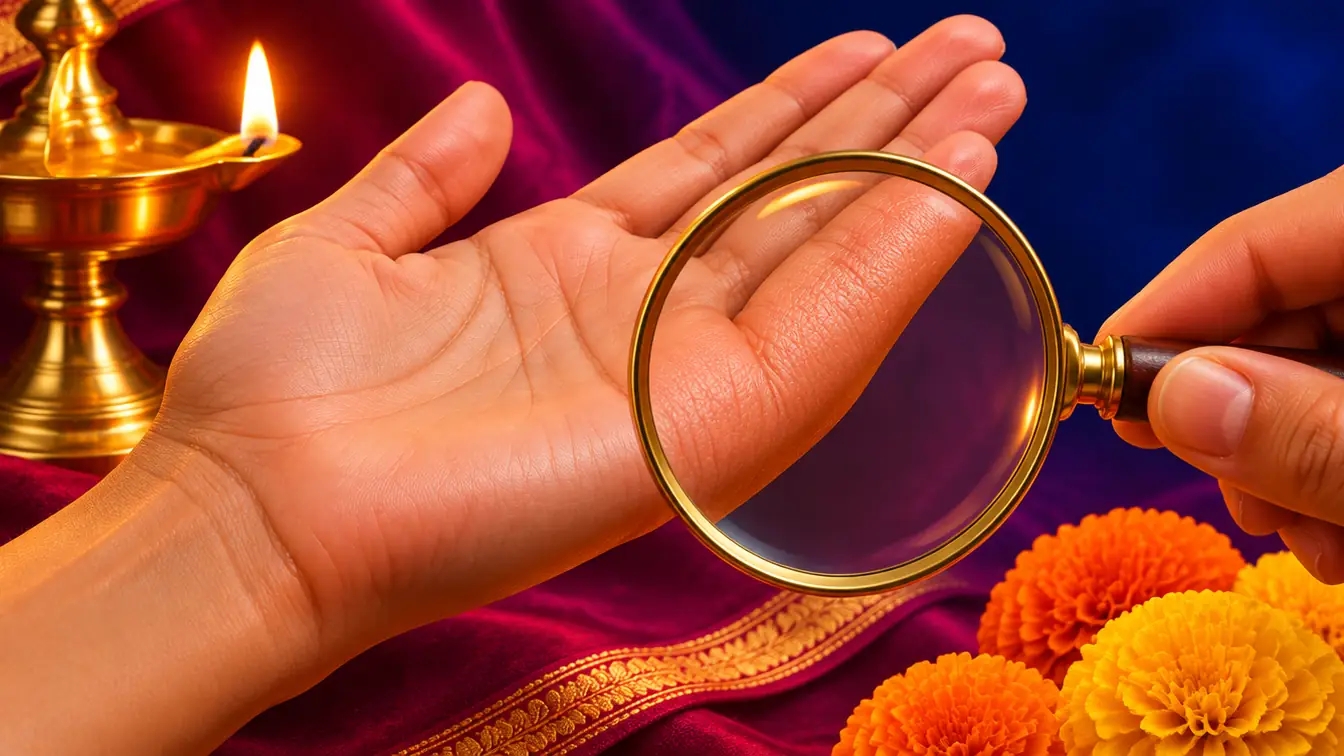
The Marriage Line in Palmistry
The marriage line is one or more short horizontal lines on the edge of the palm, below the little finger and above the heart line. Palmists read them as close emotional bonds, not legal marriages. Their number, length and direction are taken as themes for reflection, and they cannot reliably show how many times, or when, someone will marry.
Key takeaways
- Do not confuse it with the heart line below, which crosses the whole palm, or with the tiny vertical lines some palmists look for near it, which different schools read in different ways.
- A modern reading treats the marriage line as a sign of emotional attachment, not of ceremonies or paperwork.
- Some palmists estimate age by how close a line sits to the heart line or to the base of the little finger: nearer the heart line, earlier; nearer the finger, later.
- Samudrika Shastra, the Indian tradition of reading the body that includes palmistry, never judged one feature alone; the overview of Samudrika Shastra describes its broad scope.
- Many people who ask about the marriage line are really asking something else: why a match has not happened yet, whether they are "behind," how to answer parents.
Turn your hand sideways and look at the outer edge, between the base of the little finger and the end of the heart line. Most people find one to three short horizontal dashes there. Palmists call them marriage lines or relationship lines, and Hindi palmistry books call them vivah rekha. They are among the most asked-about features of the hand, especially from people being introduced to prospective matches, or whose parents keep asking when.
Where exactly is the marriage line?
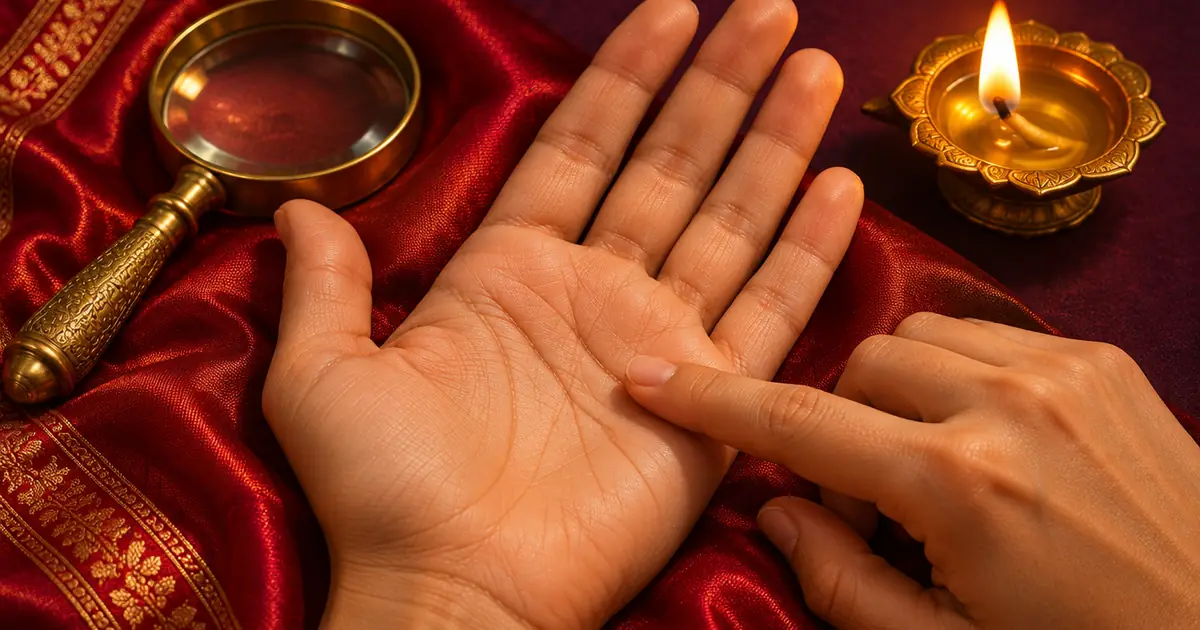
It sits on the percussion, the outer edge of the palm, on the area palmists call the mount of Mercury. It starts at the edge and runs inward, usually only a short way. Do not confuse it with the heart line below, which crosses the whole palm, or with the tiny vertical lines some palmists look for near it, which different schools read in different ways.
To see it clearly, curl the little finger slightly toward the palm. The skin folds, and the short lines stand out.
What do the old books say?
Older guides were blunt. Mrs. J. B. Dale's 1895 Indian Palmistry says these lines, "according to their number, denote the number of husbands or wives," and otherwise "may mean lovers." Western books of the same era went further, attaching separation, widowhood and even the manner of a partner's death to forks, islands and drooping ends.
That is the reading many people half-remember from a relative or a storefront palmist, and it is the part worth leaving behind. Counting lines to count marriages takes a symbol far too literally, and fearful readings about a partner's death or a divorce do real harm to people who are already anxious.
How careful readers use it today
A modern reading treats the marriage line as a sign of emotional attachment, not of ceremonies or paperwork. In broad strokes:
- A long, clear line is read as the capacity for a deep, lasting bond.
- Several short lines are read as attachments that mattered: first loves, long friendships, a relationship that ended.
- A faint line is read as feelings kept private, or a part of life still unfolding.
- A line that curves up or down is read as hope or caution in relationships, a theme for conversation rather than an outcome.
Even these gentler readings are only a starting point. The line is small and easily changed by how you hold your hand or how a photo is lit.
Why it is a poor tool for timing
Some palmists estimate age by how close a line sits to the heart line or to the base of the little finger: nearer the heart line, earlier; nearer the finger, later. The space is tiny, often less than an inch, so a millimeter either way moves the estimate by years. Readers also disagree about which end represents youth.
If your real question is when marriage is likely, palmistry is the weaker tool. In the Vedic tradition, marriage timing is read from the birth chart, through the seventh house, Venus and Jupiter, and the planetary periods, which is the work of a marriage timing consultation. Even then, the honest answer is a window of more and less favorable periods, not a date, as the short answer on which planets astrologers check for marriage timing explains.
Reading it with the rest of the hand
Samudrika Shastra, the Indian tradition of reading the body that includes palmistry, never judged one feature alone; the overview of Samudrika Shastra describes its broad scope. A palmist who looks at the marriage line will also look at:
- The heart line, for how you love and what you need from a partner.
- The mount of Venus at the base of the thumb, for warmth and affection.
- The head line, for how you make decisions about relationships.
- Both hands, since differences between them are part of the picture.
Markings on the main lines, such as breaks and forks, are covered in the post on broken, forked and chained palm lines.
When the question is really about family pressure
Many people who ask about the marriage line are really asking something else: why a match has not happened yet, whether they are "behind," how to answer parents. A palm cannot settle that. A calm conversation often helps more, and the palm reading session with Astrologer and Psychic Vijayram leaves room for it. Readings are held by phone, WhatsApp or video from clear photos of both hands, with the limit stated at the start: the hand offers themes for reflection, never a count of marriages or a date.
Common questions
I have no marriage line. Does that mean I will not marry?
No. Plenty of married people have faint or barely visible lines there, and plenty of single people have clear ones. The absence of a line is not a verdict on your future, whatever an older book or an anxious relative says.
My marriage line droops toward the heart line. Is that bad?
Older books gave a drooping line gloomy meanings. A careful reader treats it, at most, as a theme of disappointment or caution in close relationships, something to reflect on, not an event that is coming.
Should the marriage line on both hands match?
They often differ. Many readers treat the dominant hand as the more current picture and the other as background, but neither hand shows a fixed outcome. The post on comparing left and right palms covers this.
Can I send photos of my hand for a marriage line reading?
Yes. Photograph the outer edge of each hand from the side in daylight, with the fingers gently curled so the small lines show, plus a flat photo of each palm.
Related service
Keep reading
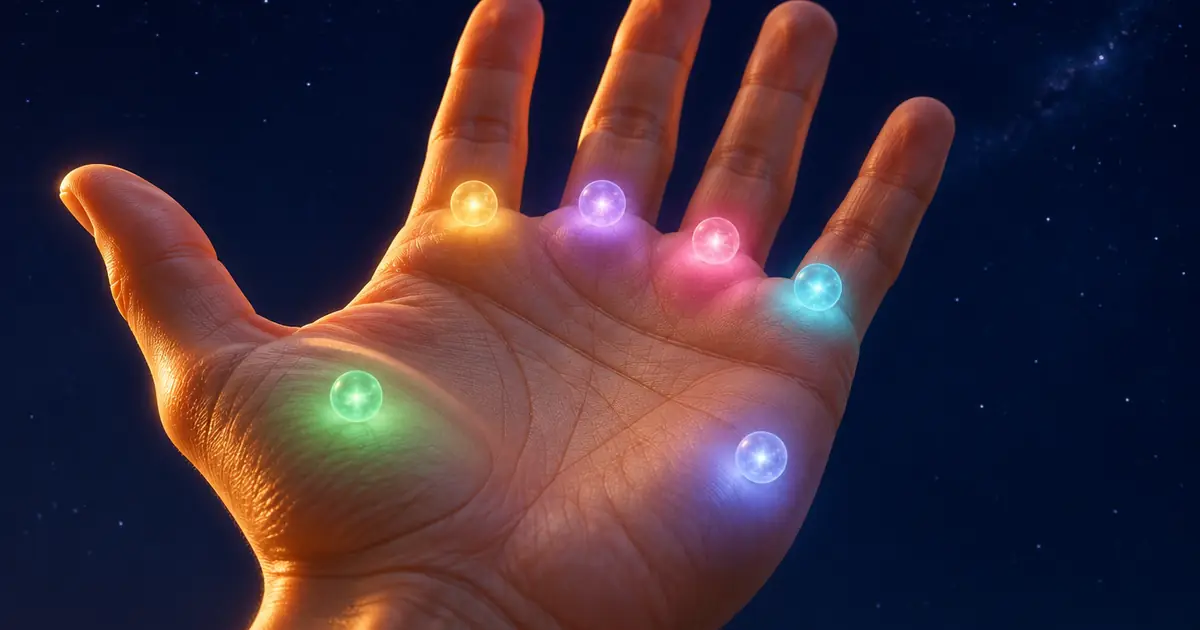
The Mounts of the Palm and Their Planets
Mounts in palmistry, mapped to the planets of Jyotish: what the Jupiter, Saturn, Sun, Mercury, Venus, Moon and Mars mounts are taken to show, and their limits.
Read article →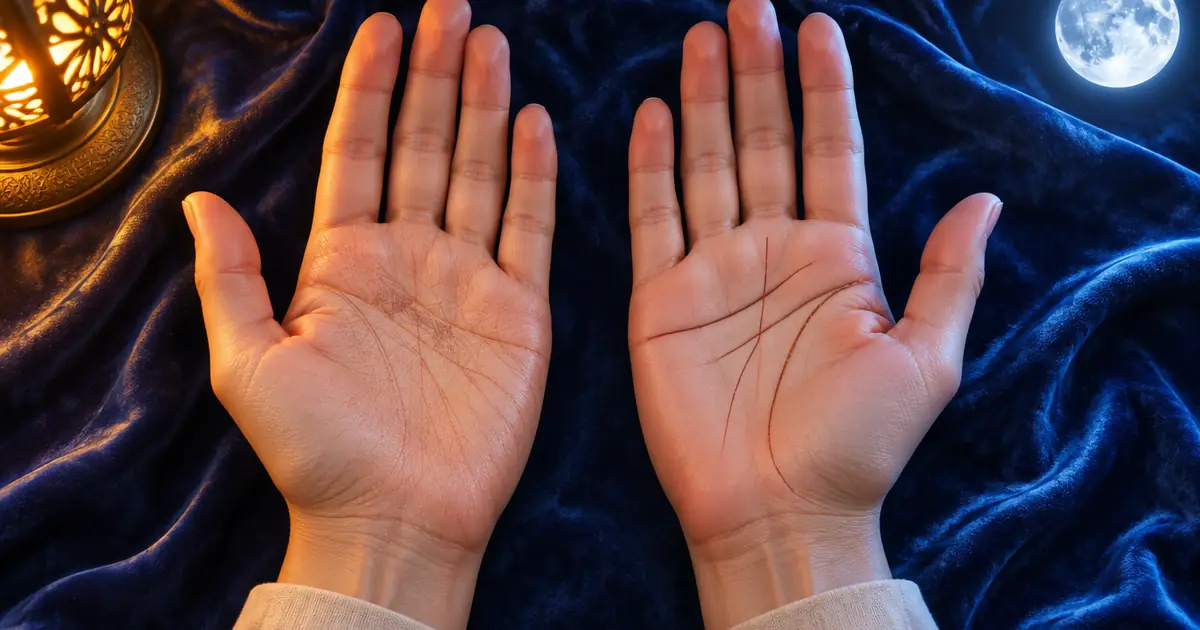
Comparing Both Palms: What Changes Between Your Left and Right Hand
Which hand does a palm reading use? Indian and Western conventions compared, what readers look for in the differences between your two palms, and photo tips.
Read article →
Life Path Numbers One to Nine
Life path number meaning from one to nine: how to calculate yours from your birth date, a note on each number, master numbers and what numerology cannot do.
Read article →Quick answers
Does a palm reading change if I am left-handed?
Which hand is used for palm reading if you are left-handed? How readers treat the dominant hand, the Indian convention, and why many look at both palms.
Read answer →Do I have to tell a psychic anything before the reading starts?
What happens in a psychic reading, and what must you share first? Often just your first name and question; you never need to tell more than you wish.
Read answer →Talk to Astrologer and Psychic Vijayram
Tell us what you are facing. If a reading is unlikely to help, you will be told that plainly.