
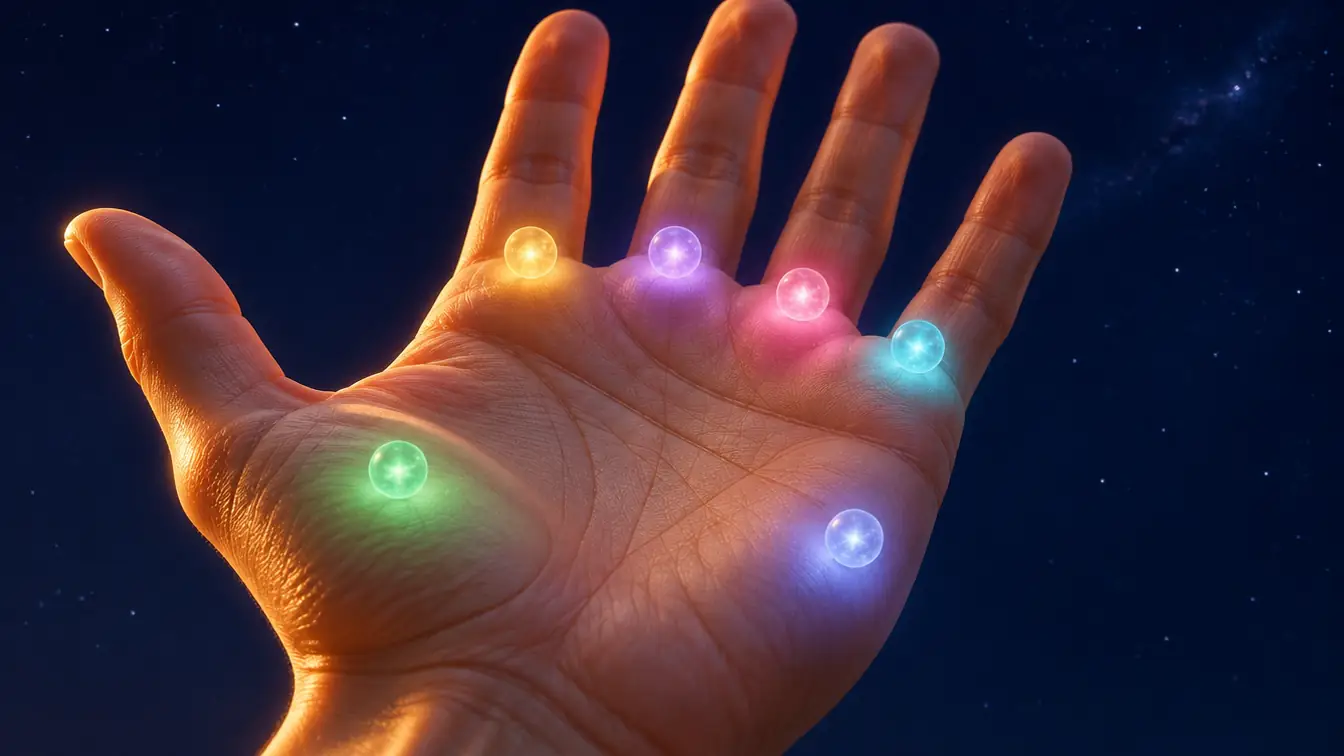
The Mounts of the Palm and Their Planets
Palmistry names the fleshy pads of the palm after planets: Jupiter under the index finger, Saturn under the middle, the Sun under the ring finger, Mercury under the little finger, Venus at the thumb, the Moon on the outer lower palm and Mars in two places. Each mount's fullness is read as a theme of character, not a forecast.
Key takeaways
- The mount names come from the seven classical planets visible to the naked eye: the Sun, the Moon, Mercury, Venus, Mars, Jupiter and Saturn.
- Schools disagree about which area to call upper and which lower, so ask your reader which convention they follow.
- Palmists look at three things: whether a mount is full, flat or overdeveloped; whether it leans toward a neighboring finger; and what markings sit on it.
- Jupiter is expansion and teaching in both.
- A full palm reading in the Hasta Samudrika tradition puts all of this together, from photos or live on video.
Press the palm of one hand with the thumb of the other and you will feel soft raised pads at the base of each finger, at the root of the thumb and along the outer edge. Palmists call these the mounts, and they name each one after a planet. The names were not chosen at random: palmistry has long borrowed its vocabulary from astrology, and in India that means the grahas of Jyotish.
Seven classical planets, nine grahas
The mount names come from the seven classical planets visible to the naked eye: the Sun, the Moon, Mercury, Venus, Mars, Jupiter and Saturn. Vedic astrology uses those seven plus Rahu and Ketu, the two lunar nodes, making the Navagraha, or nine grahas. So when an Indian palmist reads a mount, the planet's familiar character from the birth chart comes along with it: Guru's wisdom, Shani's discipline, Shukra's affection.
A tour of the hand
| Mount | Where it sits | Graha | Themes palmists read |
|---|---|---|---|
| Jupiter | Base of the index finger | Guru (Brihaspati) | Leadership, learning, faith, ambition |
| Saturn | Base of the middle finger | Shani | Responsibility, patience, seriousness, solitude |
| Sun (Apollo) | Base of the ring finger | Surya | Recognition, creativity, confidence |
| Mercury | Base of the little finger | Budha | Speech, trade, quick thinking, humor |
| Venus | Root of the thumb, inside the life line | Shukra | Affection, pleasure, art, warmth |
| Moon | Outer edge of the palm, toward the wrist | Chandra | Imagination, mood, intuition, travel |
| Mars | Two areas, plus the hollow between them | Mangala | Courage, drive, temper, endurance |
Mars needs a word of explanation. One Mars area sits between the thumb and the index finger, above the Venus mount; the other sits on the outer edge between the Mercury and Moon mounts; the hollow in the middle of the palm is often called the plain of Mars. Schools disagree about which area to call upper and which lower, so ask your reader which convention they follow.
How fullness is read
Palmists look at three things: whether a mount is full, flat or overdeveloped; whether it leans toward a neighboring finger; and what markings sit on it. Mrs. J. B. Dale's 1895 Indian Palmistry gives the classic pattern for the Jupiter mount: "when very fully shown denotes pride, tyranny; when deficient in size denotes idleness." Most mounts are read that way, as a quality that serves you in moderation and strains you in excess.
Modern readers soften the old labels. A full Venus mount is read as warmth and a liking for comfort, not "inconstancy," as Dale had it. A flat Saturn mount is read as someone who prefers company to solitude, not as a person who "will never make much headway." The theme stays; the verdict goes.
Where palmistry and Jyotish agree
The planetary characters line up well. Jupiter is expansion and teaching in both. Saturn is weight, time and duty in both. Mercury is speech and commerce. Venus is love and beauty. The Moon is feeling and the mind. That shared vocabulary is why readers who practice both, as Astrologer and Psychic Vijayram does, can talk about a palm and a chart in the same conversation without translating.
Some readers like to compare the two directly: a strong Jupiter mount beside a well-placed Jupiter in the Vedic birth chart, or a prominent Moon mount in someone with a Moon on the ascendant. When they agree, it is an interesting echo. When they disagree, it is a question to explore, not a contradiction to resolve.
Where the borrowing breaks down
- A chart has context; a mount has flesh. In Jyotish, a planet's strength depends on its sign, house, aspects and running period. A mount's fullness depends partly on the muscles of the hand, your work, your age and your weight. A pianist, a carpenter and a software developer in the Loop will have different pads for reasons that have nothing to do with planets.
- Two grahas have no mount. Rahu and Ketu are central to Vedic astrology but sit awkwardly in palmistry. Some Indian palmists assign them zones in the palm; their maps do not agree.
- A mount has no timing. The chart has dashas and transits. A mount describes a tendency, never a date.
Reading your own mounts
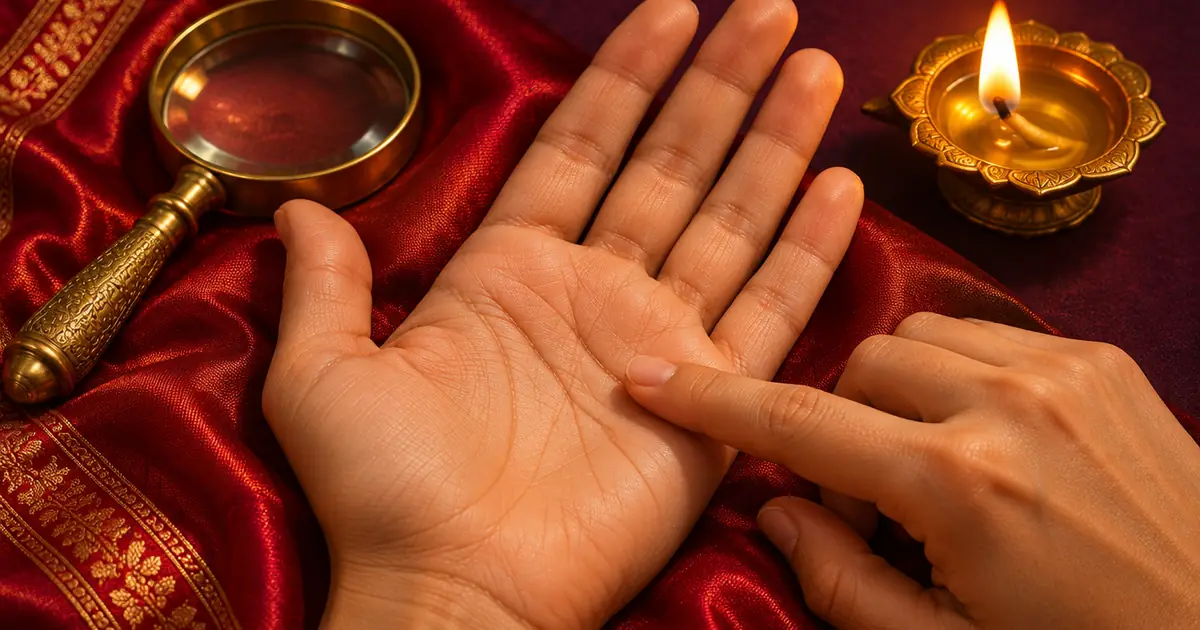
- Hold your palm flat under daylight, then tilt it so light crosses it from the side. The raised areas cast small shadows.
- Compare each pad with its neighbors rather than with someone else's hand.
- Notice whether a mount drifts toward the next finger: a Saturn mount leaning toward Jupiter, for example, is read as seriousness tempered by ambition.
- Look at both hands; differences between them are part of the reading, as the post on comparing the left and right palm explains.
- Then look at the lines that run across or end on each mount, covered in the post on what breaks, forks and chains on the lines mean.
A full palm reading in the Hasta Samudrika tradition puts all of this together, from photos or live on video. It describes character and themes for reflection. It cannot see illness, guarantee success in any field or tell you what will happen next year.
Common questions
Which mount is the most important?
No single mount outranks the others. Readers usually notice which one or two stand out on your hand, then read them with the lines and the shape of the fingers. A balanced palm with no dominant mount is common and perfectly ordinary.
Can my mounts change?
The pads of the hand change with age, weight, work and exercise, so their fullness can shift over years. That is one reason a careful reader treats mounts as a description of the present, not a fixed destiny.
Where are Rahu and Ketu on the palm?
Some Indian palmists add zones for Rahu and Ketu, usually in the middle and lower center of the palm, but teachers disagree about the exact areas. Many readers leave them out of a palm reading and look at them in the birth chart instead.
Should I wear a gemstone for a weak mount?
A flat mount is not a defect that needs a remedy. If someone recommends a costly stone on the strength of your palm alone, ask for the reasoning and take your time. The short answer on whether to wear a gemstone an astrologer suggests covers the questions to ask.
Related service
Keep reading
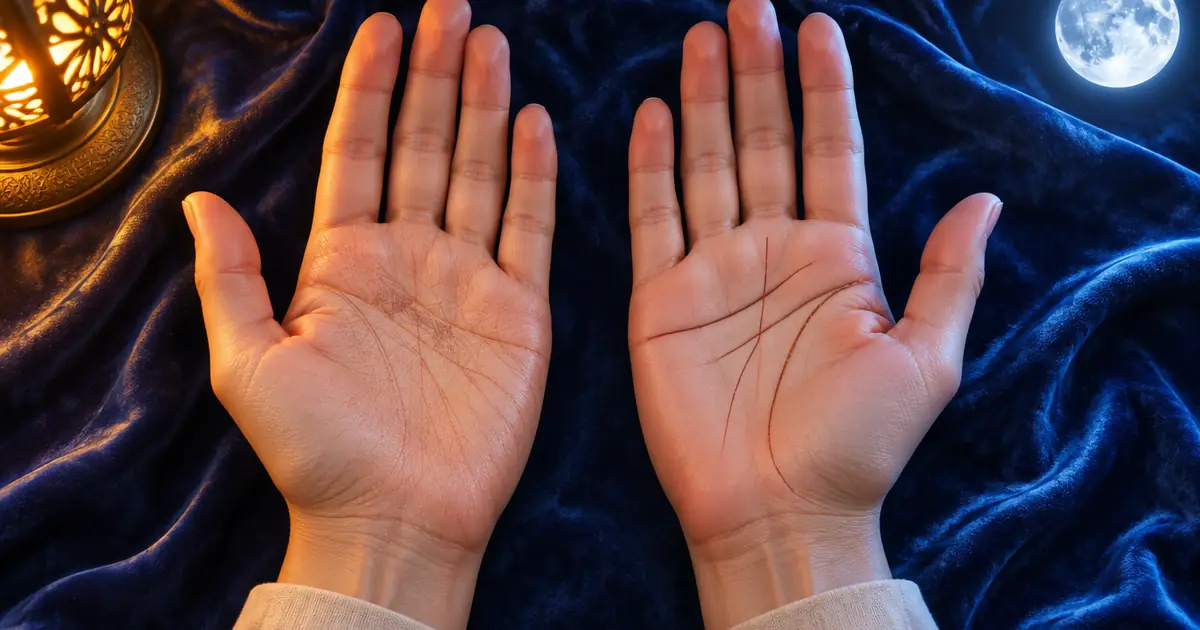
Comparing Both Palms: What Changes Between Your Left and Right Hand
Which hand does a palm reading use? Indian and Western conventions compared, what readers look for in the differences between your two palms, and photo tips.
Read article →
Life Path Numbers One to Nine
Life path number meaning from one to nine: how to calculate yours from your birth date, a note on each number, master numbers and what numerology cannot do.
Read article →
Changing Your Name After Marriage: A Numerology View for Chicago Couples
Thinking about a name change after marriage? The Cook County paperwork comes first; then what numerology claims about a new surname, hyphen or spelling tweak.
Read article →Quick answers
Does a palm reading change if I am left-handed?
Which hand is used for palm reading if you are left-handed? How readers treat the dominant hand, the Indian convention, and why many look at both palms.
Read answer →Do I have to tell a psychic anything before the reading starts?
What happens in a psychic reading, and what must you share first? Often just your first name and question; you never need to tell more than you wish.
Read answer →Talk to Astrologer and Psychic Vijayram
Tell us what you are facing. If a reading is unlikely to help, you will be told that plainly.