
From Devon to 26th Street: How Chicago's Communities Guard Against the Evil Eye
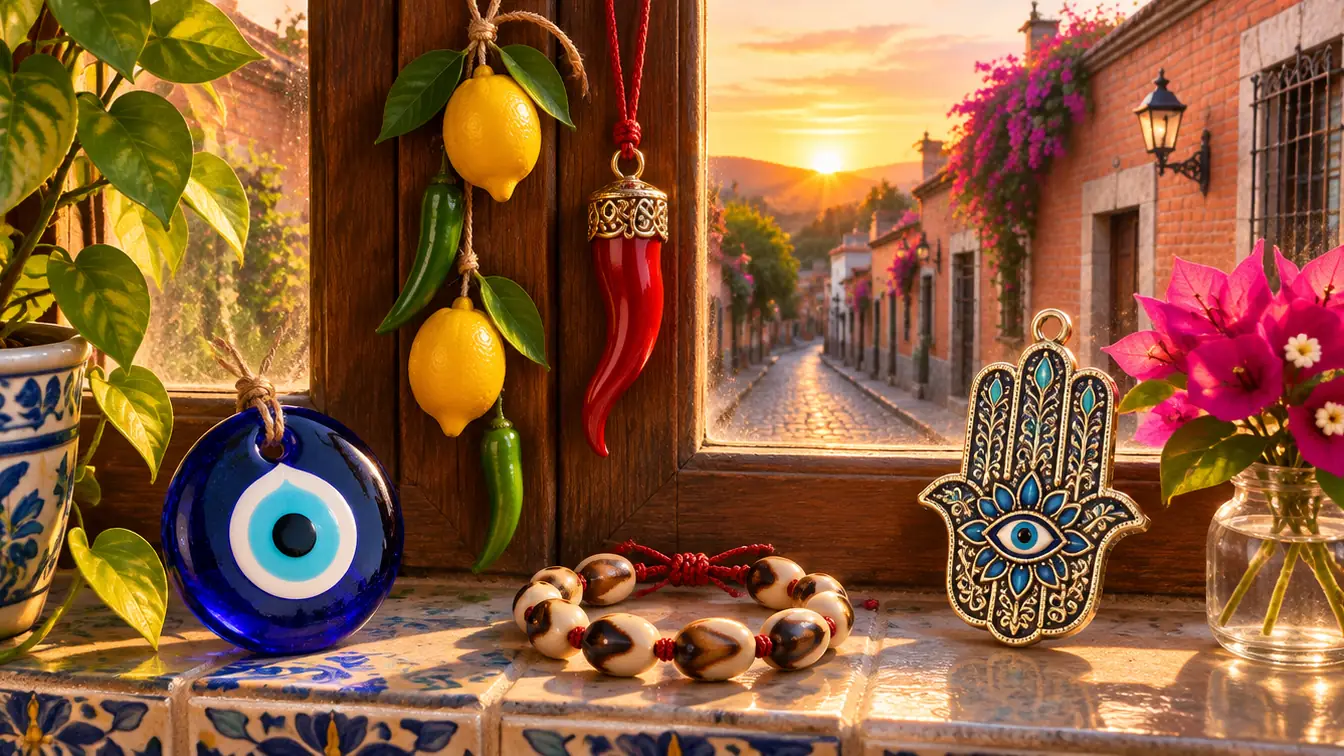
The evil eye in Chicago goes by many names: nazar on Devon Avenue and in the South Asian suburbs, mal de ojo in Pilsen and Little Village, mati in Greek families and malocchio in Italian ones. The shared belief is that envy or excess praise can harm. The customs differ, from black dots and lemons to eggs and blue glass.
Key takeaways
- In Pilsen and along 26th Street in Little Village, centers of Mexican American Chicago, the evil eye is mal de ojo.
- Greektown runs along Halsted Street between Van Buren and Madison on the Near West Side, with the National Hellenic Museum nearby, as the history of Greektown records.
- Italian American families speak of malocchio and keep the cornicello, a small red horn, or make a hand gesture to deflect it.
- Across every version, three ideas repeat.
- Whatever name a family uses, it helps to look at plain explanations before deciding the evil eye is at work.
Ask around Chicago about the evil eye and you will get a dozen names for one idea. A grandmother near Devon Avenue calls it nazar. A mother on 26th Street calls it mal de ojo. A yiayia in a Greek family calls it mati, and an Italian nonna calls it malocchio. Wherever the belief travels, the worry is the same: that envy, or even too much admiration, can harm someone you love. The evil eye in Chicago is not one custom but many, living a few miles apart.
The belief is very old and very widespread, found across the Mediterranean, the Middle East, South Asia and Latin America, as the overview of the evil eye across cultures describes. Here is how it looks in some of the city's communities.
Devon Avenue and the South Asian suburbs: nazar
On Devon Avenue in West Ridge, where Indian, Pakistani and Bangladeshi shops line the street, and in suburbs such as Naperville, Schaumburg and Aurora where many South Asian families now live, the words are nazar, buri nazar or drishti. Common customs include:
- A small black dot of kajal, the kala tika, on a baby's forehead or behind the ear.
- A black thread around the wrist, ankle or waist.
- Nazar utarna: salt, dried chilies or mustard seeds circled around a person and then discarded or dropped in a flame.
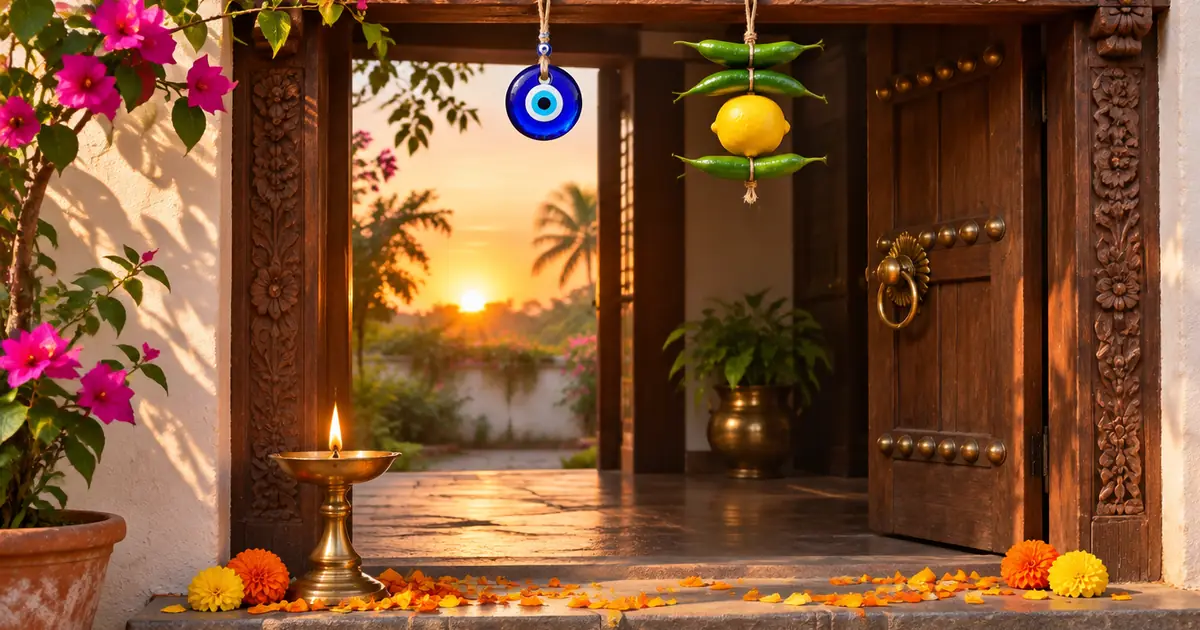
- A lemon and seven green chilies hung at a shop or home door, explained in the post on the nimbu mirchi custom at shop doors.
- Saying "Mashallah" or "nazar na lage" when praising a child, to take the sting out of admiration.
Muslim families often recite protective verses from the Quran; Hindu families may recite the Hanuman Chalisa or a short stotra. The neighborhood page for West Ridge and Devon Avenue has more on the street itself.
Pilsen and Little Village: mal de ojo
In Pilsen and along 26th Street in Little Village, centers of Mexican American Chicago, the evil eye is mal de ojo. Research on Latin American beliefs, such as the study of variation and persistence in Latin American evil eye beliefs, finds the idea holding on across generations and borders. Customs include:
- Touching a baby while admiring it, so the admiration does not "stick."
- A red bracelet, often with an ojo de venado seed, on an infant's wrist.
- A limpia, a cleansing in which an egg is passed over the body with prayer and then cracked into a glass of water to be read.
The neighborhood pages for Pilsen and Little Village describe both communities.
Greektown and Greek families: mati
Greektown runs along Halsted Street between Van Buren and Madison on the Near West Side, with the National Hellenic Museum nearby, as the history of Greektown records. Greek families across the city and suburbs know the evil eye as mati. The blue eye charm hangs from rearview mirrors and baby strollers, a little spitting sound, "ftou ftou," follows a compliment, and someone in the family who knows the prayer may do the xematiasma, often with drops of olive oil in a glass of water.
Italian, Middle Eastern and Jewish homes
Italian American families speak of malocchio and keep the cornicello, a small red horn, or make a hand gesture to deflect it. Turkish and Middle Eastern households hang the blue glass nazar bead, and many also use the hamsa, a palm-shaped amulet. In Yiddish-speaking homes the phrase kein ayin hara, often run together as "keinehora," follows good news. West Ridge itself was earlier a largely Jewish neighborhood, so these customs have shared the same blocks for decades.
What all of them share
Across every version, three ideas repeat. Vulnerable people, especially babies and new brides, need protection. Praise and envy are risky, so they are softened with a phrase, a touch or a deliberate flaw. And when someone seems affected, the family responds with care: a prayer, a ritual, an elder's attention. Seen that way, the evil eye is a language for worry and love as much as a belief about harm.
Ordinary causes first
Whatever name a family uses, it helps to look at plain explanations before deciding the evil eye is at work. A fussy baby after a crowded party is often overtired. A slow month for a shop may be the season. Headaches and exhaustion deserve a doctor. The post on sorting nazar from a hard week goes through common examples.
How sessions here approach it
Astrologer and Psychic Vijayram works in the South Asian tradition of nazar prayers, and respects the other customs families bring with them. In the evil eye prayers and protection session, held by phone, WhatsApp or video, the reader listens first, talks through ordinary causes, and offers a short prayer only if you want one. No one is ever named as the source.
The limit
Evil eye removal is faith-based work with no result promised; it does not heal an illness or settle a family quarrel. These customs offer comfort and a way to express care. They work best beside a doctor, a counselor and ordinary good sense, never instead of them.
Common questions
What is mal de ojo, and is it the same as nazar?
Mal de ojo is the Spanish name for the evil eye, common in Mexican and other Latin American families. The core belief matches nazar: a strong gaze, often admiring or envious, is thought to harm someone vulnerable, especially a baby. The customs for preventing and removing it are different.
What does nazar mean?
Nazar is a word for sight or gaze used in Hindi, Urdu, Punjabi, Persian and other languages. In everyday speech, buri nazar, the bad gaze, means the evil eye: harm believed to come from envy or too much praise. Nazar is also the name of the blue glass eye charm.
Is there someone in Chicago who removes the evil eye?
Many families keep the custom at home, usually led by a grandmother or aunt who knows the prayers. Others ask a priest or elder from their own community. Astrologer and Psychic Vijayram offers nazar prayers by phone or video, explained calmly, with the fee stated first and nobody blamed.
Is it disrespectful to wear an evil eye charm from another culture?
Most people who share the belief are glad to see the symbol worn with respect. Learning a little about where your charm comes from, and buying from people of that tradition when you can, is a kind way to wear it.
Related service
Keep reading
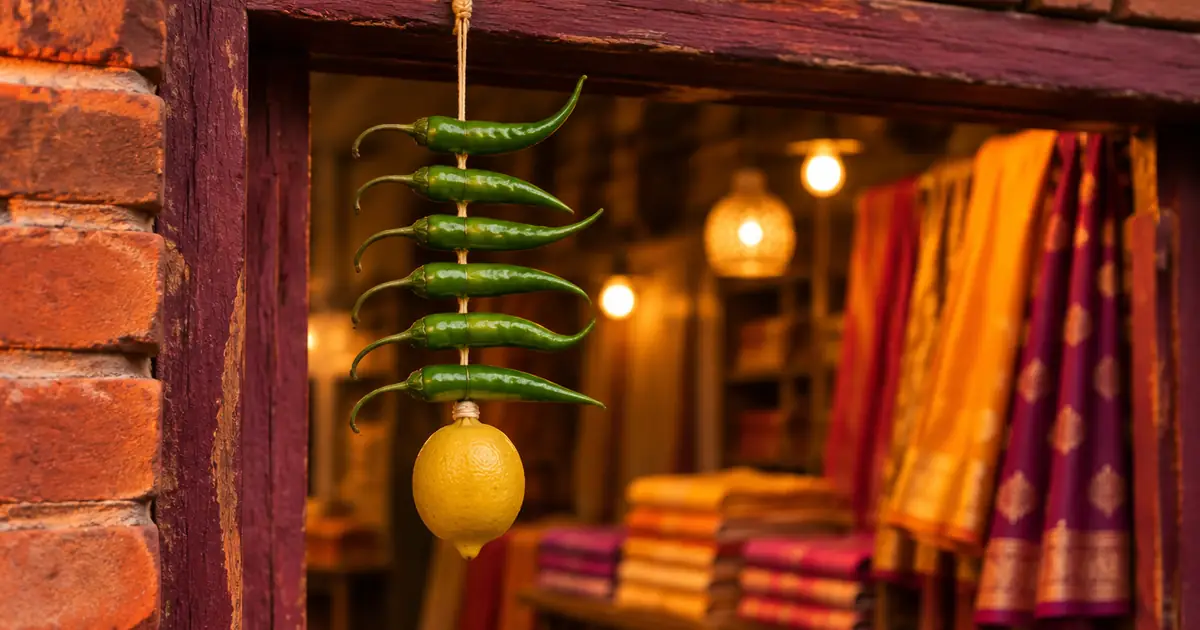
Lemon-and-Chili Charms at Shop Doors: The Nimbu Mirchi Custom
Nimbu mirchi meaning, told from Devon Avenue: why some South Asian shopkeepers hang a lemon and seven chilies at the door, and how to keep one.
Read article →
Blessing a New Chicago Apartment
Apartment cleansing in Chicago, done simply: a move-in blessing that respects your lease, the neighbors through the wall and the smoke detector in the hallway.
Read article →
Griha Shanti in a Suburban Subdivision: Havan Smoke, HOA Rules and Neighbors
Planning a house blessing in the Chicago suburbs: griha shanti and havan smoke, smoke alarms, HOA and village rules, parking and a word to the neighbors.
Read article →Quick answers
Why do families tie a black thread against nazar?
What is the evil eye, or nazar, and why do families tie a black thread against it? A belief shared by many cultures, and what the custom is meant to express.
Read answer →Is feeling drained around certain people a sign of negative energy?
Is feeling drained around certain people one of the signs of negative energy? Common feelings, the ordinary causes to rule out first, and healthy boundaries.
Read answer →Talk to Astrologer and Psychic Vijayram
Tell us what you are facing. If a reading is unlikely to help, you will be told that plainly.