

Nazar and a Newborn's First Forty Days in Chicago
For evil eye baby protection, many Chicago families keep the old customs: a small black dot behind the ear, a prayer and fewer visitors in the first forty days. Keep them safe. Use only lead-free kajal away from the eyes, skip threads and beads on a sleeping baby, and call your pediatrician for fever, poor feeding or unusual crying.
Key takeaways
- Before any custom, a few health rules that matter far more than nazar:
- Many South Asian families observe a rest of about forty days after a birth, called jaappa in parts of India and sawa mahina in Punjab and Pakistan.
- The small black mark, often placed on the forehead, cheek or behind the ear, is meant to make the baby a little less perfect, so that praise does not turn into harm.
- A black thread around the wrist, ankle or waist, or a bracelet with a blue eye bead, is a much-loved gift.
- Discarding the salt or chilies in the trash, without burning, keeps the meaning and skips the risk.
A new baby in a South Asian family in Chicago often arrives with two sets of instructions. One comes from the hospital: feeding schedules, safe sleep, when to call the doctor. The other comes from a grandmother on a video call from Hyderabad or Lahore, or from the next room: put a black dot behind the ear, keep visitors away, say a prayer when people praise the baby. Evil eye baby protection is one of the oldest family customs there is. This post is about keeping it with love and keeping it safe.
Your pediatrician comes first
Before any custom, a few health rules that matter far more than nazar:
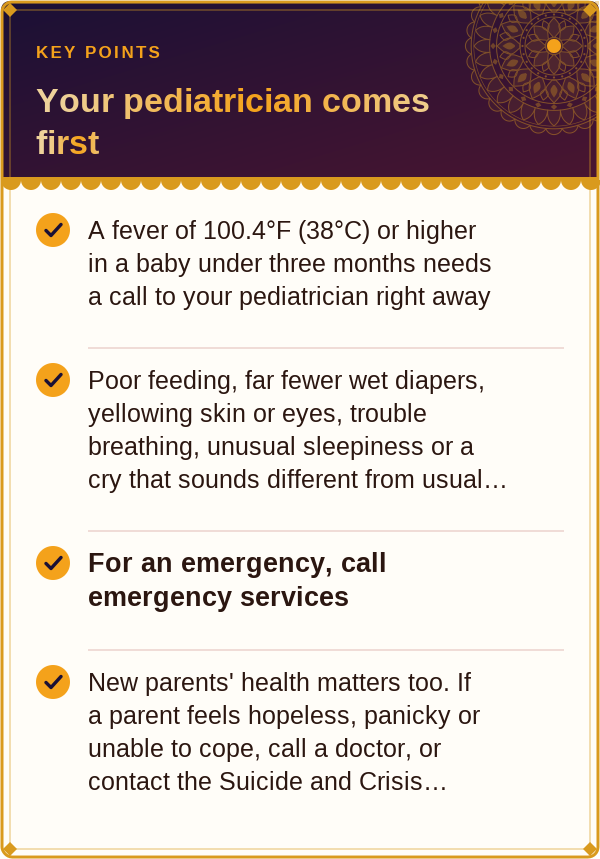
- A fever of 100.4°F (38°C) or higher in a baby under three months needs a call to your pediatrician right away.
- Poor feeding, far fewer wet diapers, yellowing skin or eyes, trouble breathing, unusual sleepiness or a cry that sounds different from usual all need a doctor, not a ritual.
- For an emergency, call emergency services.
- New parents' health matters too. If a parent feels hopeless, panicky or unable to cope, call a doctor, or contact the Suicide and Crisis Lifeline at any hour.
Tradition and medicine are not rivals here. A grandmother who wants the baby protected from harm wants exactly what the pediatrician wants.
The forty days, and why families guard them
Many South Asian families observe a rest of about forty days after a birth, called jaappa in parts of India and sawa mahina in Punjab and Pakistan. The mother rests and eats special foods, relatives take over the household, and visitors are limited. Mexican families in Chicago often keep a similar rest called la cuarentena. Part of the reason given is nazar: a newborn is thought to be especially open to envious or admiring eyes.
The custom happens to match modern advice. Fewer visitors means fewer infections, and asking guests to wash their hands and stay home when sick is something any pediatrician will endorse. Chicago has one of the largest Indian American communities in the country, as the article on Indians in Chicago notes, so you are far from the first family to raise these customs with a pediatrician.
The black dot: kala tika
The small black mark, often placed on the forehead, cheek or behind the ear, is meant to make the baby a little less perfect, so that praise does not turn into harm. It is the most common nazar custom of all.
The safety issue is the product. The FDA warns that kohl, kajal and surma can contain dangerous amounts of lead, which is especially harmful to babies and young children. If you keep the custom:
- Use a product clearly labeled lead-free, or a safe alternative your pediatrician approves.
- Place a tiny dot behind the ear or on the sole of the foot, not near the eyes.
- Never line a baby's eyes with kajal.
Threads, bracelets and beads
A black thread around the wrist, ankle or waist, or a bracelet with a blue eye bead, is a much-loved gift. Here the medical advice is firm: the American Academy of Pediatrics cautions parents against necklaces, bracelets and beads on babies because of the risk of choking and strangulation. Safe-sleep guidance also says a baby's crib should be bare.
Families have found gentle workarounds. The mother wears the thread on her own wrist. The thread is tied to the stroller or car seat handle, outside the baby's reach, and removed for sleep. A small nazar charm hangs by the door of the nursery instead of on the baby. Or the prayer stands alone.
Nazar utarna for a baby
Some grandmothers circle salt or dried chilies around the baby and then throw them away or drop them into a flame. If your family does this, circle gently, without touching the baby's face, and do any burning in a different room with a window open, far from the baby. Chili smoke irritates small lungs. Discarding the salt or chilies in the trash, without burning, keeps the meaning and skips the risk.
Praise and protective words
Many families soften praise with a phrase: "Mashallah," "nazar na lage," "keep her safe." Teaching visitors to add a blessing to a compliment is a lovely custom with no safety concerns at all.
When grandparents insist
Disagreements about these customs can be painful in the first weeks, when everyone is tired. It helps to agree on what you will keep and how, and to give the safety reason plainly: "We will keep the tika behind the ear with the lead-free one, and the thread goes on my wrist because the doctor said no bracelets." Most elders accept a change that protects the baby.
A prayer, if you want one
Some parents like a short protective prayer said for the baby, especially after a crowded naming ceremony or a family visit. The evil eye prayers and protection session with Astrologer and Psychic Vijayram can include a simple recitation on video, by phone, WhatsApp or video, with ordinary causes talked through first. Families planning a name often also ask about the nakshatra naming tradition for Chicago-born babies, and the post on recording a newborn's birth minute explains why the exact time matters for the chart.
The limit
No dot, thread or prayer can protect a baby from illness, and none replaces a pediatrician, vaccinations or safe sleep. These customs carry a family's love and hopes. Keep them gently and safely, and let the doctor handle the health of your child.
Common questions
Is kajal safe to put on a baby?
Many imported kajal, kohl and surma products contain lead, and the FDA warns against using them. If your family wants the black dot, use a product clearly labeled lead-free, put a tiny mark behind the ear rather than near the eyes, and never line a baby's eyes.
Can my baby wear a black thread or nazar bracelet?
Pediatricians caution against necklaces, bracelets and beads on babies because of the risk of choking and strangulation. Keep the thread on a parent's wrist, tie it to the stroller handle while you are walking, or let a prayer take its place.
What does kala tika mean?
Kala tika means black mark. It is a small dot of kajal placed on a baby, traditionally to spoil the baby's perfection just enough that admiring eyes do not cause harm. It belongs to a wider family of nazar customs built on the idea of a deliberate flaw.
My baby cries every evening. Is it nazar?
Evening fussiness is very common in the first months and usually has ordinary causes such as tiredness, hunger or colic. Talk to your pediatrician, especially if the crying is new, high-pitched or comes with fever or poor feeding. A prayer can comfort you too, beside that care.
Related service

Keep reading

Vahan Puja Before the First Snow: Blessing a Car for Chicagoland Winters
Vahana puja in Chicago: what a new car blessing involves, how to ask an area temple about one, and the winter car checks that should go with it.
Read article →
Nazar or Just a Hard Week? Sorting Ordinary Causes First
Evil eye symptoms people describe, from tiredness to a fussy baby, set beside the ordinary causes to check first, with a doctor first for anything physical.
Read article →
Nazar Utarna Step by Step: Salt, Chili and Fire Safety in a Modern Home
Evil eye remedies at home, step by step: nazar utarna with salt, chilies, mustard seeds or alum, kept as tradition, with smoke-alarm and pet cautions.
Read article →Quick answers
Why do families tie a black thread against nazar?
What is the evil eye, or nazar, and why do families tie a black thread against it? A belief shared by many cultures, and what the custom is meant to express.
Read answer →Is feeling drained around certain people a sign of negative energy?
Is feeling drained around certain people one of the signs of negative energy? Common feelings, the ordinary causes to rule out first, and healthy boundaries.
Read answer →Talk to Astrologer and Psychic Vijayram
Tell us what you are facing. If a reading is unlikely to help, you will be told that plainly.