
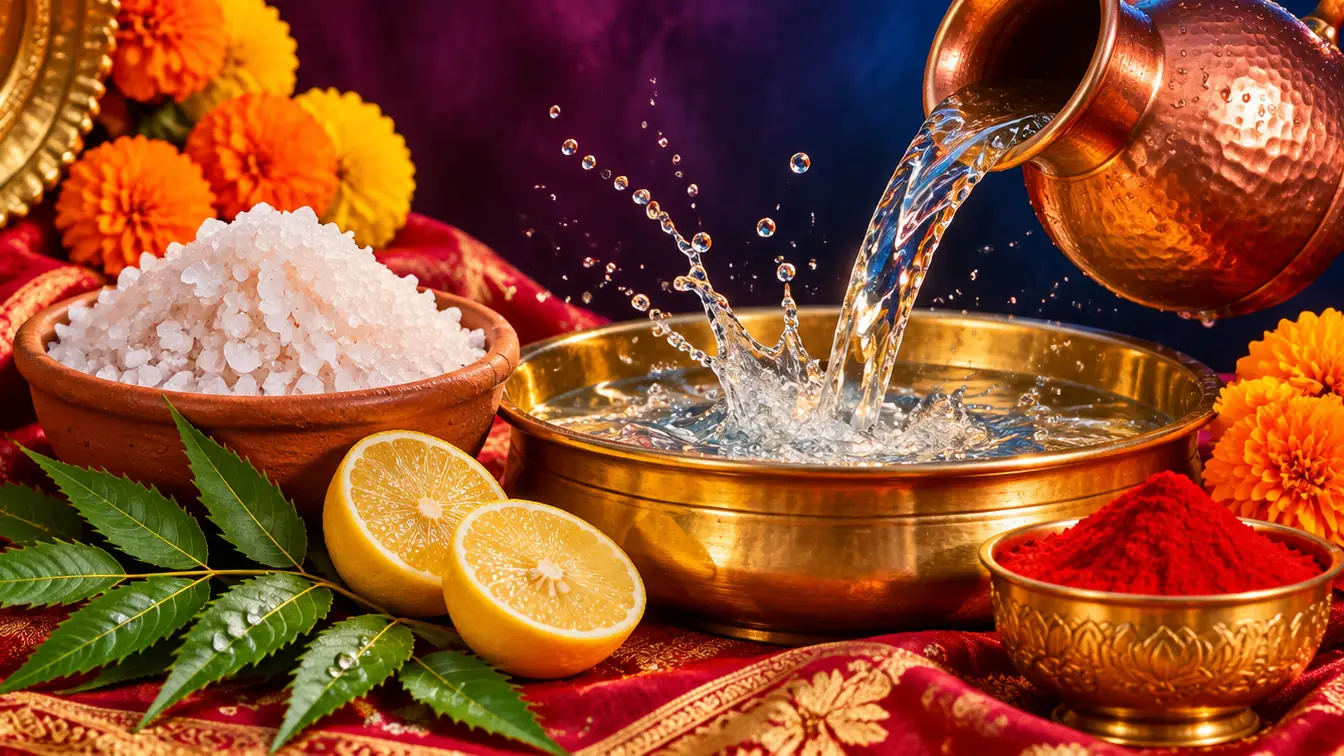
Salt, Water and Other Household Cleansing Customs
A salt cleansing ritual uses ordinary salt as a sign of purity: a pinch in the mop water, a small bowl left in a corner overnight, a handful circled around a person and discarded. Versions appear from Japan to the Mediterranean to South Asia. Treat it as faith practice, keep salt away from pets, and expect meaning, not measurable results.
Key takeaways
- Salt was precious long before refrigeration.
- A spoonful of salt in a bucket of water, used to mop the floors, especially near the entrance.
- Families sprinkle Ganga jal, water from the Ganges kept in a small bottle, around a room.
- To make aura cleansing salt at home, mix coarse sea salt with a few dried herbs or petals you associate with calm, such as rosemary, lavender or rose, and keep it in a jar.
- The salt on Chicago's sidewalks is not for rituals.
Chicagoans know salt well. Every winter, trucks spread it on the streets and residents scatter it on their front steps until the sidewalks crunch. Inside many homes, salt has a quieter job: a pinch in the mop bucket, a bowl on a windowsill, a handful circled around a child and thrown away. A salt cleansing ritual is one of the most widespread household customs in the world, and it is worth knowing where it comes from and how to keep it sensibly.
Where the customs come from
Salt was precious long before refrigeration. It preserved food, which made it a natural symbol of what lasts and what stays pure. Many traditions took up that meaning:
- The Hebrew Bible requires salt with offerings and speaks of a "covenant of salt," a lasting bond, as the Jewish Encyclopedia's entry on salt records. Bread and salt are still offered to bless a new home in many Jewish and Eastern European families.
- Shinto purification, harae, uses salt to cleanse spaces and people, as the article on harae explains. Small cones of salt beside restaurant doorways and the salt thrown by sumo wrestlers come from the same idea.
- South Asian families use rock salt in nazar utarna, the custom of circling salt around a person to take away the evil eye, and add salt to the water used to wash floors.
- Catholic tradition includes blessed salt, sometimes placed at doorways or windows.
- European folk custom says to throw a pinch of spilled salt over the left shoulder.
Different faiths, different reasons, one shared sense that salt marks a space as clean and protected.

How families use salt at home
Salt water mopping
A spoonful of salt in a bucket of water, used to mop the floors, especially near the entrance. Some families do it weekly, some before festivals. Use a small amount, avoid unsealed wood and natural stone, and rinse with plain water now and then to prevent a film.
The salt bowl
A small bowl of coarse salt left in a corner or by the door for a day or a week, then thrown away. People often place one after guests, an illness or a quarrel.
Salt at the threshold
A thin line or a few grains across the doorway, a custom found in several traditions. In an apartment hallway, keep it inside your own door.
Circling salt around a person
The heart of nazar utarna, described step by step in nazar utarna with salt, chili and fire safety.
Water customs that go with it
Salt rarely works alone. Families sprinkle Ganga jal, water from the Ganges kept in a small bottle, around a room. Others use tulsi water, rose water, or holy water blessed at church. Some wipe the doorframe with clean water at the start of the week. The common thread is the same as with salt: a simple, visible act of making a place fresh.
How to make aura cleansing salt at home
To make aura cleansing salt at home, mix coarse sea salt with a few dried herbs or petals you associate with calm, such as rosemary, lavender or rose, and keep it in a jar. Use a handful in a bath or a small bowl in your room. It is a symbolic blend, not a product with proven effects, so keep it simple:
- Do not add essential oils if you have cats; many are toxic to them.
- Keep it away from your eyes, and test a little on your skin first if you plan to bathe with it.
- Label the jar so nobody mistakes it for cooking salt.
The aura and energy cleansing session is the place to talk through personal practices like this one.
A note on road salt and pets
The salt on Chicago's sidewalks is not for rituals. It may contain other de-icing chemicals, and it is hard on dogs' paws. Salt in general is a real hazard for pets: Pet Poison Helpline warns that salt poisoning can come from homemade salt dough, from eating snow mixed with de-icer and from salt water. Keep ritual bowls up high, sweep spilled salt, and never use salt to make a pet vomit.
Salt and a heavy home
If a home feels heavy, salt can be one part of a fresh start, along with fresh air, light and a clear-out. The post on clearing a closed-up winter home without smoke puts these together into a short routine, and the short answer on whether feeling drained around people means negative energy looks at the personal side. When you would like a reader to suggest prayers or walk through a cleansing with you, the negative energy and spiritual cleansing session with Astrologer and Psychic Vijayram is held by phone, WhatsApp or video.

The limit
Salt cannot fix mold, a draft, an illness or a family argument, and no ritual has been shown to pull anything out of the air. These customs carry meaning that people across the world have valued for centuries. Keep them for that meaning, keep them safe for children and pets, and look after the practical problems directly.
Common questions
Does salt really absorb negative energy?
That is a traditional belief, not something that has been measured. Salt has stood for purity and protection in many cultures for thousands of years, which is why it appears in so many rituals. Use it for what it means to you, and look after ordinary causes of a heavy home separately.
Is it okay to mop with salt water every day?
It is safe for most tile and vinyl floors if you use only a little and rinse occasionally, since salt can leave a dull film. Avoid it on unsealed wood and natural stone, which salt can damage. Many families do it weekly rather than daily.
What should I do with the salt after a ritual?
Throw it away or dissolve it in running water. Do not cook with it, sprinkle it in the garden or leave it where pets can reach it. Most traditions say ritual salt should not be reused.
Can I use Epsom salt for a cleansing bath?
Yes, many people do. Epsom salt is magnesium sulfate, not table salt, and is sold for soaking. Treat the bath as a calming ritual, keep the water comfortably warm, and skip it if you have broken skin or a doctor has advised against it.
Related service
Keep reading

Abhichara in the Old Texts: What Black Magic Meant Historically
The black magic meaning in Indian tradition: abhichara in the Atharvaveda, how the law books punished harmful rites, and what honest practice says today.
Read article →
A 40-Day Hanuman Chalisa Practice for Tuesdays and Saturdays
Hanuman Chalisa for protection, explained plainly: why the forty verses are recited for courage, and a simple Tuesday and Saturday plan for keeping count.
Read article →
Graha Shanti at Home or at a Temple: Choosing How to Hold One
What a graha shanti puja is, when an astrologer suggests one, and how Chicago families choose between a home rite, a temple booking or joining online.
Read article →Quick answers
Is feeling drained around certain people a sign of negative energy?
Is feeling drained around certain people one of the signs of negative energy? Common feelings, the ordinary causes to rule out first, and healthy boundaries.
Read answer →Why do families tie a black thread against nazar?
What is the evil eye, or nazar, and why do families tie a black thread against it? A belief shared by many cultures, and what the custom is meant to express.
Read answer →Talk to Astrologer and Psychic Vijayram
Tell us what you are facing. If a reading is unlikely to help, you will be told that plainly.