
Day of the Dead in Pilsen and Pitru Paksha: Two Ways of Remembering
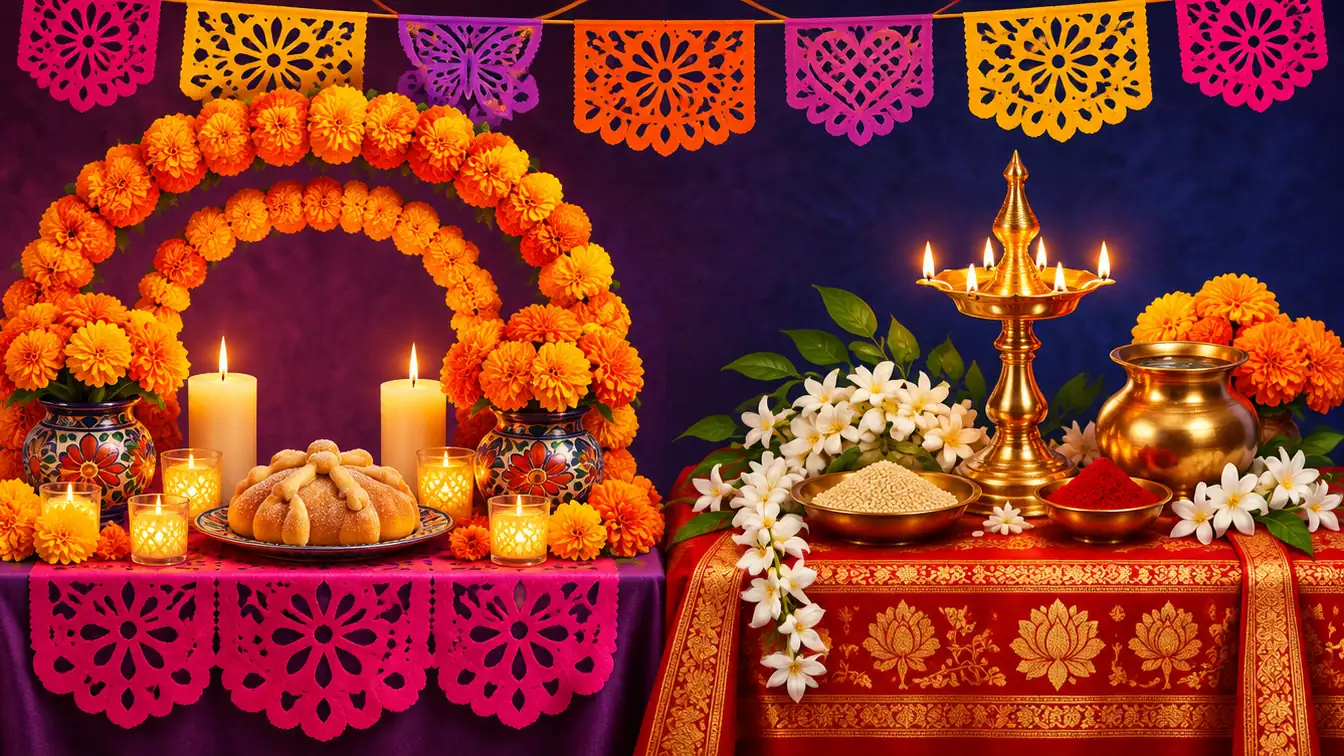
Day of the Dead in Pilsen, seen in home ofrendas and the National Museum of Mexican Art's annual exhibition, welcomes the dead back with marigolds, photos and favorite foods each November. Pitru Paksha, a two-week Hindu observance in early autumn, honors ancestors with water, sesame and rice offerings. Both are ways of remembering, each with its own meaning.
Key takeaways
- Festivals of remembrance can hit hard in the first year.
- Pilsen, on the Lower West Side, was named by Czech immigrants in the nineteenth century and is now predominantly Mexican American.
- Pitru Paksha, "the half-month of the ancestors," falls in the dark half of a lunar month in early autumn, usually September or October.
- Día de los Muertos grew from Indigenous Mexican traditions blended with Catholic All Saints' and All Souls' Days.
- Chicago has plenty of households where a Mexican American and an Indian American family have joined through marriage.
In late October, Pilsen fills with marigold orange. Bakeries sell pan de muerto, murals seem brighter than usual, and families set out photographs, candles and a loved one's favorite foods on home altars. A few weeks earlier, in kitchens across Chicago's Hindu households, someone may have poured water mixed with black sesame through their fingers while saying the names of parents and grandparents. Two traditions, two calendars, one shared instinct: the dead are not forgotten.
If the loss is recent
Festivals of remembrance can hit hard in the first year. If you are struggling, lean on people first: family, friends, your parish or temple. The NAMI Chicago Helpline offers emotional support and referrals, and if grief turns into thoughts of not wanting to go on, contact the Suicide and Crisis Lifeline at any hour. Ritual can comfort. It is not the only help you deserve.
Day of the Dead in Pilsen
Pilsen, on the Lower West Side, was named by Czech immigrants in the nineteenth century and is now predominantly Mexican American. It is home to the National Museum of Mexican Art in Harrison Park, which mounts a Día de los Muertos exhibition every October, featuring altars and art by Chicago-area and international artists and described as the largest of its kind in the country.
The celebration itself centers on the first two days of November. As the overview of the Day of the Dead explains, it is a time when families believe the dead return to visit, and they prepare for them with joy as much as sorrow. Common elements of an ofrenda include:
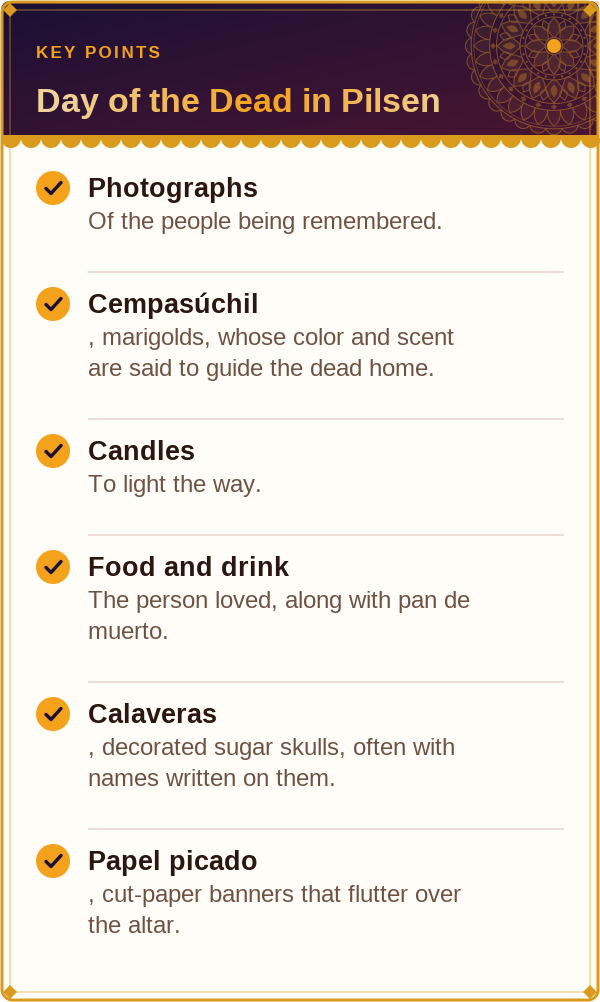
- Photographs of the people being remembered.
- Cempasúchil, marigolds, whose color and scent are said to guide the dead home.
- Candles to light the way.
- Food and drink the person loved, along with pan de muerto.
- Calaveras, decorated sugar skulls, often with names written on them.
- Papel picado, cut-paper banners that flutter over the altar.
Families also visit and clean graves, sometimes staying to eat and tell stories. The mood is warm, colorful and often funny, because the dead are being welcomed, not mourned.
Pitru Paksha
Pitru Paksha, "the half-month of the ancestors," falls in the dark half of a lunar month in early autumn, usually September or October. The Hindu American Foundation's explainer on Pitru Paksha describes it as a period of about fifteen days dedicated to ancestors, also called Shraddha, when families set aside housewarmings, engagements and weddings to remember and reflect. Common practices include:
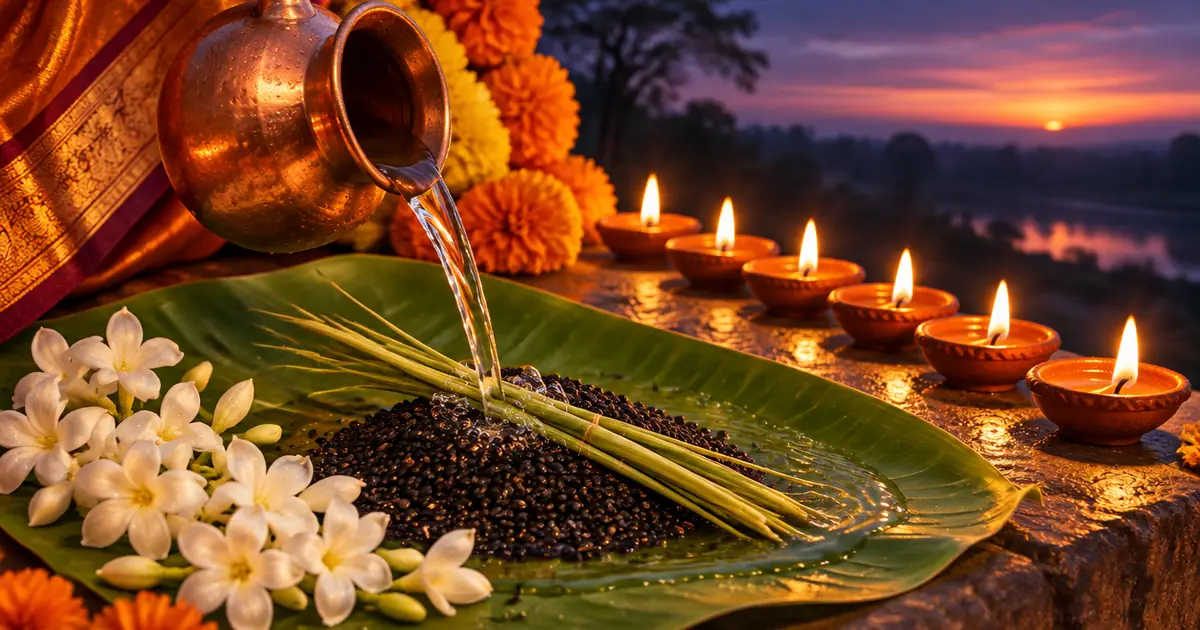
- Tarpan, offering water mixed with black sesame while naming the departed.
- Pinda, rice balls offered to ancestors, often with a priest's help.
- Feeding others: crows, cows, priests or people in need, as an offering on the ancestors' behalf.
- Restraint: many families avoid new purchases, celebrations and certain foods during these two weeks.
The tone is quieter and more solemn than Día de los Muertos, focused on duty, gratitude and peace for the departed. The post on keeping Pitru Paksha simply in Chicago has a step-by-step home tarpan.
Side by side
| Día de los Muertos | Pitru Paksha | |
|---|---|---|
| When | November 1 and 2, every year | About fifteen lunar days in early autumn; dates shift yearly |
| Where | Home altars, graves, community exhibitions | Home, riverbanks or temples, often with a priest |
| Mood | Welcoming, festive, bittersweet | Solemn, dutiful, grateful |
| Key offerings | Marigolds, candles, photos, favorite foods | Water, sesame, rice, food given to others |
| Who is honored | Family and friends who have died | Ancestors, traditionally three generations |
Similar, not the same
It is tempting to say these are "the same thing in different clothes." They are not. Día de los Muertos grew from Indigenous Mexican traditions blended with Catholic All Saints' and All Souls' Days. Pitru Paksha rests on Hindu ideas of karma, rebirth and the debts owed to ancestors. Each has its own theology and its own meaning for the families who keep it. Respect starts with not flattening them into one.
What they do share is worth noticing: a set time each year to say names out loud, to feed someone in memory of the dead, and to admit that the people we lost still shape us.
For families who hold both
Chicago has plenty of households where a Mexican American and an Indian American family have joined through marriage. Some keep both observances, each in its own season, with grandparents from each side leading their own rite. That tends to work better than combining them on one altar. Children learn that remembrance can take more than one form, and neither tradition is diluted.
How a reader can help, and where it stops
Astrologer and Psychic Vijayram offers ancestral prayers (Pitru) guidance by phone, WhatsApp or video: help with timing a home tarpan for Chicago, understanding the rites, or simply talking about a parent or grandparent. Any prayer suggested is optional and explained first. For dreams of the departed, see dreams of relatives who have died. For the neighborhood itself, see the Pilsen area page and the downtown, West and South Sides region page.
What a reading cannot do
A reading cannot tell you whether an ancestor is at peace, confirm that the dead visit, or replace the priest, elder or family who lead your own tradition's rites. It can offer guidance and a respectful space to remember, in whichever tradition is yours.
Common questions
Can a Hindu family visit the Day of the Dead exhibition?
Yes. The museum's exhibition is open to the public, and many visitors from other traditions come each year. Go as a respectful guest: look, learn, and leave the altars as you found them.
Is it all right to build an ofrenda if I am not Mexican?
Many Mexican Americans welcome interest, but some feel uneasy when the custom is borrowed as decoration. If you have a real connection, through family, marriage or friendship, ask someone from that tradition to show you how. If you do not, visiting and learning is a respectful choice.
Do I have to observe Pitru Paksha on exact dates in Chicago?
The observance follows the Hindu lunar calendar, so the dates shift each year and should be calculated for Chicago, not copied from an Indian calendar. If you do not know an ancestor's lunar death date, Mahalaya Amavasya, the last day, is traditionally set aside for everyone.
Is it a bad sign if I dream of a parent around these days?
No. Dreams of the dead are common, especially around anniversaries and festivals of remembrance. Many families take them as a gentle reminder to pray or light a lamp.
Related service
Keep reading
Lunch-Hour Readings for Loop Office Workers
A psychic reading downtown in Chicago without leaving the Loop: how to fit a focused 30-minute phone session into a workday and still get something useful.
Read article →
Why Some Readers Combine Intuition and a Birth Chart
Psychic vs astrologer: intuitive insight and birth chart calculation answer different questions. How a combined reading works, and when one method is enough.
Read article →
Mediums and Psychics: Which One for Grief, Which One for Decisions
Psychic vs medium, sorted by the question you bring: a medium for grief and remembrance, a psychic for decisions, and what to do when a question is both.
Read article →More from Downtown, West and South Sides
Lunch-Hour Readings for Loop Office Workers
A psychic reading downtown in Chicago without leaving the Loop: how to fit a focused 30-minute phone session into a workday and still get something useful.
Read article →
A Heavy Atmosphere at Work: A Faith-Based View for Loop Offices
Negative energy at work in a Loop office usually means workload, conflict or burnout. When HR and rest help most, and quiet desk-level practices for the rest.
Read article →
Chicago's Trading Floors and the Chart: Mercury, Jupiter and Risk-Heavy Careers
Astrology for traders and finance workers in the Loop: how Mercury, Jupiter and Rahu are read for risk-heavy careers, with no market tips or financial advice.
Read article →Local pages
Astrologer in The Loop
An astrologer in the Loop, Chicago, for office workers and downtown residents: career, timing and Vedic chart readings by phone, WhatsApp or video.
View location →
Psychic Reading and Astrology in River North
Psychic reading in River North, Chicago, for gallery, design and nightlife workers: tarot, intuitive and Vedic chart sessions by phone, WhatsApp or video.
View location →
Astrologer in South Loop
An astrologer in South Loop, Chicago, near the Museum Campus and Adler Planetarium: Vedic birth chart and timing readings by phone, WhatsApp or video.
View location →Quick answers
Do I have to tell a psychic anything before the reading starts?
What happens in a psychic reading, and what must you share first? Often just your first name and question; you never need to tell more than you wish.
Read answer →What should I do if a reader keeps asking for more money?
How to spot a psychic scam: what to do if a reader uses fear and keeps asking for more money. Stop paying, keep records, report it, and know the warning signs.
Read answer →Talk to Astrologer and Psychic Vijayram
Tell us what you are facing. If a reading is unlikely to help, you will be told that plainly.