

Tarpan in a Chicago Apartment: A Simple Pitru Paksha Practice
A simple home tarpan during Pitru Paksha uses water, black sesame and the names of the departed, offered facing south on the lunar day that matches each death, calculated for Chicago rather than India. Families who want a full shraddha with pinda offerings, or who are in the first year after a loss, usually ask a priest.
Key takeaways
- Pitru Paksha can land hard when a parent or grandparent died this year.
- Pitru Paksha is the sixteen lunar days of the waning moon that end at Mahalaya Amavasya, usually falling in September or early October.
- A tithi begins at the same instant everywhere on earth, but it falls on different calendar dates depending on where you stand.
- Tradition favors late morning to early afternoon.
- A simple vegetarian meal, often cooked without onion or garlic, is made in the ancestors' memory and shared.
If the loss is recent
Pitru Paksha can land hard when a parent or grandparent died this year. Ritual can comfort, but it is not the only support you need. If sleep, appetite or work have been off for weeks, talk to your doctor. Grief counselors, faith communities and hospice bereavement programs exist for exactly this; the National Library of Medicine's page on bereavement lists what to expect and where to find help. If grief turns into thoughts of ending your life, contact the Suicide and Crisis Lifeline at any hour, or call emergency services in an emergency. Nothing below replaces that care.
What the observance is
Pitru Paksha is the sixteen lunar days of the waning moon that end at Mahalaya Amavasya, usually falling in September or early October. During those days families remember the departed of three generations with water, sesame, food and prayer. The Hindu American Foundation's explanation of Pitru Paksha gives a short overview of its meaning and customs.
Keeping it in the USA usually means keeping it in a smaller space, on a working weekday, without a river nearby or a family priest down the street. The core of the rite fits those limits well.
Setting the date for Chicago, not India
Each ancestor is traditionally honored on the tithi, or lunar day, on which they died. A tithi begins at the same instant everywhere on earth, but it falls on different calendar dates depending on where you stand. Shraddha customs look at which tithi is running around midday and early afternoon at your location. Because Chicago is ten and a half hours behind India in September, the Chicago date for a given tithi can be a day different from the one printed in an Indian calendar, or in a WhatsApp message from relatives.
Use a panchang calculated for Chicago, as the post on why a Chicago panchang starts from local sunrise explains. If no tithi is known, use Mahalaya Amavasya.
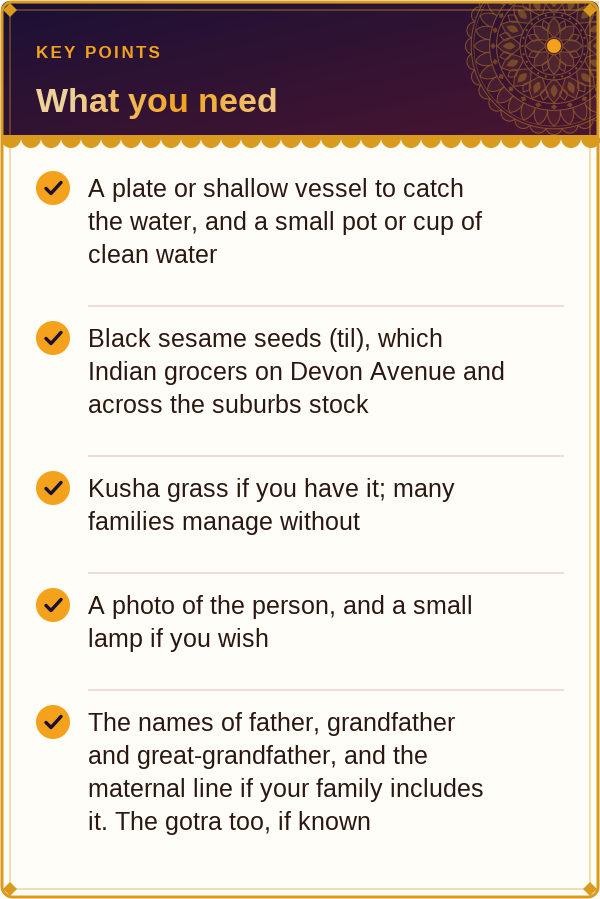
What you need
- A plate or shallow vessel to catch the water, and a small pot or cup of clean water.
- Black sesame seeds (til), which Indian grocers on Devon Avenue and across the suburbs stock.
- Kusha grass if you have it; many families manage without.
- A photo of the person, and a small lamp if you wish.
- The names of father, grandfather and great-grandfather, and the maternal line if your family includes it. The gotra too, if known.
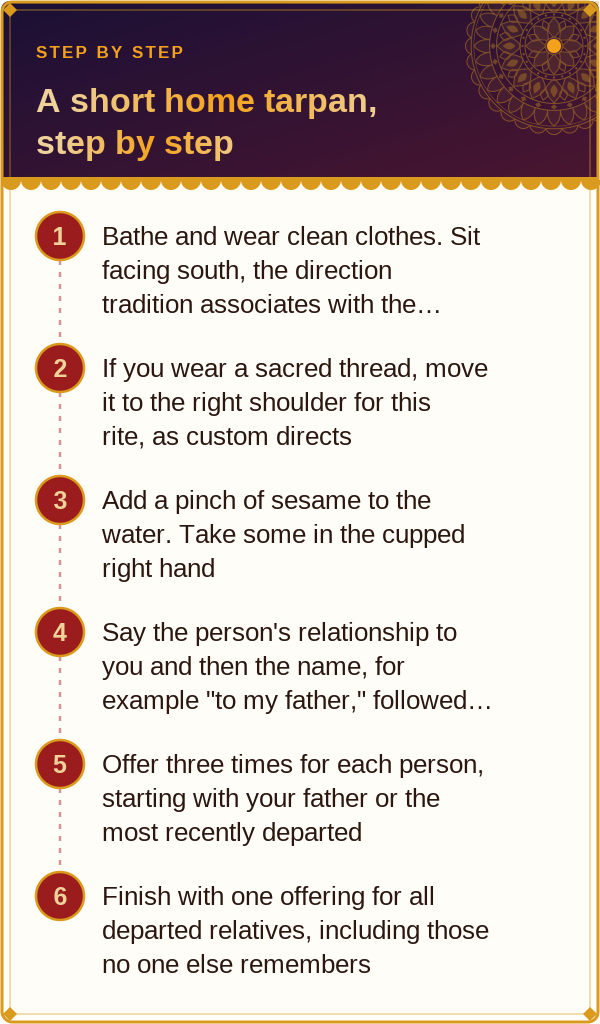
A short home tarpan, step by step
- Bathe and wear clean clothes. Sit facing south, the direction tradition associates with the ancestors.
- If you wear a sacred thread, move it to the right shoulder for this rite, as custom directs.
- Add a pinch of sesame to the water. Take some in the cupped right hand.
- Say the person's relationship to you and then the name, for example "to my father," followed by his full name, and let the water flow out between the thumb and forefinger onto the plate.
- Offer three times for each person, starting with your father or the most recently departed.
- Finish with one offering for all departed relatives, including those no one else remembers.
- Sit quietly for a minute. Speak to them plainly if you want to. Many people find this is the part they remember.
- Pour the collected water onto soil.
The whole rite can take ten minutes. Tradition favors late morning to early afternoon. If a weekday office schedule makes that impossible, some families offer the water before work on the correct day and keep the meal and donation for the evening or the weekend. Ask your family elders what they prefer.
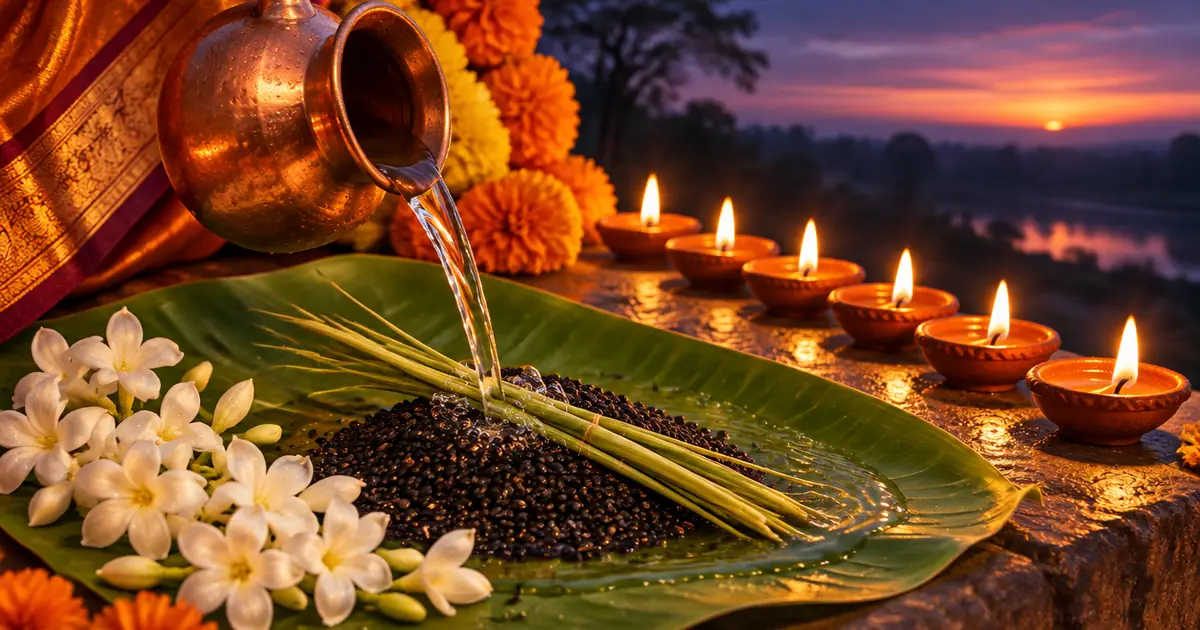
Food and giving
A simple vegetarian meal, often cooked without onion or garlic, is made in the ancestors' memory and shared. Custom sets aside a portion for crows; in a Chicago apartment that is rarely practical, and building rules may forbid feeding birds from a balcony. Many families instead give a meal or groceries to a food pantry in the person's name, or donate to a cause they cared about.
If you light a lamp, keep it away from curtains and blinds, set it on a heatproof plate, and never leave it burning in an empty room.
When to ask a priest instead
- The first annual shraddha after a death, which many families keep with full rites.
- When pinda offerings of rice balls and the complete mantras are expected.
- When you are unsure of the procedure your family follows.
- When the death was sudden or accidental, since some traditions set a different day for it.
Community temples are the natural place to ask. The Hindu Temple of Greater Chicago in Lemont is one long-established option; call the temple office and ask how they handle shraddha requests. For a wider view of ancestor rites and how they connect with the chart, see the ancestral prayers (Pitru) guidance session with Astrologer and Psychic Vijayram, and the post on visiting Chicago-area temples for practical notes on getting there.
What this practice cannot do
Tarpan is remembrance. It will not make grief keep a schedule, and it is not a fix for misfortune. Be wary of anyone who says your troubles come from angry ancestors and that only an expensive ritual will calm them. If a quiet daily practice would help through the season, a personal mantra and meditation session can offer one.
Common questions
I do not know the lunar date my father died. When do I offer tarpan?
Tradition sets aside the last day of Pitru Paksha, Mahalaya or Sarvapitri Amavasya, for everyone whose tithi is unknown, and for all ancestors together. Many families in the USA use that day for the whole observance.
Can a woman perform tarpan?
Customs differ between families and communities. Many households today have daughters and wives offer water and names, while others keep the rite with sons or a priest. Follow your family's practice, or ask a priest you trust if you are unsure.
Is it bad luck to skip Pitru Paksha one year?
No one should frighten you with that idea. The observance is an act of remembrance. If illness, work or travel gets in the way, a simple offering of water and names on another day, or a donation in their memory, is a sincere response.
Where do I pour the water afterward?
Onto soil: the base of a plant, a tree or a garden bed. In an apartment, a large potted plant on a balcony or windowsill works well. Avoid simply tipping it down the sink if you can.
Related service
Keep reading
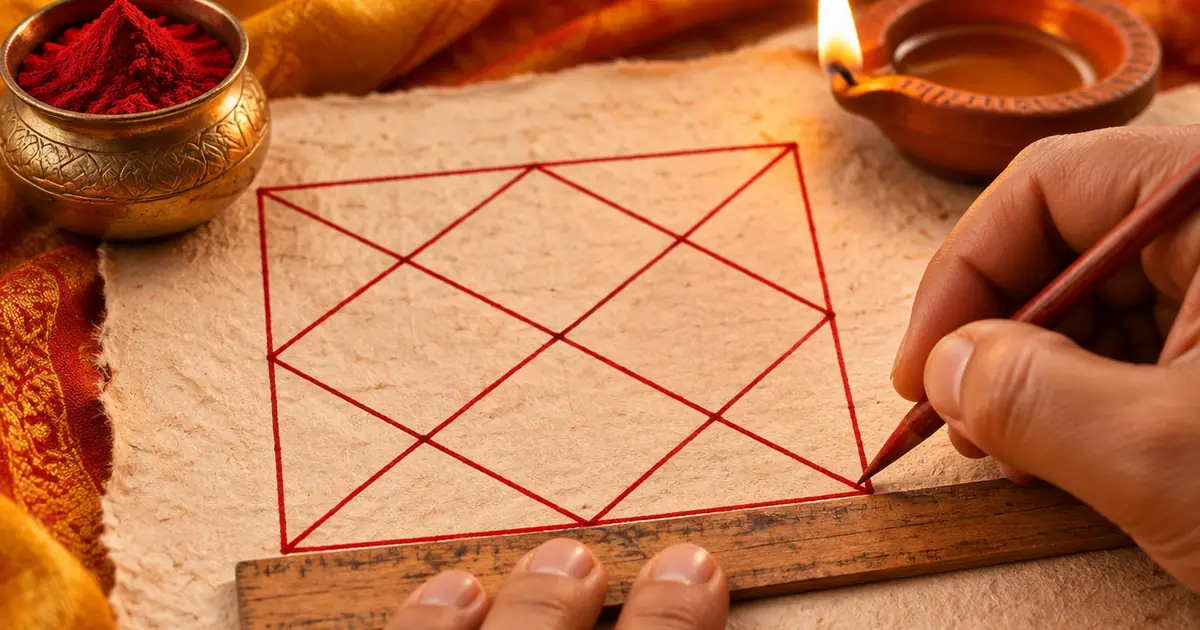
How to Read a North Indian Chart in Ten Minutes
How to read a North Indian chart: the diamond layout, why the houses stay put while sign numbers move, and where to find your ascendant and Moon in minutes.
Read article →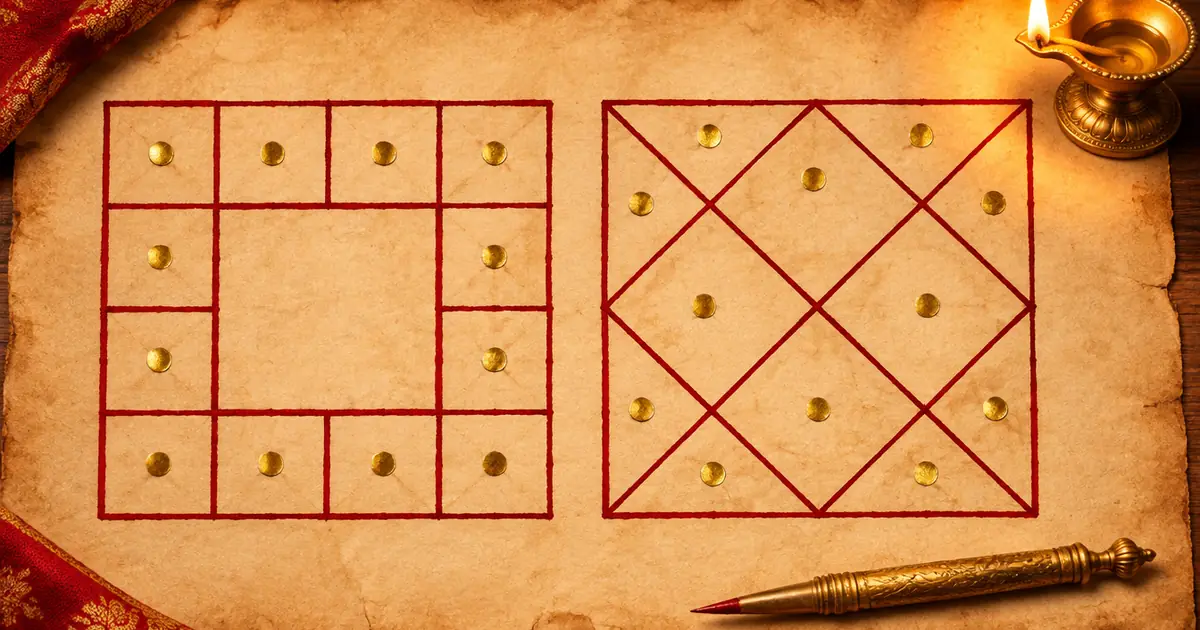
Square or Diamond? Converting a South Indian Chart to the North Indian Layout
South Indian chart vs North Indian chart: find the ascendant in the square grid, then redraw it as a diamond step by step so families holding both can compare.
Read article →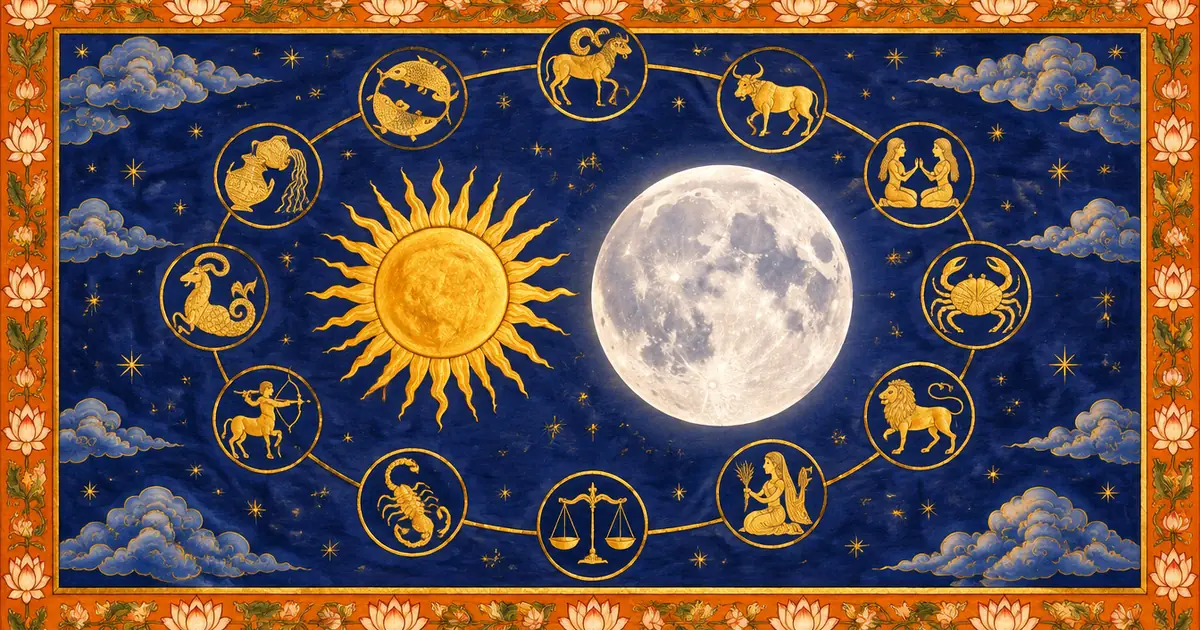
Moon Sign or Sun Sign: Which One Does Vedic Astrology Use?
Moon sign in Vedic astrology: why your rashi is the Moon's sign, how it differs from a newspaper Sun sign, and how to find your own from a birth date and time.
Read article →Quick answers
Can a Western birth chart printout be turned into a kundli?
What is a kundli, and can a Western birth chart printout become one? Yes, from the same birth data. Here is what the sidereal shift and Indian layout change.
Read answer →How exact does my birth place need to be: city, hospital or village?
The birth chart reading details needed: date, clock time and town. Why the nearest city is usually close enough, and when a more exact birthplace helps.
Read answer →Talk to Astrologer and Psychic Vijayram
Tell us what you are facing. If a reading is unlikely to help, you will be told that plainly.