
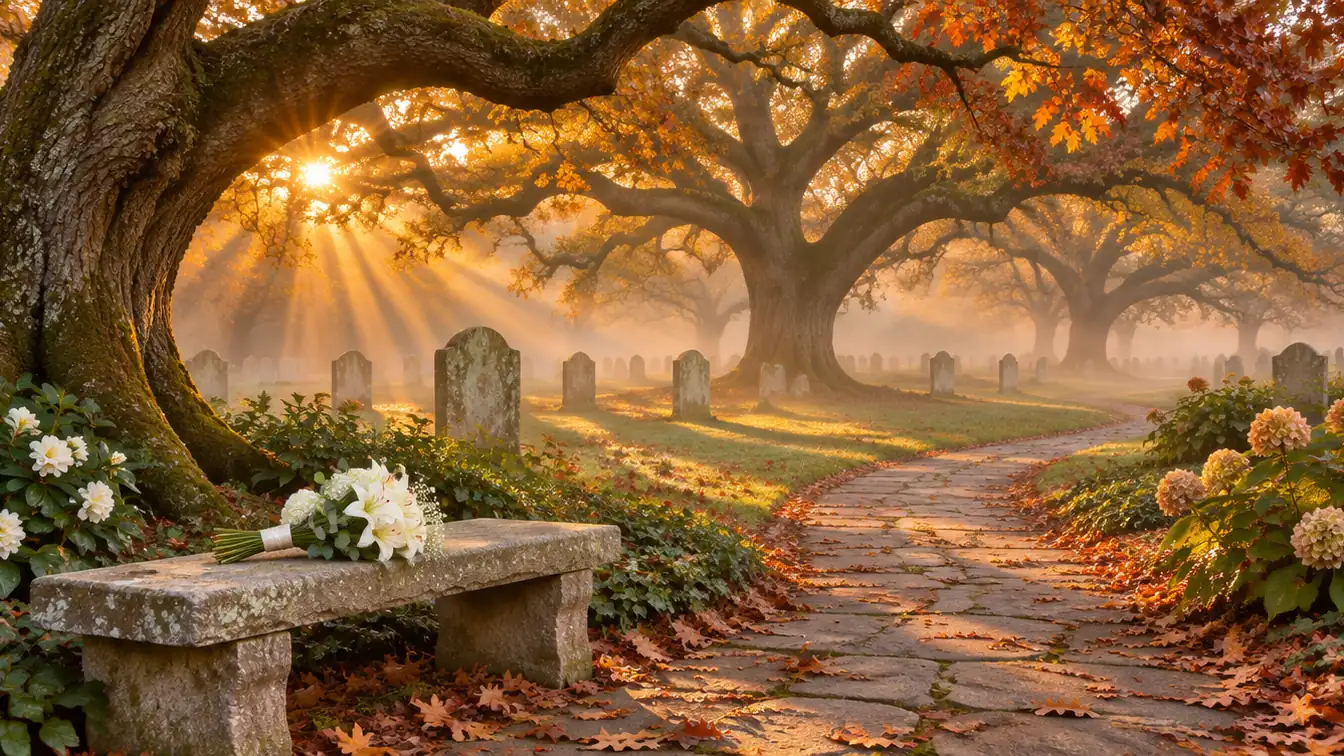
A Quiet Visit to a Chicago Cemetery After a Medium Session
Visiting a grave after a loss can give grief a place to go. In Chicago, historic cemeteries such as Graceland and Rosehill, and many neighborhood and suburban ones, welcome quiet visitors. Check the hours, bring flowers or a few written words, sit for a while, and lean on grief support alongside any medium session or ritual.
Key takeaways
- The National Library of Medicine keeps a plain guide to bereavement and where to find help.
- A medium session often brings a loved one vividly to mind.
- Chicago has dozens of cemeteries, and the right one is wherever your person rests.
- Many Chicago families have loved ones in parish cemeteries, Jewish and Muslim cemeteries, or suburban memorial parks along the tollways.
- Many Hindu and Sikh families cremate their dead, and ashes are often immersed in a river in India or elsewhere, so there may be no grave to visit in Chicago at all.
Grief support comes first
If you are newly bereaved, the most important support is human: family, friends, your doctor, a grief counselor, a hospice bereavement program, your faith community. The National Library of Medicine keeps a plain guide to bereavement and where to find help. If grief brings thoughts of harming yourself, contact the Suicide and Crisis Lifeline at any hour, or call emergency services. A medium session or a quiet visit can sit beside that support. Neither replaces it.
Why a place can help
A medium session often brings a loved one vividly to mind. Afterward, many people feel a need to do something with that feeling, something physical and ordinary. Visiting a grave gives grief a place to go. You can stand somewhere that holds their name, say what you need to say and then walk back out into the city, a little lighter or simply a little more settled.
There is no right way to do it. Some people stay five minutes. Some bring a folding chair and stay an hour. Both are visits.
Two historic North Side cemeteries
Chicago has dozens of cemeteries, and the right one is wherever your person rests. Two of the oldest are also among the most peaceful places on the North Side to walk and sit.
Graceland
Graceland Cemetery in Uptown was established in 1860 and covers about 120 acres, with its main entrance at Clark Street and Irving Park Road. It was laid out as a garden cemetery, with winding paths, a reflecting lake and an arboretum of more than 2,000 trees, and it is listed on the National Register of Historic Places. Its quiet stretches feel a long way from the traffic outside.
Rosehill
Rosehill Cemetery, founded in 1859, is the largest cemetery in the city of Chicago at about 350 acres. Its castellated Gothic entrance gate, designed by William W. Boyington, is a North Side landmark, and the grounds include a large community mausoleum with Tiffany stained glass. Its size means you can usually find a bench to yourself.
Both are active cemeteries where families still bury and remember their dead, so visitors are asked to be respectful of services and private grief.
Neighborhood and suburban cemeteries
Many Chicago families have loved ones in parish cemeteries, Jewish and Muslim cemeteries, or suburban memorial parks along the tollways. Smaller cemeteries are often quieter still, and staff are usually glad to help you find a plot if you call ahead with the name and dates.
When there is no grave
Many Hindu and Sikh families cremate their dead, and ashes are often immersed in a river in India or elsewhere, so there may be no grave to visit in Chicago at all. That does not leave you without a place. People choose:
- A spot on the lakefront at sunrise, facing the water.
- A temple or gurdwara, at a quiet hour.
- A tree planted in the person's memory, or a bench with a small plaque.
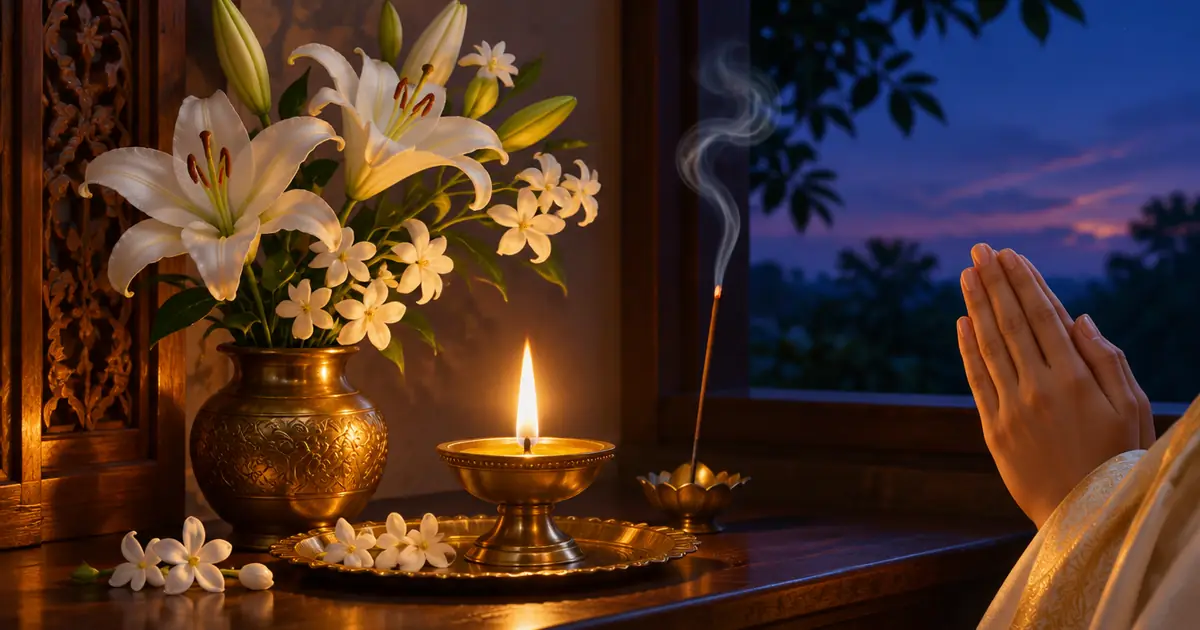
- A corner of home with a photo, a lamp and fresh flowers.
Mexican American families in Pilsen and Little Village build ofrendas for the Day of the Dead; the post on Day of the Dead in Pilsen and Pitru Paksha looks at two traditions of remembrance side by side.
A simple way to mark the visit
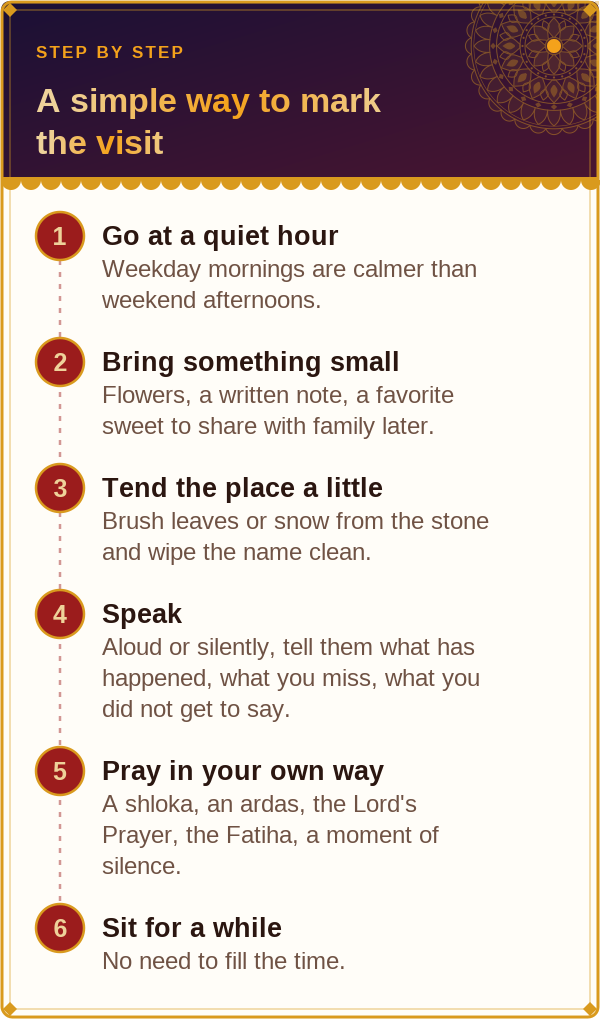
- Go at a quiet hour. Weekday mornings are calmer than weekend afternoons.
- Bring something small. Flowers, a written note, a favorite sweet to share with family later. In Jewish custom, a small stone placed on the headstone marks that someone has come.
- Tend the place a little. Brush leaves or snow from the stone and wipe the name clean. Many people find this simple care comforting.
- Speak. Aloud or silently, tell them what has happened, what you miss, what you did not get to say.
- Pray in your own way. A shloka, an ardas, the Lord's Prayer, the Fatiha, a moment of silence.
- Sit for a while. No need to fill the time.
- Close gently. A touch of the stone, a bow, a word of goodbye until next time.
Practical notes for a Chicago visit
- Check opening hours and rules on the cemetery's own website or by phone before you go. Hours can change with the seasons.
- In winter, paths may be icy or unplowed, and the wind off the lake is sharp. Wear boots and layers, and go in daylight.
- If a funeral is under way nearby, keep your distance and your voice low.
- Many cemeteries limit what can be left at a grave, such as glass, candles and artificial flowers, and clear decorations seasonally.
- Ask before taking photos of other people's monuments, especially during a service.
Afterward
Eat something warm. Call someone who knew them. Write down what you felt. If the visit followed a session, the post on what to expect from a first medium session has notes on the days after. If you are grieving a parent or grandparent far away, grieving in Chicago when family is far away may help.
The prayer-led psychic medium session offered by Astrologer and Psychic Vijayram is a faith practice of remembrance, held by phone, WhatsApp or video. It cannot confirm where your loved one is or replace the care of people around you. A quiet visit, made in your own time, is one more way to carry them with you.
Common questions
Is it normal to feel nothing at the grave?
Yes. Some people feel overwhelmed and others feel strangely flat, and both are common. Grief does not perform on cue. The visit still counts, and it may feel different another time.
Should I go alone or with family?
Either. Going alone gives room to speak freely; going together lets you share memories. Some people go once with family and later return alone. Choose what feels kind to you now.
Can I light a diya or candle at the grave?
Check the cemetery's rules first. Many limit open flames, glass containers and items left behind, especially in dry or windy weather. A battery candle, flowers or a few quiet words are good alternatives.
Should I visit right after a medium session?
Many people prefer a day or two in between, so the session can settle. If you do go the same day, plan something gentle afterward and have someone you can call.
Related service
Keep reading

Work, Family, Love or a Move: The Topics Chicagoans Bring to a Psychic
Work, family, love or a move: the topics Chicagoans bring to a psychic reading, how a phone or video session handles each, and what a reader cannot know.
Read article →
Red Flags in Chicago Psychic Ads: A Checklist Before You Book
Looking for the best psychic in Chicago? Check these red flags first: unclear prices, scare tactics, rising fees and secrecy, in storefronts and online ads.
Read article →
Phone or In Person? Booking a Reading in a Chicago Winter
Snow, parking and a cold wait for the 'L': when a phone psychic reading in Chicago makes more sense than a trip across town, and how to set up a call well.
Read article →Quick answers
Is it normal to feel worse after a medium session?
What does a psychic medium do, and is it normal to feel worse afterward? Why grief can surface strongly after a session, and where to find real support.
Read answer →Do I have to tell a psychic anything before the reading starts?
What happens in a psychic reading, and what must you share first? Often just your first name and question; you never need to tell more than you wish.
Read answer →Talk to Astrologer and Psychic Vijayram
Tell us what you are facing. If a reading is unlikely to help, you will be told that plainly.