
Shivaratri Abhishekam at Chicago-Area Temples: Planning a Family Visit
Maha Shivaratri in Chicago falls in February or March, and many area temples hold abhishekam through the night. The four prahar pujas divide the night between Chicago's sunset and sunrise into equal parts, about three hours each. Check each temple's schedule, dress for a cold night and plan who drives home.
Key takeaways
- Maha Shivaratri , the great night of Shiva, falls on the fourteenth lunar day of the waning Moon in the month of Phalguna (Magha in the southern reckoning), the night before the new moon.
- A prahar here is one quarter of the night, measured from local sunset to the next local sunrise.
- Several temples around Chicago hold Shivaratri programs.
- Few families can do all four prahars together.
- Set up a small altar with a linga or picture of Shiva, a lamp and water.
Most Hindu festivals in Chicago come with a warm-weather or home-based version. Maha Shivaratri does not. It arrives in February or early March, on one of the longest and coldest nights a temple calendar asks devotees to stay awake through, and some families drive out to sit with Shiva until dawn. A little planning makes the night prayerful rather than exhausting.
What the night is
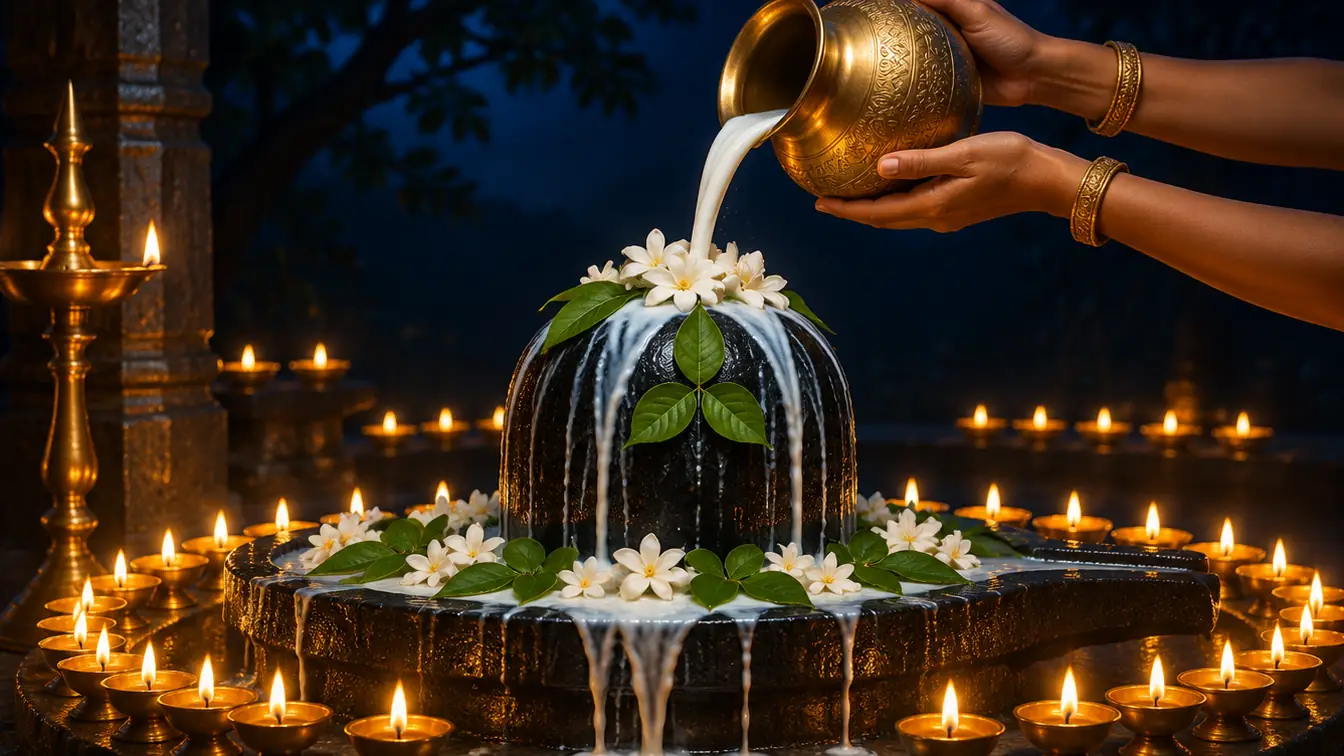
Maha Shivaratri, the great night of Shiva, falls on the fourteenth lunar day of the waning Moon in the month of Phalguna (Magha in the southern reckoning), the night before the new moon. Devotees fast, keep vigil, chant "Om Namah Shivaya" and offer abhishekam, the ritual bathing of the Shiva linga with water, milk, yogurt, honey and ghee, followed by bilva leaves. Many temples perform abhishekam four times during the night, once in each prahar.
How the four prahars are set in Chicago
A prahar here is one quarter of the night, measured from local sunset to the next local sunrise. Because Chicago's winter nights are long, each quarter is long too. By our own calculation for two sample nights:
| Mid-February night | Early-March night | |
|---|---|---|
| Sunset | About 5:23 p.m. | About 5:46 p.m. |
| First prahar ends | About 8:43 p.m. | About 8:53 p.m. |
| Second prahar ends (near local midnight) | About 12:04 a.m. | About 12:01 a.m. |
| Third prahar ends | About 3:24 a.m. | About 3:08 a.m. |
| Sunrise | About 6:44 a.m. | About 6:15 a.m. |
Each prahar runs a little over three hours. The midnight period, Nishita Kaal, is often treated as the most important single puja. Two cautions: these are sample nights, not a specific year's dates; and if Shivaratri falls close to the second Sunday of March, when clocks spring forward, make sure your panchang uses the correct offset for that night.
Choosing a temple
Several temples around Chicago hold Shivaratri programs. Two examples with Shiva shrines:
- The Hindu Temple of Greater Chicago in Lemont has a temple dedicated to Ganesha, Shiva and Durga alongside its Rama temple. More about the town is on the Lemont page.
- The BAPS mandir in Bartlett, which includes a Shiva-Parvati shrine, lists Maha Shivaratri among its annual festivals.
Schedules, abhishekam arrangements and parking change from year to year. Always check the temple's own website before you go; do not rely on last year's flyer or a forwarded message. The guide to visiting temples in Lemont, Aurora and Bartlett has general etiquette.
A family plan for the night
Decide who stays for what
Few families can do all four prahars together. A common pattern: everyone attends the first prahar in the early evening; children and elders go home after it; one or two adults stay for the midnight abhishekam; the most committed keep vigil to dawn, at the temple or at home.
What to bring
- A warm coat, hat, gloves and boots. Temple parking lots in the suburbs can be icy and dark.
- Socks: shoes come off inside, and floors can be cold.
- Offerings if the temple accepts them: milk, bilva leaves (hard to find in a Chicago winter; some temples supply them), flowers, fruit.
- Water and fasting-friendly snacks for those keeping a partial fast, and regular food for children.
- A small book of chants or a phone with the text loaded, set to silent.
Getting home safely
The most practical advice of the night: do not drive home exhausted on winter roads. Arrange a rested driver, leave after an earlier prahar, or rest at the temple if it allows before setting off.
Keeping vigil at home
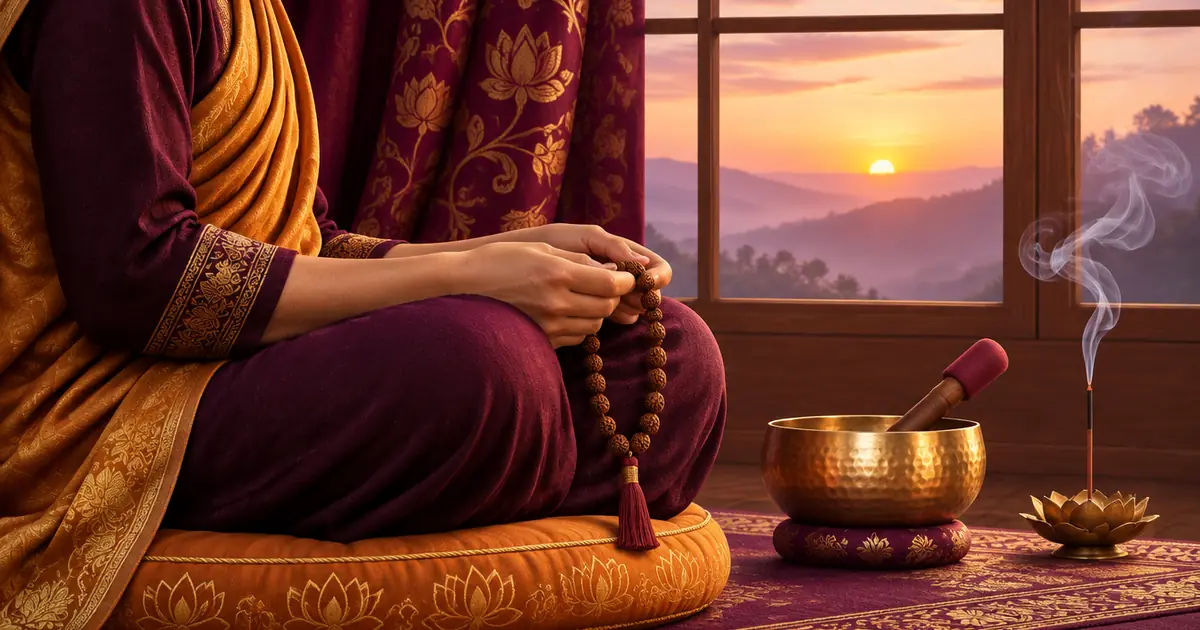
If the drive is too far or the weather too bad, a home vigil is entirely faithful. Set up a small altar with a linga or picture of Shiva, a lamp and water. At each prahar, offer water or milk, a flower and a few minutes of chanting. Between prahars, read, sing or sit quietly. Some families take turns so that someone in the house is always awake.
Fasting with care
Traditional fasts range from waterless to fruit and milk only. For anyone working the next day, or with diabetes, a pregnancy or regular medication, the gentler versions make sense, and medical advice comes first. Break the fast after the morning prayers with something light.
Mantra beyond the night
Many people find that Shivaratri starts a practice they want to keep: "Om Namah Shivaya" each morning, or the Mahamrityunjaya mantra, explained in when families chant the Mahamrityunjaya mantra. If you would like help choosing and sustaining a daily practice, personal mantra and meditation guidance is offered by Astrologer and Psychic Vijayram by phone, WhatsApp or video. For the other great midnight of the year, see keeping the Janmashtami midnight puja at home.
What the vigil cannot do
Shivaratri is a night of devotion and self-discipline. Staying awake does not purchase a blessing, and leaving after one prahar does not lose one. No ritual on this night should be sold to you with a promise attached.
Common questions
Do I have to stay at the temple all night?
No. Many families attend one or two prahars and continue the vigil at home. Staying awake with prayer, wherever you are, is the heart of the observance.
Can I bring my own milk for abhishekam?
Temples differ. Some invite devotees to bring milk or bilva leaves, others perform abhishekam through priests and ask you to sponsor it instead. Check the temple's website or call ahead.
What is a sensible Shivaratri fast for someone who works the next day?
Many people take fruit, milk and water through the day and night rather than fasting without water, then break the fast after the morning prayers. Follow your doctor's advice if you have any health condition.
Is it safe to drive home after an all-night vigil?
Drowsy driving is dangerous, especially on winter roads. Arrange a rested driver, leave after an earlier prahar, or rest before setting off.
Related service
Keep reading
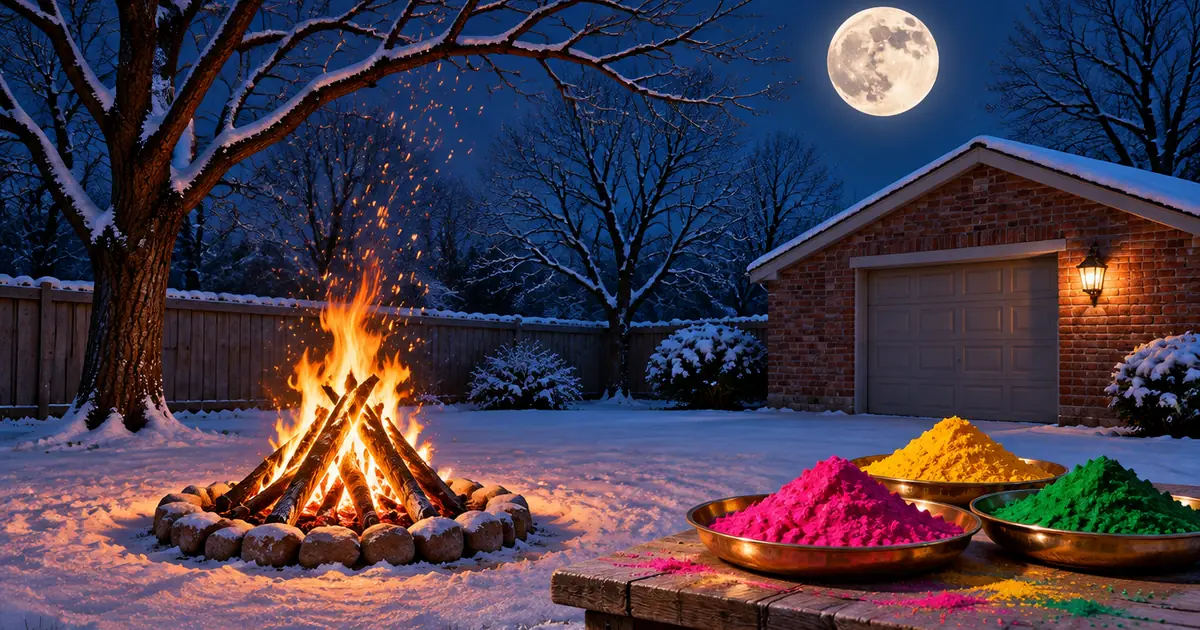
Holika Dahan on a Cold March Night: Timing Holi in Chicago
Holi in Chicago: how the Holika Dahan bonfire night is set by the Phalguna full moon and the Bhadra rule, and why color play here often moves indoors or later.
Read article →
Clay, Paper or Metal? Choosing a Ganesh Murti for a Chicago Apartment
Ganesh Chaturthi in Chicago: choosing a murti's size and material for an apartment, dissolving clay at home, and checking local rules before outdoor immersion.
Read article →
Akshaya Tritiya and Gold Shopping on Devon Avenue
Akshaya Tritiya in Chicago: why the day is considered lasting for purchases, how the Devon Avenue gold custom fits it, and how to keep it without overspending.
Read article →Quick answers
Can a Western birth chart printout be turned into a kundli?
What is a kundli, and can a Western birth chart printout become one? Yes, from the same birth data. Here is what the sidereal shift and Indian layout change.
Read answer →How exact does my birth place need to be: city, hospital or village?
The birth chart reading details needed: date, clock time and town. Why the nearest city is usually close enough, and when a more exact birthplace helps.
Read answer →Talk to Astrologer and Psychic Vijayram
Tell us what you are facing. If a reading is unlikely to help, you will be told that plainly.