
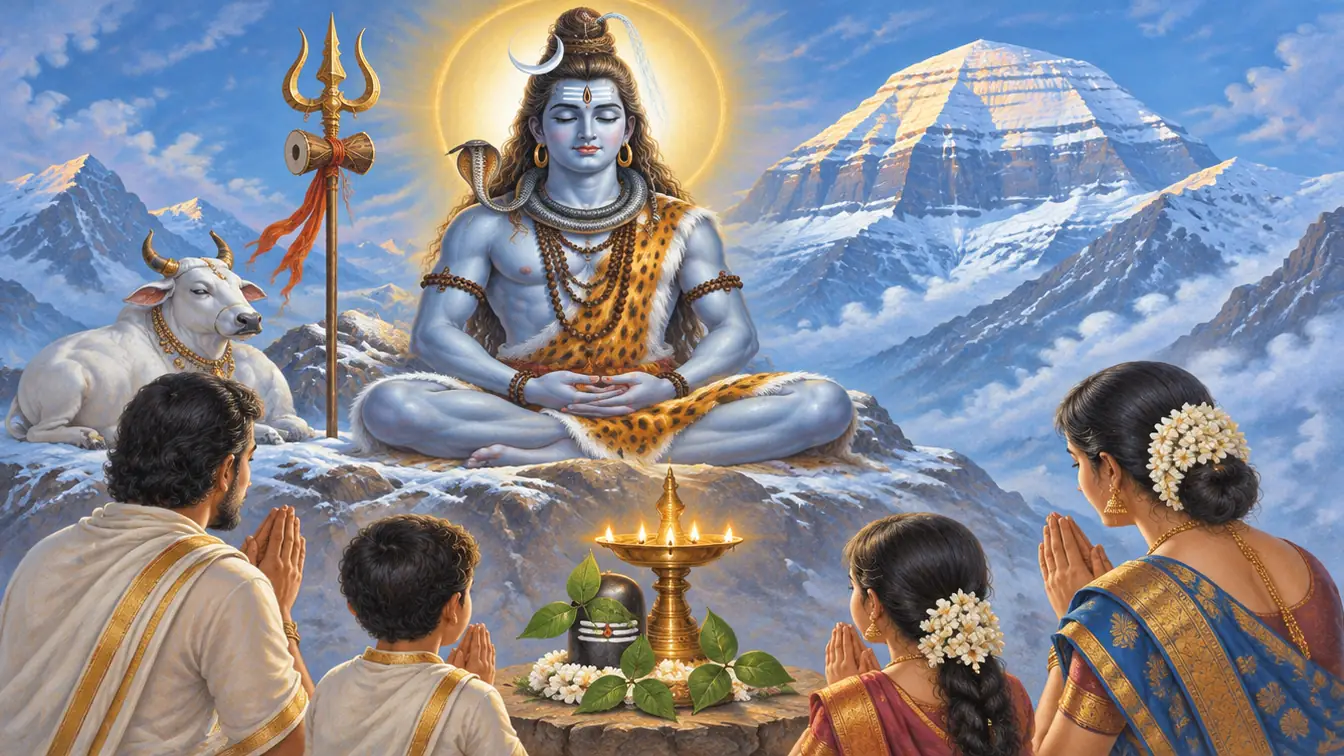
The Mahamrityunjaya Mantra: When Families Chant It
The Mahamrityunjaya mantra is a Rig Vedic prayer to Shiva as the three-eyed one, asking for release from death and fear as a ripe fruit falls easily from its vine. Families chant it at a diagnosis, before surgery and through recovery. It is a prayer for strength alongside medical treatment, never instead of it.
Key takeaways
- Never stop or change a treatment because of any spiritual advice.
- Om tryambakam yajamahe sugandhim pushti-vardhanam
- Relatives in India and Chicago can chant at the same agreed time over a video call, which many families find comforting across the distance.
- Chicago's hospitals care for patients of every faith.
- Astrologer and Psychic Vijayram offers it in that spirit, with deep respect for the doctors, nurses and caregivers doing the work of healing.
When someone in the family falls seriously ill, a particular prayer often starts circulating: in a group chat, at a bedside, on a call from grandparents in India. It is the Mahamrityunjaya mantra, the great prayer to the conqueror of death. This post explains what it says, when families turn to it, and how to chant it in a way that supports the patient and the medical team rather than getting in their way.
Before the prayer: the practical side
The doctors and nurses lead the care. Keep asking them questions, write down the answers and keep a list of medications. Never stop or change a treatment because of any spiritual advice. In an emergency, call emergency services. If you are the one doing most of the caring, look after yourself too; the National Library of Medicine's page for caregivers covers respite, stress and practical support. A prayer is strongest when it sits beside that work, not in place of it.
The mantra and its meaning
Om tryambakam yajamahe sugandhim pushti-vardhanam
urvarukam iva bandhanan mrityor mukshiya mamritat
The verse comes from the Rig Veda, book seven, hymn fifty-nine, verse twelve, and recurs in the Yajurveda. The overview of the Mahamrityunjaya mantra notes that it is addressed to Tryambaka, the three-eyed one, a name of Rudra, whom Shaiva tradition identifies with Shiva. In plain English:
- Om tryambakam yajamahe: we worship the three-eyed one,
- sugandhim pushti-vardhanam: who is fragrant and who increases nourishment and strength.
- urvarukam iva bandhanan: as a ripe cucumber is freed from its vine,
- mrityor mukshiya mamritat: may I be freed from death, and not from immortality.
The image at the center is gentle. A ripe fruit does not need to be torn off; it separates from the vine on its own when the time is right. Families read the prayer in more than one way: as a plea for recovery and strength, as a prayer to be released from fear, and, when the time comes, as a prayer for a peaceful passing. All three readings are held within the tradition.
When families chant it
- At a diagnosis. In the first frightening days, chanting gives a family something steady to do together.
- On surgery day. Many families chant in the waiting room, silently, while the operation goes on. The date itself belongs to the surgeon's schedule; the post on why your doctor's schedule comes first for surgery dates explains why.
- Through a long recovery. A daily round at home in the weeks after discharge. The post on coming home from a Chicago hospital pairs mantra with rest and the care plan.
- For elders. Some families chant it on an older relative's birthday, or through the month of Shravan, as a prayer for long life.
- On Maha Shivaratri, the great night of Shiva, when many temples hold long chanting sessions; see the post on Shivaratri at Chicago-area temples.
- At the end of life, softly, as a prayer for peace.
How to chant it
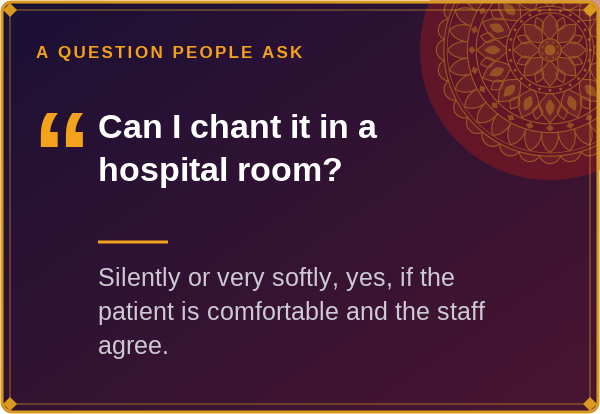
- Learn it in two halves. Say the first line ten times until it is easy, then the second, then put them together.
- Sit quietly, facing east or north if you like, with a picture of Shiva or simply a lamp at home.
- Chant at a slow, even pace. Eleven repetitions take a few minutes; a full mala of 108 takes longer, so choose what you can keep.
- Hold the person in mind as you chant, with their name, if you wish, at the start.
- Close with a moment of silence.
Relatives in India and Chicago can chant at the same agreed time over a video call, which many families find comforting across the distance. Some take on a large shared count and split it among relatives, keeping a tally together.
In the hospital
Chicago's hospitals care for patients of every faith. Ask the nurse before chanting aloud, keep your voice low if you share a room, and use headphones for recordings. Never bring a lamp, candle or incense into a hospital: oxygen equipment makes any flame dangerous. Ask whether the hospital has a spiritual care team; many do, and they can help with a quiet room or a visit from a chaplain who respects your tradition.
Where this practice can help
If you would like guidance on a daily practice for an ill family member, or for yourself as a caregiver, a spiritual healing session offers prayer, mantra and quiet attention by phone or video, alongside the medical care, never instead of it. The guide to choosing a mantra explains other options if this one feels too heavy for the moment.
What the mantra cannot do
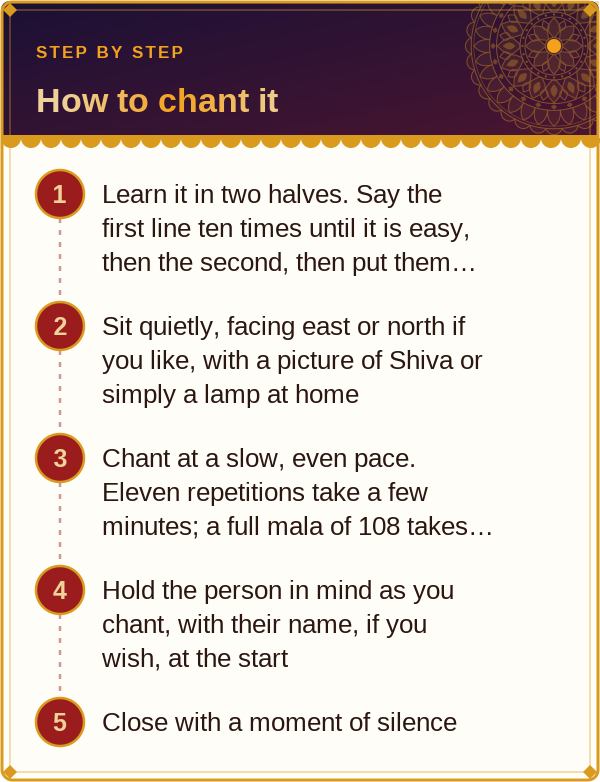
The Mahamrityunjaya mantra cannot cure disease, replace treatment or guarantee recovery, and no honest teacher will say otherwise. It offers a family a shared prayer for strength in frightening times. Astrologer and Psychic Vijayram offers it in that spirit, with deep respect for the doctors, nurses and caregivers doing the work of healing.
Common questions
Can I chant it in a hospital room?
Silently or very softly, yes, if the patient is comfortable and the staff agree. Never light a lamp or incense in a hospital: open flames and oxygen are dangerous together. A recording on headphones is a good option, and many hospitals have a spiritual care or chaplaincy team who can help arrange a quiet space.
How many times should we chant it?
Eleven or 108 repetitions are common daily counts. Some families take on a larger shared count, splitting it among relatives and tracking it together. The number matters less than steady, sincere practice that does not wear out an already exhausted family.
If my relative does not recover, did we chant it wrongly?
No. The outcome of an illness is not a measure of your devotion, and nobody should ever suggest otherwise. The mantra itself speaks of release, and families also chant it at the end of life, as a prayer for peace. If grief or guilt weighs on you, please talk to someone you trust or a grief counselor.
What are the benefits people describe?
Families often say the mantra gives them something steady to do in hours of waiting, and a way to pray together across distance. Those comforts are real. It does not change a diagnosis, and the people treating your relative remain the ones to ask about recovery.
Related service
Keep reading

Energy Cleansing and Therapy: Different Jobs
Energy healing vs therapy: what each one is for, why one never replaces the other, how to tell which you need first, and how to use both without conflict.
Read article →
Vastu Basics: Entrance, Kitchen, Bedroom
Vastu basics for the three rooms that matter most, the entrance, kitchen and bedroom, with adjustments that need no building work and what not to worry about.
Read article →
Pitru Dosha: What It Means and How Families Respond
Pitru dosha explained calmly: the old idea of a debt to ancestors, how astrologers use the term, and the simple observances families keep, without fear.
Read article →Quick answers
Should I tell my doctor I am having spiritual healing sessions?
Is spiritual healing medical treatment? No. Why to tell your doctor about spiritual healing sessions, and how faith practice can sit beside your medical care.
Read answer →How will I know if an aura cleansing helped?
What is aura cleansing, and how do you know if it helped? What people describe afterward, the plain limits of a traditional practice, and when to see a doctor.
Read answer →Talk to Astrologer and Psychic Vijayram
Tell us what you are facing. If a reading is unlikely to help, you will be told that plainly.