

Energy Cleansing and Therapy: Different Jobs
Energy healing vs therapy is not a contest: they do different jobs. Therapy is licensed mental health treatment with evidence behind it for depression, anxiety and trauma. Energy cleansing is a faith or wellness practice that some people find calming. If you are struggling to function, therapy comes first; a cleansing can sit beside it, never instead.
Key takeaways
- An energy healer is someone who works with the idea of a subtle life force, called prana, qi or simply energy, and aims to clear, balance or strengthen it.
- Therapy, or psychotherapy, is treatment provided by licensed mental health professionals such as psychologists, clinical social workers, licensed counselors and psychiatrists.
- See a therapist or doctor, before or instead of any cleansing, if:
- With therapy in place, or for ordinary stress that is not affecting your daily life, a cleansing can be a comforting ritual.
- Energy cleansing cannot treat depression, anxiety, trauma, addiction or any other condition.
People often ask whether they should see a therapist or an energy healer, as if the two were competing for the same job. They are not. Comparing energy healing vs therapy is a bit like comparing a temple visit with a visit to the dentist: both can matter in a life, but they are for different things. This post explains what each one does, why one never replaces the other and how to use both well.
What is an energy healer?
An energy healer is someone who works with the idea of a subtle life force, called prana, qi or simply energy, and aims to clear, balance or strengthen it. Methods vary widely: Reiki, pranic healing, chakra work, aura cleansing with salt, water and mantra, sound baths and more. The National Center for Complementary and Integrative Health's page on Reiki is a fair example of the evidence picture: it has not been clearly shown to be effective for any health-related purpose, and most research on it has not been of high quality. Energy healing is generally not a licensed health profession, so anyone can use the title.
What is therapy?
Therapy, or psychotherapy, is treatment provided by licensed mental health professionals such as psychologists, clinical social workers, licensed counselors and psychiatrists. It uses methods that have been tested, such as cognitive behavioral therapy, and it can be combined with medication when needed. The National Institute of Mental Health's overview of depression and its treatment explains how therapy and medication help, and why depression is a medical condition, not a weakness or a spiritual failing.
Side by side
| Therapy | Energy cleansing or healing | |
|---|---|---|
| What it is | Licensed mental health treatment | A faith, cultural or wellness practice |
| Who provides it | Psychologists, counselors, clinical social workers, psychiatrists | Healers, priests, teachers, family elders |
| Licensing | Licensed and regulated by the state | Generally unregulated |
| Evidence | Strong for depression, anxiety, trauma and more | No good evidence of effects beyond relaxation and comfort |
| Good for | Treating mental health conditions, changing patterns, processing trauma | Comfort, ritual, meaning, a sense of a fresh start |
| Not for | Replacing your faith | Treating any illness, mental or physical |
When therapy comes first
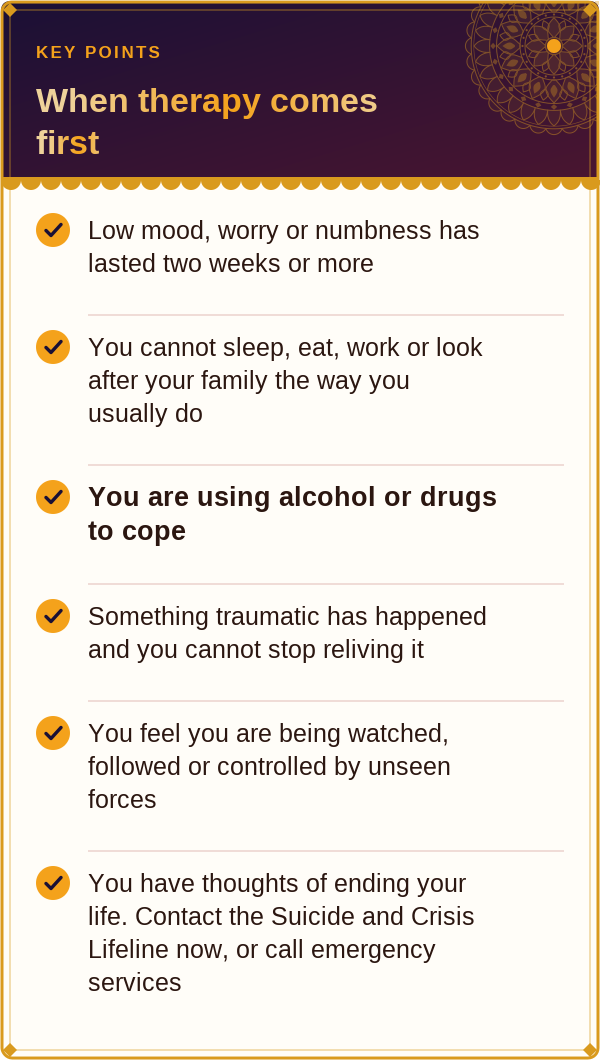
See a therapist or doctor, before or instead of any cleansing, if:
- Low mood, worry or numbness has lasted two weeks or more.
- You cannot sleep, eat, work or look after your family the way you usually do.
- You are using alcohol or drugs to cope.
- Something traumatic has happened and you cannot stop reliving it.
- You feel you are being watched, followed or controlled by unseen forces.
- You have thoughts of ending your life. Contact the Suicide and Crisis Lifeline now, or call emergency services.
Finding a therapist can feel hard. Your insurance company's member services, your doctor or your employer's assistance program can help, and the NAMI HelpLine offers information and referrals. Many therapists now work by video, which helps if you live far from the city or have a crowded schedule.
Where an energy cleansing can sit
With therapy in place, or for ordinary stress that is not affecting your daily life, a cleansing can be a comforting ritual. It can mark the end of a hard season, a move, a recovery or a loss. For many South Asian families, it is also simply part of how home and faith work: salt in the bathwater after a funeral, a lamp lit after a difficult week. The page on aura and energy cleansing describes how this practice runs it, beginning with ordinary checks of sleep, health and stress.
If what you feel is drained or heavy, the post on negative energy or burnout is a good place to start sorting ordinary causes from spiritual worries.
Using both without conflict
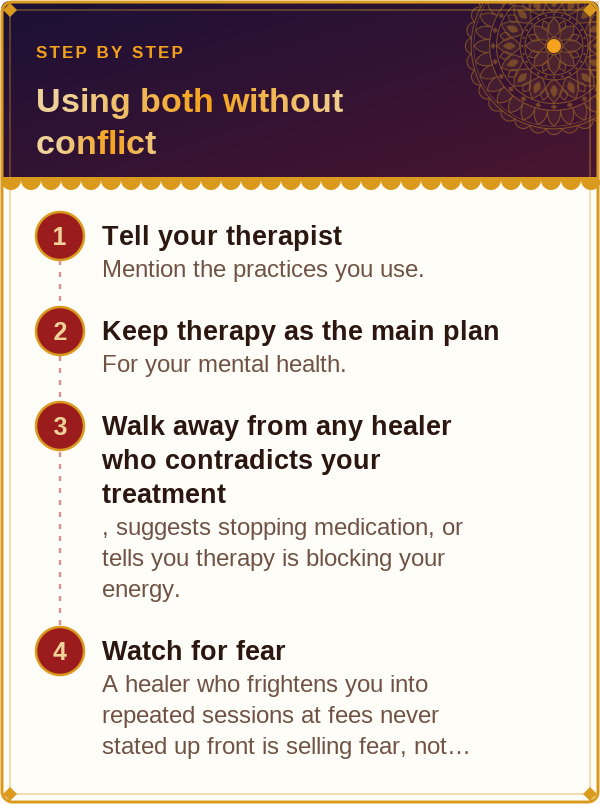
- Tell your therapist. Mention the practices you use. A good therapist will respect them.
- Keep therapy as the main plan for your mental health. Let the cleansing be a personal practice beside it.
- Walk away from any healer who contradicts your treatment, suggests stopping medication, or tells you therapy is blocking your energy.
- Watch for fear. A healer who frightens you into repeated sessions at fees never stated up front is selling fear, not healing.
The same honest limits apply to chakra work; the post on what chakra balancing claims and what it cannot do covers them, and the guide to who a spiritual healing session suits lists the signs that mean see a doctor first.
The plain limit
Energy cleansing cannot treat depression, anxiety, trauma, addiction or any other condition. It can offer comfort, ritual and a sense of care. Astrologer and Psychic Vijayram offers it on those terms only, and will always point you toward therapy and medical care when they are what you need.
Common questions
Is energy cleansing real?
It is a real practice with a long history in many cultures, and people often feel calmer afterward. There is no scientific evidence that it moves an energy field or treats any condition. Value it for the comfort and meaning it gives, and look to medicine and therapy for treatment.
What is energy balancing?
It is a broad term used by Reiki practitioners, chakra teachers, some massage therapists and others for practices meant to even out a person's subtle energy. Ask any practitioner what they actually do in a session, whether they touch you, and what they claim, before booking.
Should I book an energy healer online or near me?
Practices built on prayer, breath and guidance work well online, by phone or video. Hands-on practices need someone nearby. Whichever you choose, the same questions apply: clear fees, no promises of cures, and respect for your medical and mental health care.
My therapist is skeptical about energy work. Should I stop?
Talk about it openly. Most therapists respect a client's faith practices as long as they do not replace treatment or cause harm. Keep your therapy as the main plan for your mental health, and treat any cleansing as a personal practice alongside it.
Related service

Keep reading

Vastu Basics: Entrance, Kitchen, Bedroom
Vastu basics for the three rooms that matter most, the entrance, kitchen and bedroom, with adjustments that need no building work and what not to worry about.
Read article →
Pitru Dosha: What It Means and How Families Respond
Pitru dosha explained calmly: the old idea of a debt to ancestors, how astrologers use the term, and the simple observances families keep, without fear.
Read article →
Ayurveda and Jyotish: Where They Meet and Where We Stop
Ayurveda and astrology share Vedic roots and pair planets with doshas. Where the two traditions meet, and why health questions go to licensed practitioners.
Read article →Quick answers
How will I know if an aura cleansing helped?
What is aura cleansing, and how do you know if it helped? What people describe afterward, the plain limits of a traditional practice, and when to see a doctor.
Read answer →Should I tell my doctor I am having spiritual healing sessions?
Is spiritual healing medical treatment? No. Why to tell your doctor about spiritual healing sessions, and how faith practice can sit beside your medical care.
Read answer →Talk to Astrologer and Psychic Vijayram
Tell us what you are facing. If a reading is unlikely to help, you will be told that plainly.