

Who a Spiritual Healing Session Suits, and Who Should See a Doctor First
A spiritual healer in Chicago can offer prayer, mantra, breath and quiet attention to people looking for calm, alongside their medical care. It suits people under stress, grieving or in treatment who want faith support. Anyone with new, severe or worsening symptoms, or thoughts of self-harm, should see a doctor or contact the Suicide and Crisis Lifeline first.
Key takeaways
- The National Library of Medicine's MedlinePlus is a reliable place to read about symptoms and find out what kind of care to seek.
- With medical care in place, or with no medical concern at all, a session can be a good fit for:
- In this practice, a spiritual healing session begins with a calm conversation about what brought you, including your medical care.
- Searches for an energy healer in Chicago or chakra healing in Chicago turn up many different practices: Reiki, pranic healing, sound baths, crystal work and chakra meditation.
- A healer who passes those questions is working in good faith.
People look for a spiritual healer in Chicago for many reasons: a long illness, a hard year, grief that has not lifted, or a quiet sense that something inside needs tending. This post is honest about who a spiritual healing session suits, who should see a doctor first, and what to ask any healer before you book. The doctor comes first, so that is where we start.
See a doctor first if any of these are true
- Emergency signs: chest pain, trouble breathing, sudden weakness or numbness, confusion, a severe headache unlike any before. Call emergency services.
- Thoughts of ending your life or harming yourself. Contact the Suicide and Crisis Lifeline at any hour. In Chicago, the NAMI Chicago Helpline also takes calls and texts; its site lists support groups and helpline services across the city.
- New or worsening symptoms you have not had checked: pain that will not settle, a lump, unexplained weight loss, fainting, blood where it should not be.
- Changes in mind or mood that frighten you or the people around you: hearing voices, not sleeping for days, losing touch with what is real.
- Anything that started with a new medication. Call the prescriber or a pharmacist.
- Pregnancy concerns, or symptoms during alcohol or drug withdrawal.
The National Library of Medicine's MedlinePlus is a reliable place to read about symptoms and find out what kind of care to seek. A spiritual healing session is not that care.
Who a session suits
With medical care in place, or with no medical concern at all, a session can be a good fit for:
- People in treatment who want prayer and steadiness alongside it, during chemotherapy, after surgery or through a long recovery.
- Caregivers who are running on empty and need a half hour that is about them.
- People who are grieving and leaning on family, friends or a counselor, and also want the comfort of faith.
- People under ordinary stress: a new job, a move to Chicago, exams, a demanding winter.
- People who feel spiritually dry and want to return to prayer or mantra with some guidance.
Who it does not suit
- Anyone hoping a session will replace a diagnosis, a prescription or therapy.
- Anyone in acute crisis. The right call then is the Suicide and Crisis Lifeline or emergency services.
- Anyone who wants another person named as the cause of their illness. That will not be said here.
What happens in a session
In this practice, a spiritual healing session begins with a calm conversation about what brought you, including your medical care. Then comes prayer, chosen with you and suited to your faith; a mantra, often short enough to keep after the call; slow guided breathing; and a few minutes of quiet attention. It runs by phone, WhatsApp or video at a time arranged in Central Time, and nothing is touched or handled. Many people end with a simple practice to repeat at home, sometimes from personal mantra and meditation guidance.
Research on meditation is cautious but encouraging: the National Center for Complementary and Integrative Health's review of meditation's effectiveness and safety notes possible help with stress, anxiety and sleep for some people, and that a small number find it unsettling. If that happens, stop and tell your doctor.
Energy healer, chakra healing: what the words mean
Searches for an energy healer in Chicago or chakra healing in Chicago turn up many different practices: Reiki, pranic healing, sound baths, crystal work and chakra meditation. They come from different traditions and make different claims. In this practice, chakra work means breath, seed syllables and attention moved through the body, taught rather than done to you; the page on chakra balancing with breath and mantra explains it. The post on energy cleansing and therapy as different jobs sets out why none of these replace mental health care.
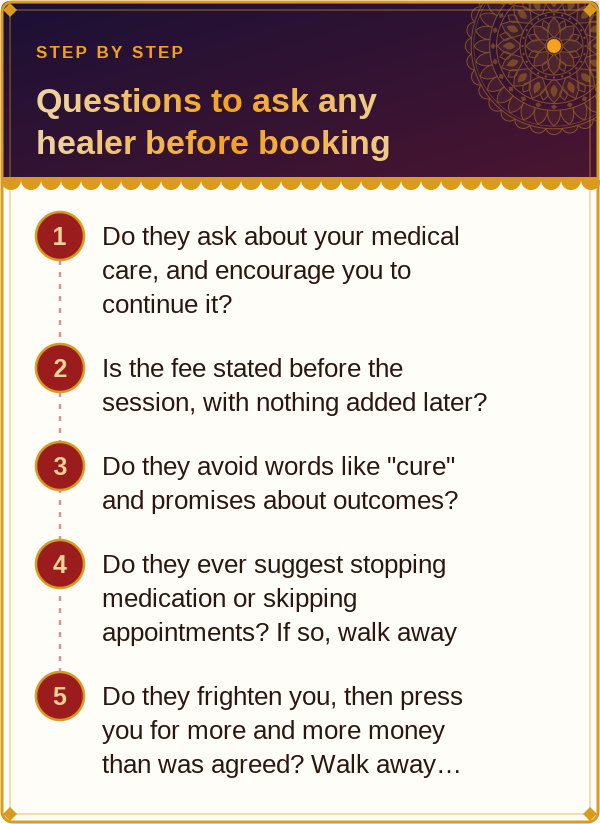
Questions to ask any healer before booking
- Do they ask about your medical care, and encourage you to continue it?
- Is the fee stated before the session, with nothing added later?
- Do they avoid words like "cure" and promises about outcomes?
- Do they ever suggest stopping medication or skipping appointments? If so, walk away.
- Do they frighten you, then press you for more and more money than was agreed? Walk away faster.
A healer who passes those questions is working in good faith. Astrologer and Psychic Vijayram aims to meet each of them, and you can ask before booking through the contact page.
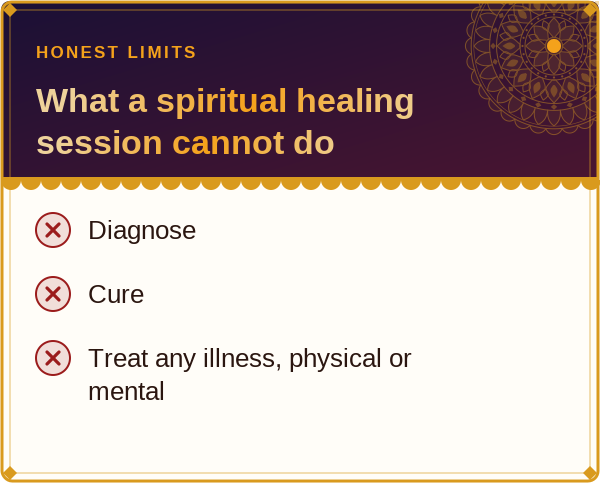
What a spiritual healing session cannot do
It cannot diagnose, cure or treat any illness, physical or mental. It cannot replace medication, therapy or a hospital visit. What it can offer is prayer, calm and a steadier frame of mind, given alongside your care and never in place of it.
Common questions
Is there a spiritual healer near me in Chicago, or does it have to be remote?
Sessions in this practice are by phone, WhatsApp or video, so it does not matter whether you live in Rogers Park, Bolingbrook or Elgin. Prayer, mantra and breath work translate well to a call, and many people find it easier to settle at home than in an unfamiliar room.
Should I tell my doctor about spiritual healing sessions?
Yes. It helps your care team understand what you are doing and why. Most doctors are comfortable with prayer and meditation alongside treatment. The short answer on telling your doctor about spiritual healing covers how to bring it up.
A healer told me to stop my medication. What should I do?
Do not stop it. Talk to the doctor who prescribed it before changing anything, and stop seeing anyone who gives that advice. No faith practice in this tradition asks you to abandon medical care.
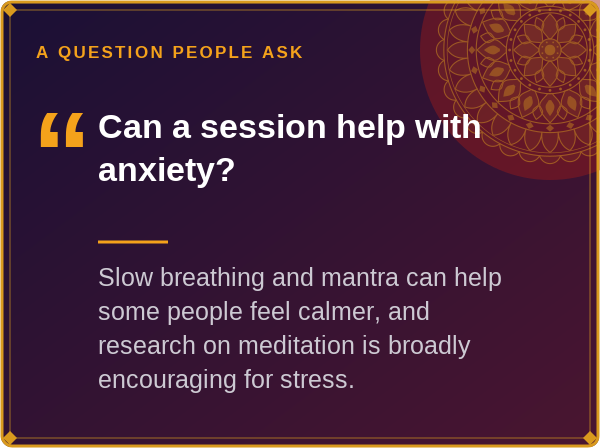
Can a session help with anxiety?
Slow breathing and mantra can help some people feel calmer, and research on meditation is broadly encouraging for stress. Anxiety that disrupts work, sleep or relationships needs a doctor or therapist. A session can sit beside that care and never replaces it.
Related service

Keep reading

The Darkest Weeks Around the Solstice: A Chicago Morning Practice
A winter blues spiritual practice for Chicago's darkest weeks: a short sunrise routine of light, breath and mantra, and clear signs to see a doctor about SAD.
Read article →
Quiet Places for Mantra Practice Along the Lakefront Trail
Meditation spots in Chicago for mantra and japa along the Lakefront Trail, north to south, with notes on dawn, wind, winter ice and leaving no offerings behind.
Read article →
A Five-Minute Mantra for the Metra or the 'L'
A mantra for the commute, sized for Chicago's Metra and 'L' rides: a five-minute silent practice, finger counting instead of a mala, and train etiquette.
Read article →Quick answers
Should I tell my doctor I am having spiritual healing sessions?
Is spiritual healing medical treatment? No. Why to tell your doctor about spiritual healing sessions, and how faith practice can sit beside your medical care.
Read answer →How will I know if an aura cleansing helped?
What is aura cleansing, and how do you know if it helped? What people describe afterward, the plain limits of a traditional practice, and when to see a doctor.
Read answer →Talk to Astrologer and Psychic Vijayram
Tell us what you are facing. If a reading is unlikely to help, you will be told that plainly.