
Quiet Places for Mantra Practice Along the Lakefront Trail
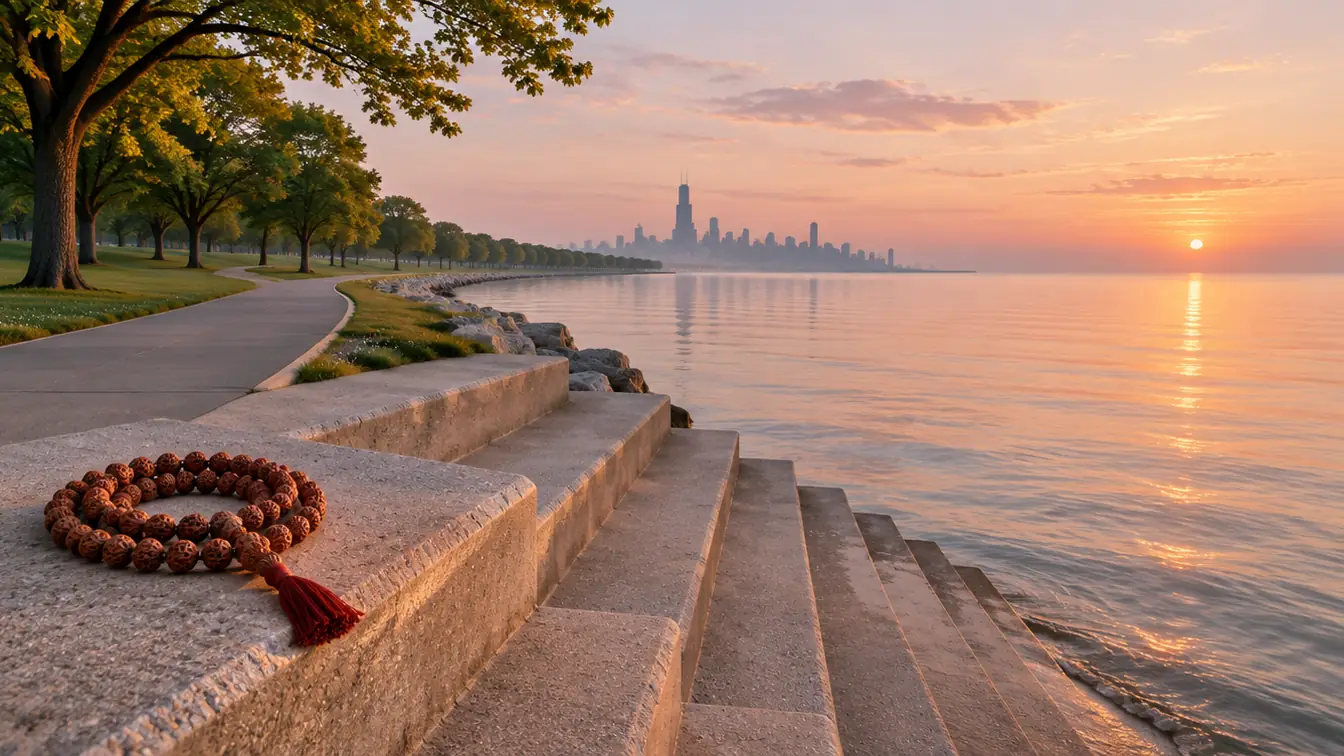
Good meditation spots in Chicago for mantra practice include the lakefront's quieter points at dawn: the beaches near the trail's north end in Edgewater, Montrose Point, Northerly Island, Promontory Point and the Japanese garden on Wooded Island. The eastern horizon over Lake Michigan suits sunrise prayer. Go early, dress for the wind and take every offering home.
Key takeaways
- Many Hindu morning prayers are said facing east at sunrise.
- The trail begins near the beaches of Edgewater, a short walk from Red Line stations.
- Most weeks, the lake will be a weekend treat, and practice happens on weekdays at home or on the train.
Chicago has one advantage most big cities lack: an open eastern horizon. Stand anywhere on the lakefront at dawn and the sun comes up over Lake Michigan, with the city at your back and the sound of the water covering most of the traffic. For anyone looking for meditation spots in Chicago, especially for mantra and japa, that is hard to beat. This guide runs north to south and stays practical.
Why the lakefront suits japa
Many Hindu morning prayers are said facing east at sunrise. The lake gives every point on the shore a clear view of that direction. Waves keep a steady rhythm that is easy to breathe with. And the trail itself is long enough to walk with a mala for as long as you like: the Chicago Park District describes the Lakefront Trail as running about 18 miles from Ardmore Avenue on the north to 71st Street on the south, with separate pedestrian and bike paths along much of it.
The trail passes through the four big lakefront parks, Lincoln, Grant, Burnham and Jackson, as the overview of the Chicago Lakefront Trail notes. On busy summer days it is anything but quiet. The calm comes early: before about seven in summer, and in the first hour of daylight in spring and fall.
North to south: six quieter places
The north end, Edgewater
The trail begins near the beaches of Edgewater, a short walk from Red Line stations. At first light the sand is usually empty, and the open water makes it one of the best spots for sunrise prayer. If you live in Rogers Park, Edgewater or near the east end of Devon Avenue, this is your nearest stretch.
Montrose Point
The point beside Montrose Harbor juts into the lake and includes a bird sanctuary with paths through grass and shrubs. It is a good place for walking japa among birdsong, especially during spring and fall migration. Keep to the paths and keep your voice low.
Lincoln Park, a short step off the trail
Lincoln Park has sheltered corners a few minutes inland from the lake, where trees cut the wind on raw mornings. The Alfred Caldwell Lily Pool, a small prairie-style garden near the zoo, is one; check whether it is open before you go. Spots like this suit seated practice when the shoreline is too exposed.
Northerly Island
Beyond the Adler Planetarium at the Museum Campus, Northerly Island is a lakefront park with walking paths and open views across the water. It suits a slow loop with a mala. If the planetarium sparks questions about the sky and the zodiac, the post on sidereal and tropical zodiacs picks up the thread.
Promontory Point
At 55th Street in Hyde Park, the Point is a small peninsula with stepped limestone blocks along the water and a skyline view to the north. Many people sit on the stones to watch the sunrise. It is one of the most loved spots on the lake for quiet sitting; the page on Hyde Park describes the neighborhood around it.
Wooded Island, Jackson Park
Near the south end of the trail, Wooded Island in Jackson Park holds the Garden of the Phoenix, a Japanese garden. It is a short walk inland from the lake and a calm place to sit with a few rounds of a mantra.
How to practice outdoors
- Walking japa. Move one bead per step or per breath. A traditional japamala has 108 beads; one round on foot takes about as long as a short walk between two beaches.
- Seated japa. Bring a folded cloth or small mat to sit on stone or sand. Face east if you can.
- Silent or aloud. Chant softly only when nobody is near. Silent repetition works anywhere.
- Stay off the bike path. Where paths are separated, walk on the pedestrian side, and step well aside before stopping.
Weather, safety and leaving no trace
- Wind. In spring and early summer it is often noticeably cooler by the lake than a few blocks inland. Bring a layer even in June.
- Winter. Ice forms on revetments and waves sometimes wash over the path. The Park District posts weather closures for parts of the trail; check before you go, and never sit on wet or icy stone near the edge.
- Dawn safety. Tell someone where you are going, keep your phone charged, and choose spots with other early walkers nearby.
- No offerings left behind. Do not leave flowers, food, ash or incense on the beach or in the water. Lamps and incense belong indoors.
Bringing it home
Most weeks, the lake will be a weekend treat, and practice happens on weekdays at home or on the train. The post on a five-minute mantra for the Metra or the 'L' covers the weekday side, and personal mantra and meditation guidance can help you shape both into one routine. A beautiful place does not do the practice for you, and a mantra by the water cannot treat anxiety or depression, which need a doctor or therapist. Astrologer and Psychic Vijayram offers the lakefront simply as a good setting for the steady attention that mantra asks for.
Common questions
Is it all right to chant aloud on the lakefront?
Softly, yes, when nobody is close by. At dawn many spots are almost empty. As the trail fills, switch to silent repetition, which the tradition treats as an equally valid form of japa, and often a more focused one.
Can I practice there in winter?
On calm, dry mornings, yes, briefly and well dressed. Avoid the revetment edges when waves are high or the stone is icy, and check the Park District for weather closures before you go. On harsh days, practice by an east-facing window at home instead.
Can I leave flowers or float a diya on the lake?
Please do not. Offerings left on the beach or in Lake Michigan become litter. Offer flowers at home or at a temple, and keep lamps and incense for indoors, where they can be watched and safely put out.
Which mantra suits a lakefront walk?
A short one you already know, so you are not reading from a phone. Many people use the Gayatri at sunrise or a one-line name mantra for walking. The guide to choosing a mantra by deity, planet or need can help you pick.
Related service

Keep reading
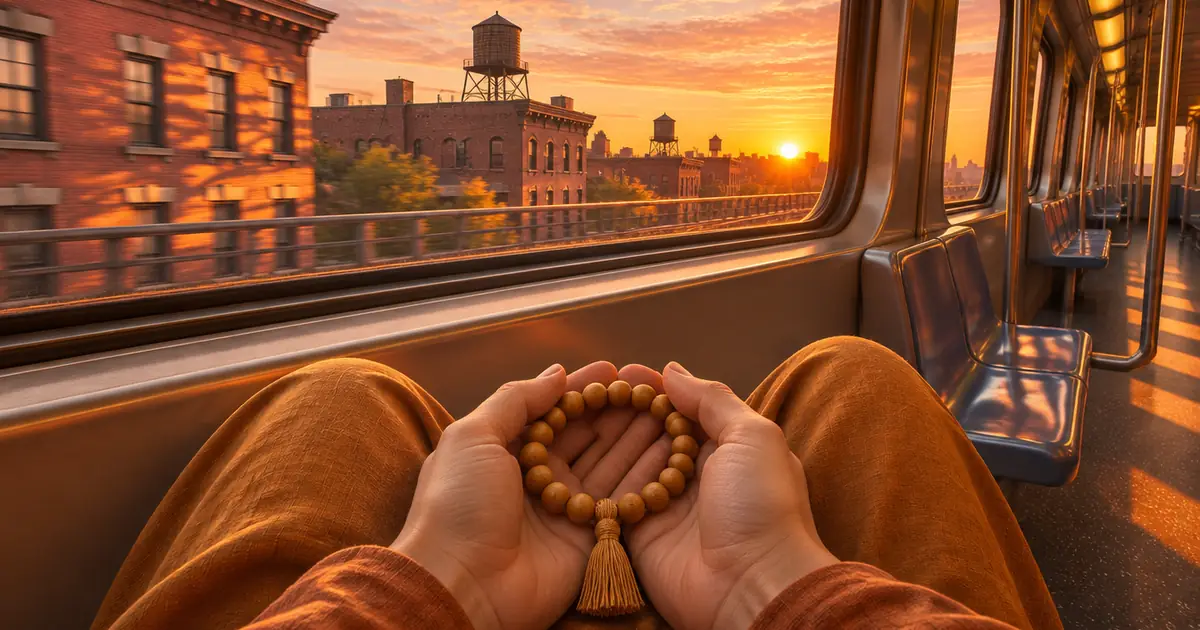
A Five-Minute Mantra for the Metra or the 'L'
A mantra for the commute, sized for Chicago's Metra and 'L' rides: a five-minute silent practice, finger counting instead of a mala, and train etiquette.
Read article →
The Aura Cleansing Ritual Step by Step, as Practiced in Chicago Homes
Aura cleansing in Chicago, step by step: the salt bath, lamp, water and mantra rite for an apartment or a house, smoke-free options and the limits of ritual.
Read article →
Grieving in Chicago When Family Is Far Away
Hindu grief support in Chicago when family is far away: the rites you can keep here, joining rites in India by video, and the people and services to lean on.
Read article →Quick answers
How will I know if an aura cleansing helped?
What is aura cleansing, and how do you know if it helped? What people describe afterward, the plain limits of a traditional practice, and when to see a doctor.
Read answer →Should I tell my doctor I am having spiritual healing sessions?
Is spiritual healing medical treatment? No. Why to tell your doctor about spiritual healing sessions, and how faith practice can sit beside your medical care.
Read answer →Talk to Astrologer and Psychic Vijayram
Tell us what you are facing. If a reading is unlikely to help, you will be told that plainly.