
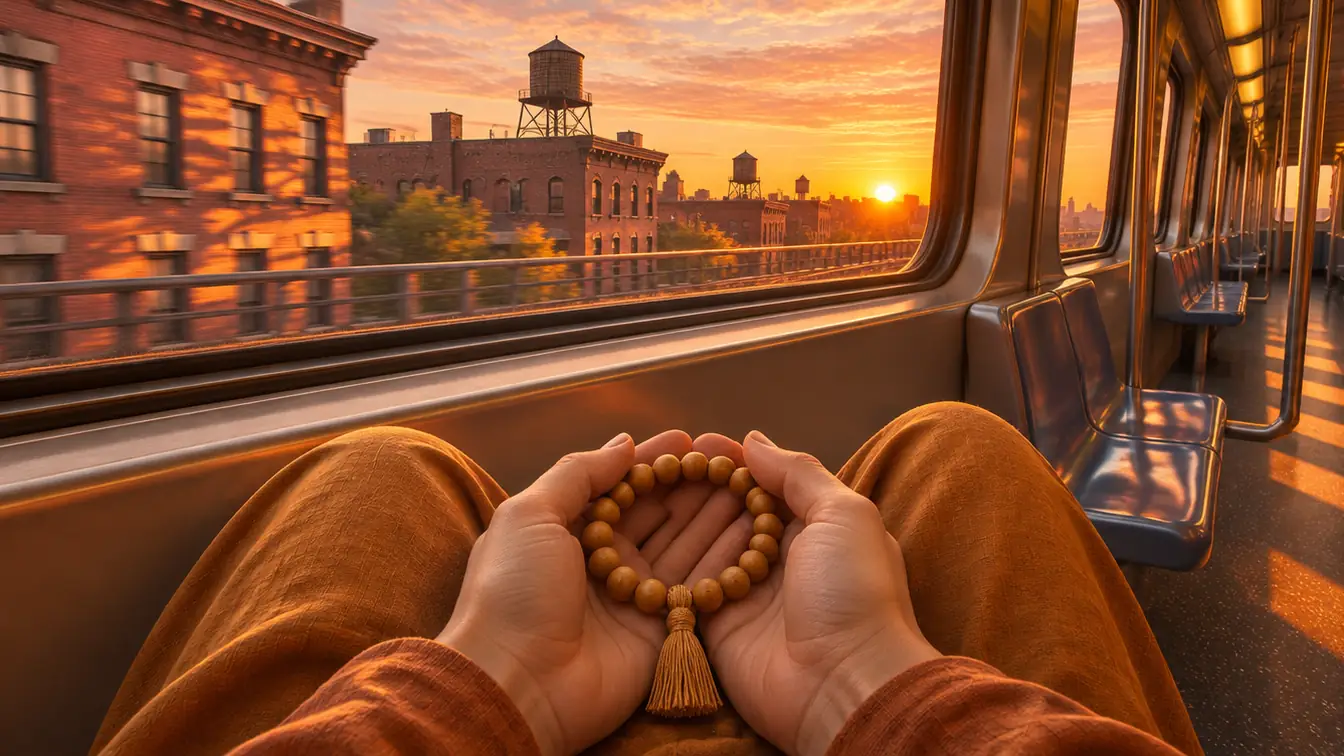
A Five-Minute Mantra for the Metra or the 'L'
A mantra for the commute is a short sacred phrase repeated silently for about five minutes of a ride. On Chicago's Metra or the 'L', settle for one stop, repeat the mantra with your breath while counting on your finger joints, then sit still before your station. It steadies the mind; it is not therapy.
Key takeaways
- A train ride has a beginning and an end, a steady rhythm and very little you need to do.
- Put your phone away, or at least face down.
- Another method suits the 'L', where stations come every minute or two: repeat the mantra continuously between one station and the next, then pause at the platform while doors open and close.
- Choose something short you already know by heart, so you are not reading from a screen.
- The morning ride sets a tone for the day.
The commute is often the only part of the day nobody else can claim. Twenty minutes on the Blue Line, forty on a BNSF train from Naperville, a quick hop on the Brown Line: each one can hold a short practice. This post sets out a mantra for the commute that takes five minutes, needs no equipment and draws no attention from the person in the next seat.
Why a train works well for mantra
A train ride has a beginning and an end, a steady rhythm and very little you need to do. Those are good conditions for japa, the repetition of a mantra. Chicago has plenty of them: Metra runs eleven commuter lines from four downtown terminals, as its system overview describes, and the CTA's 'L' carries riders across the city on its color-coded lines. Whether you ride the Red Line from Rogers Park, the Purple Line from Evanston or the Union Pacific Northwest line from Palatine, the method is the same.
The five-minute practice
Minute one: settle
Put your phone away, or at least face down. Sit with both feet on the floor. Let one stop go by while you simply notice the sound of the train and the weight of your body in the seat. If you are standing, hold the rail, keep your eyes open and soften your gaze.
Minutes two to four: repeat with the breath
Repeat your mantra silently, one repetition per out-breath or two per breath, whichever feels natural. Do not force the breath to match; let the words settle into the rhythm on their own.
To count without a mala, use the traditional finger method: touch your thumb to each segment of the four fingers in turn, which gives twelve counts per hand. Nine passes make 108. On a short ride, three passes, thirty-six repetitions, are plenty. Your hand can stay in a pocket or on your lap.
Minute five: stillness
Stop repeating. Sit for a few breaths with no words at all, and notice how you feel. Then gather your things before your stop arrives.
Use the stations as a mala
Another method suits the 'L', where stations come every minute or two: repeat the mantra continuously between one station and the next, then pause at the platform while doors open and close. Five stations make a full practice. On Metra, where stops are farther apart, one stretch between stations may be enough by itself.
Which mantra?
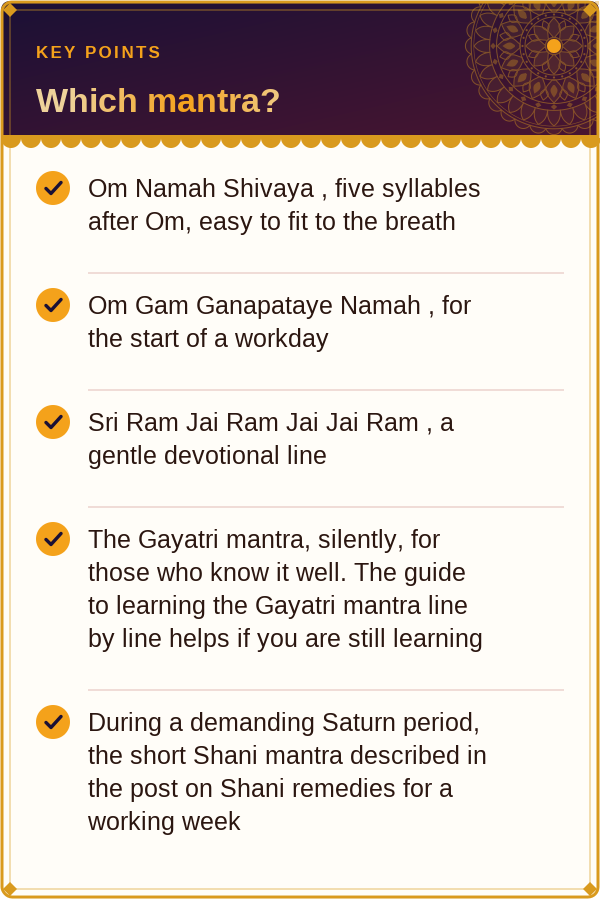
Choose something short you already know by heart, so you are not reading from a screen. Common choices:
- Om Namah Shivaya, five syllables after Om, easy to fit to the breath.
- Om Gam Ganapataye Namah, for the start of a workday.
- Sri Ram Jai Ram Jai Jai Ram, a gentle devotional line.
- The Gayatri mantra, silently, for those who know it well. The guide to learning the Gayatri mantra line by line helps if you are still learning.
- During a demanding Saturn period, the short Shani mantra described in the post on Shani remedies for a working week.
The same method works with prayers from other traditions; many Sikh riders do simran of Waheguru the same way. If you are unsure what to choose, the guide to choosing a mantra by deity, planet or need sets out the options.
Morning and evening rides
The morning ride sets a tone for the day. The evening ride is just as useful: a few minutes of mantra on the way home helps you leave work at work, so you walk in the door with something left for your family. Some people use a different mantra for each direction, one for energy, one for rest.
Etiquette and safety
- Stay aware of your surroundings, especially on platforms and near doors.
- Keep bags closed and on your lap rather than on the floor while your eyes are lowered.
- Never practice with eyes closed while standing near the platform edge.
- Keep it silent; a whispered mantra can sound like muttering to the next seat.
When the commute disappears
If you now work from home, you may miss the threshold a ride used to give you. A short walk around the block at the start and end of the day, with the mantra, does the same job. The post on blessing a home office offers other ways to mark the workday's edges.
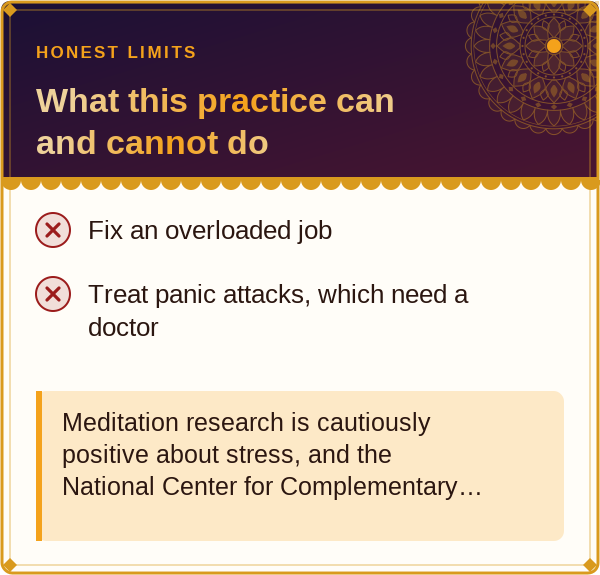
What this practice can and cannot do
Meditation research is cautiously positive about stress, and the National Center for Complementary and Integrative Health's review of meditation and its safety is a fair summary. A commute mantra cannot fix an overloaded job or treat panic attacks, which need a doctor. For a mantra chosen for you, with a routine built around your actual week, personal mantra and meditation guidance is available by phone or video. Astrologer and Psychic Vijayram sees five quiet minutes on a train as a small, real practice, and nothing grander.
Common questions
Is silent repetition as good as chanting aloud?
The tradition treats silent, mental repetition as a full form of practice, and many teachers rank it highly because it asks for more attention. Moving your lips without sound is a middle way that helps some people keep focus on a noisy train.
What if I lose count?
Let it go and keep repeating. Counting is a support, not the goal. On days when your mind keeps wandering, aim for five minutes by the clock instead of a number of repetitions.
I drive to work. Can I still do this?
Not with eyes closed or attention turned inward. Play a recording of the mantra and listen as you would to music, keeping your full attention on the road. Save the silent practice for the parking lot before you walk in.
Can I use a mala on the train?
Yes, discreetly. A small wrist mala or a mala kept in a coat pocket works well. Some people prefer finger counting on crowded trains so one hand can hold a rail.
Related service

Keep reading

The Aura Cleansing Ritual Step by Step, as Practiced in Chicago Homes
Aura cleansing in Chicago, step by step: the salt bath, lamp, water and mantra rite for an apartment or a house, smoke-free options and the limits of ritual.
Read article →
Grieving in Chicago When Family Is Far Away
Hindu grief support in Chicago when family is far away: the rites you can keep here, joining rites in India by video, and the people and services to lean on.
Read article →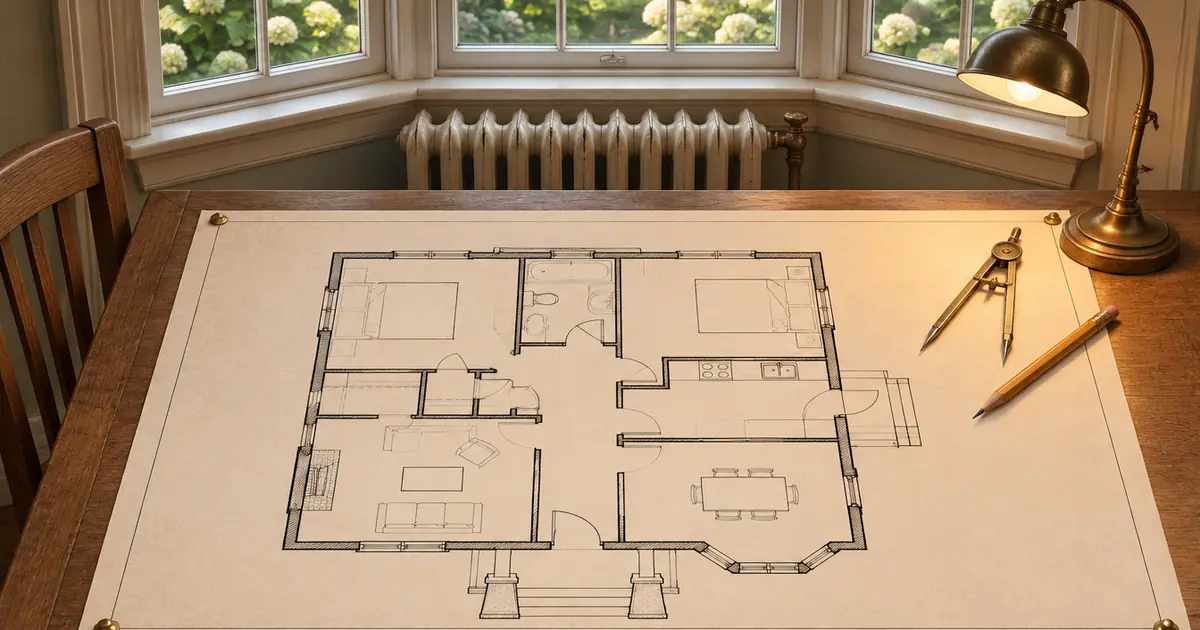
Vastu for Chicago Apartments and Bungalows
Vastu for apartments and bungalows in Chicago: the street grid, fixed kitchens, radiators and north light, with changes renters can make without building work.
Read article →Quick answers
How will I know if an aura cleansing helped?
What is aura cleansing, and how do you know if it helped? What people describe afterward, the plain limits of a traditional practice, and when to see a doctor.
Read answer →Should I tell my doctor I am having spiritual healing sessions?
Is spiritual healing medical treatment? No. Why to tell your doctor about spiritual healing sessions, and how faith practice can sit beside your medical care.
Read answer →Talk to Astrologer and Psychic Vijayram
Tell us what you are facing. If a reading is unlikely to help, you will be told that plainly.