
Chakra Balancing: What It Claims and What It Cannot Do
Chakra balancing is a contemplative practice in which you move attention, breath and sacred sound through seven centers along the spine. It can be calming, and breathing and meditation may ease stress for some people. There is no evidence that chakras are physical structures or that balancing them treats illness, so it never replaces medical care.
Key takeaways
- In the Vedic and tantric form, you sit upright, breathe slowly, and rest your attention at each center in turn while chanting its seed syllable: Lam, Vam, Ram, Yam, Ham, Om, then silence.
- As a practice, yes; as a mechanism, the evidence is missing.
- Online lists of blocked chakra signs usually include fatigue, anxiety, poor sleep, digestive trouble, headaches, low confidence and trouble speaking up.
- Go gently if you have a history of trauma, psychosis or panic attacks.
- The post on why energy cleansing and therapy do different jobs explains how the two can sit side by side.
People come to chakra balancing from many directions: a yoga class, a friend's recommendation, a video promising to clear blocked energy, or a family tradition of mantra and meditation. The practice can be quiet and steadying. It also attracts claims it cannot support. This post sets out what the practice is, what it claims and where the honest limits sit.
What is chakra balancing?
It is the practice of bringing attention, breath and sound to the seven centers described in yogic and tantric texts, from the base of the spine to the crown, with the aim of feeling more even and settled. In the Vedic and tantric form, you sit upright, breathe slowly, and rest your attention at each center in turn while chanting its seed syllable: Lam, Vam, Ram, Yam, Ham, Om, then silence. The guide to the seven chakras mapped to everyday habits gives the full chart.
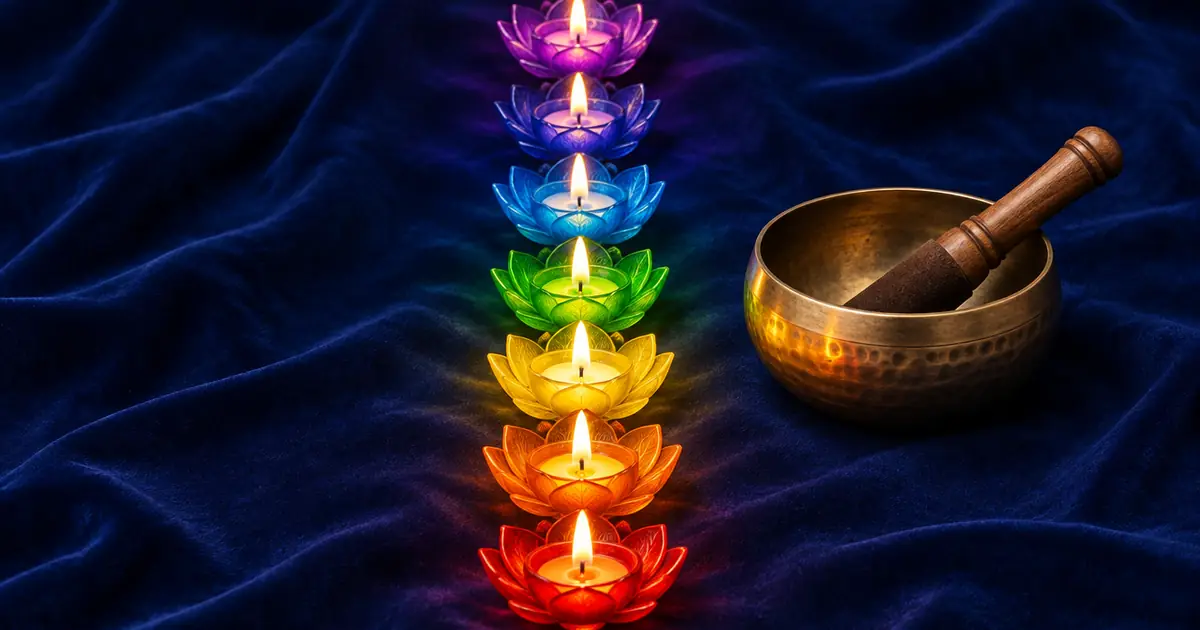
Other forms look quite different. Some practitioners work with their hands on or above the body. Others use crystals laid on the centers, singing bowls, color lights or pendulums. These grew mostly from twentieth-century Western energy-healing movements rather than from the older texts.
The claims, and what can honestly be said
| Common claim | An honest answer |
|---|---|
| It reduces stress | Slow breathing and meditation may help some people with stress, anxiety and sleep. That is the strongest ground the practice stands on. |
| It balances your energy | A meaningful description of an inner experience, but not something anyone can measure or verify. |
| It can detect blocked chakras | No reliable test exists. Pendulums, muscle testing and intuitive scans reflect the practitioner, not your body. |
| It heals illness or pain | No. There is no good evidence that it treats any disease. |
| It releases trauma | Strong feelings can surface in meditation, but working through trauma is the work of a trained therapist. |
Is chakra balancing real?
As a practice, yes; as a mechanism, the evidence is missing. Researchers group chakra work with energy therapies, practices based on the idea of a subtle life force, and the overview of energy medicine records that scientific study has not found such fields or shown that working with them treats disease. The National Center for Complementary and Integrative Health explains how such practices are classed in its guide to complementary, alternative and integrative health. Meditation, which overlaps with the traditional form, has more research behind it for stress, though results are modest.
You can hold both views at once. Many devout people treat the chakras as a sacred map without needing them to be anatomy. What matters is that the practice is used for reflection and calm, never in place of care.
About blocked chakra signs
Online lists of blocked chakra signs usually include fatigue, anxiety, poor sleep, digestive trouble, headaches, low confidence and trouble speaking up. Every one of those has ordinary causes, and several can signal conditions a doctor should check, from thyroid problems to depression. Use the chakra map to reflect on patterns in your life if it helps. Do not use it to explain away symptoms. If something physical is new, persistent or getting worse, see a doctor; if low mood or thoughts of self-harm are part of it, contact the Suicide and Crisis Lifeline.
How to do it at home: a ten-minute version
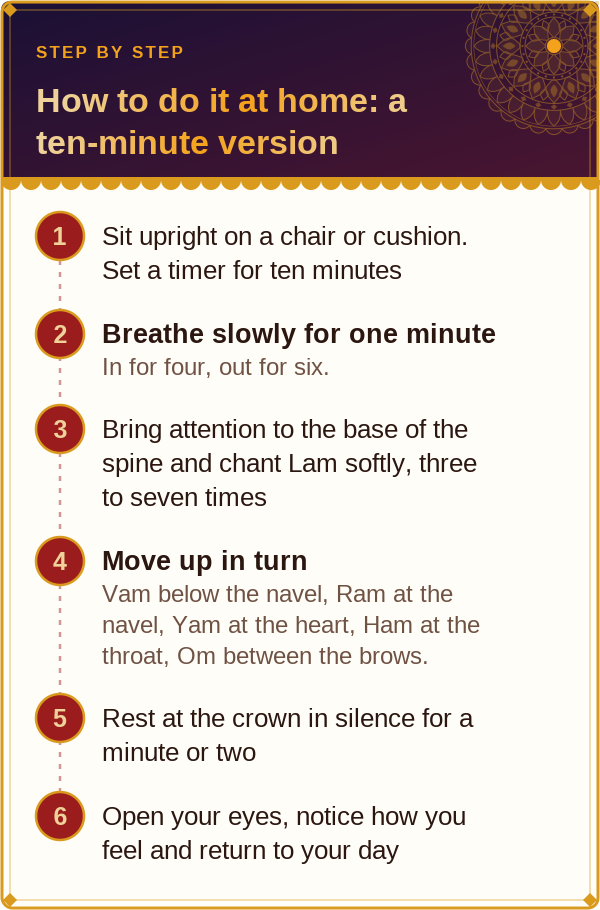
- Sit upright on a chair or cushion. Set a timer for ten minutes.
- Breathe slowly for one minute: in for four, out for six.
- Bring attention to the base of the spine and chant Lam softly, three to seven times.
- Move up in turn: Vam below the navel, Ram at the navel, Yam at the heart, Ham at the throat, Om between the brows.
- Rest at the crown in silence for a minute or two.
- Open your eyes, notice how you feel and return to your day.
If you want this taught properly, with pronunciation and a routine shaped around your week, a chakra balancing session with breath and mantra covers it by phone or video.
Who should go carefully
Meditation is generally safe, but the NCCIH review of meditation and mindfulness notes that a small number of people have unpleasant experiences, and that people with certain mental health conditions should talk to their providers first. Go gently if you have a history of trauma, psychosis or panic attacks. Skip forceful breathing techniques if you are pregnant or have a heart or lung condition. Stop if you feel dizzy, frightened or unwell.
What the practice cannot do
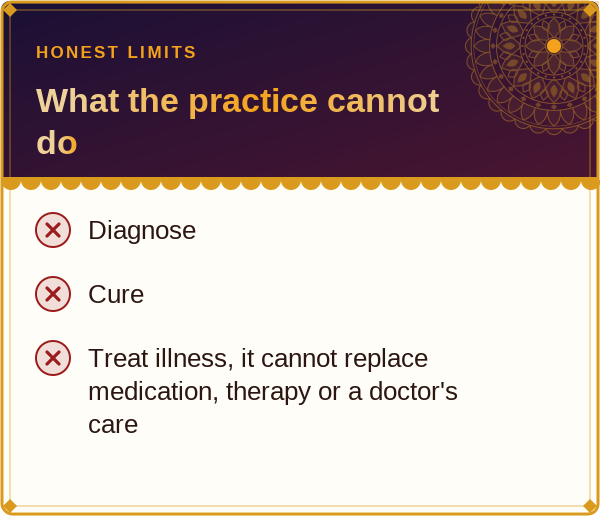
It cannot diagnose, cure or treat illness, and it cannot replace medication, therapy or a doctor's care. The post on why energy cleansing and therapy do different jobs explains how the two can sit side by side. Astrologer and Psychic Vijayram teaches chakra work as meditation and devotion, honestly described, alongside the care you already have.
Common questions
Is chakra healing real?
It is real as a practice people do and value, and the calm many feel afterward is real too. There is no reliable evidence that chakras exist as physical structures or that chakra healing changes the course of any disease. Treat it as meditation and devotion, not as medicine.
How is chakra healing done?
It depends on the practitioner. Some teach breath, seed syllables and visualization; some hold their hands on or above the body; others use crystals, sound bowls or pendulums. In this practice it is taught, by phone or video, as breath and mantra you can do yourself.
A healer used a pendulum and said my heart chakra is blocked. Is that a test?
No. A pendulum's swing is shaped by tiny, unconscious hand movements, known as the ideomotor effect, so it reflects the person holding it. It cannot diagnose anything. If you have symptoms in your chest, see a doctor.
Should I tell my doctor I am doing chakra work?
Yes, as you would mention any complementary practice. It helps your care team see the whole picture. The short answer on telling your doctor about spiritual healing gives a simple way to bring it up.
Related service
Keep reading
Choosing a Mantra: By Deity, by Planet or by Need
Which mantra to chant? How a mantra is picked from your birth chart, your chosen deity or what you need now, with the nine planetary beej mantras in one table.
Read article →
Gayatri Mantra at Sunrise: Learning the Pronunciation Line by Line
The Gayatri mantra meaning, line by line, with a plain pronunciation guide, the story behind the verse and a simple way to begin a daily count at sunrise.
Read article →
The Mahamrityunjaya Mantra: When Families Chant It
The Mahamrityunjaya mantra, its meaning and when families chant it: at a diagnosis, on surgery day, in recovery. A prayer for strength said beside treatment.
Read article →Quick answers
How will I know if an aura cleansing helped?
What is aura cleansing, and how do you know if it helped? What people describe afterward, the plain limits of a traditional practice, and when to see a doctor.
Read answer →Should I tell my doctor I am having spiritual healing sessions?
Is spiritual healing medical treatment? No. Why to tell your doctor about spiritual healing sessions, and how faith practice can sit beside your medical care.
Read answer →Talk to Astrologer and Psychic Vijayram
Tell us what you are facing. If a reading is unlikely to help, you will be told that plainly.