

The Seven Chakras Mapped to Everyday Habits
The seven chakras are centers along the spine described in Indian tantric and yogic texts: root, sacral, navel, heart, throat, brow and crown. Each has a theme, such as stability, creativity, will, love, speech, insight and connection. They are a contemplative map for reflection and practice, not anatomy, and they do not diagnose anything.
Key takeaways
- Teachers then added colors, crystals and psychology.
- The root is about feeling secure in your body and your days.
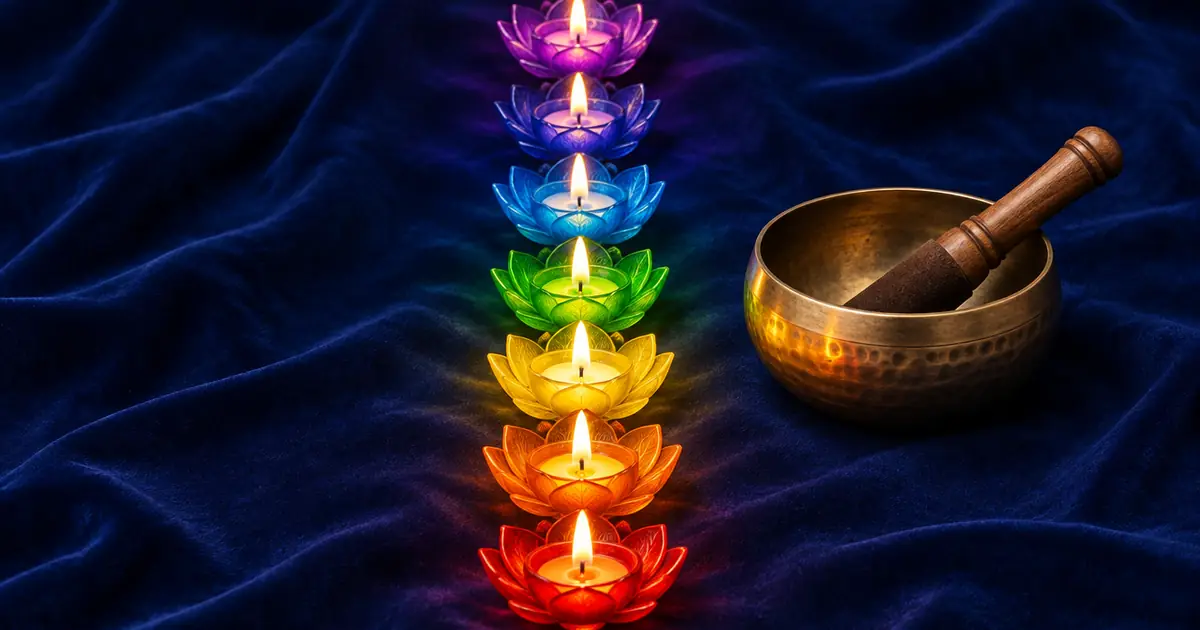
- Many people combine the chart with breath and sound: sitting upright, moving attention slowly from the base of the spine to the crown, chanting each seed syllable a few times along the way.
- Chakras are not organs, and a "blocked chakra" is not a diagnosis.
The seven chakras appear on yoga studio walls, phone wallpapers and incense boxes, usually as a rainbow column of circles. Behind the pictures is an old contemplative map from Indian tradition. This guide gives each chakra's location, theme and seed syllable, then pairs it with one ordinary habit people use to reflect on that theme. Think of it as a way to notice your life, not as a medical chart.
Where the map comes from
Chakra means wheel. The idea of subtle centers along the spine developed in medieval tantric and yogic texts, with many different systems; the overview of the chakra in Indian traditions traces how the familiar seven-center model reached the West, largely through an early twentieth-century English translation of a sixteenth-century Sanskrit text. Teachers then added colors, crystals and psychology. The core, in the Vedic and tantric view, remains a map for meditation: places to rest attention, each linked with a sound and a quality.
A chakra chart at a glance
| Chakra | Where | Theme | Seed syllable |
|---|---|---|---|
| Muladhara (root) | Base of the spine | Stability, safety, the body | Lam |
| Svadhisthana (sacral) | Below the navel | Creativity, feeling, pleasure | Vam |
| Manipura (navel) | Navel and upper belly | Will, energy, confidence | Ram |
| Anahata (heart) | Center of the chest | Love, compassion, grief | Yam |
| Vishuddha (throat) | Throat | Speech, truth, listening | Ham |
| Ajna (brow) | Between the eyebrows | Insight, discernment | Om |
| Sahasrara (crown) | Top of the head | Connection beyond the self | Silence, or Om |
One everyday habit for each chakra
Root: keep a steady rhythm
The root is about feeling secure in your body and your days. The simplest habit that reflects it is a regular wake-up and bedtime, kept on weekends too. Standing for a minute each morning with your feet flat on the floor, noticing your weight, is another. When life feels unsteady, people often find that routine helps more than any special practice.
Sacral: make something with your hands
The sacral center is linked with creativity and feeling. Once a week, make something without a purpose: cook a dish slowly, draw, play an instrument, plant seeds on a windowsill. The point is enjoying the process, which many adults have quietly stopped doing.
Navel: do the hard thing first
Manipura is associated with will and inner fire, and in Ayurvedic language with digestion. A habit that reflects it is tackling one difficult task before checking messages each morning. Eating meals at regular times is another; the tradition treats steady digestion and steady effort as related.
Heart: one deliberate kindness
Anahata holds love, compassion and also grief. Make one deliberate act of kindness a day: a call to a parent, a note to a friend, patience with a coworker. When grief is present, let the heart theme include letting yourself feel it rather than hurrying past.
Throat: say one true thing kindly
Vishuddha concerns speech and listening. A daily habit is to pause before replying in a tense moment, and to say one honest thing gently that you would usually swallow. Chanting aloud, even for a few minutes, is the traditional practice most tied to this center.
Brow: five quiet minutes
Ajna is the seat of insight. Five minutes of silence each morning, before the phone, is the habit most people find useful. Writing down a decision you are weighing, and returning to it the next day, works too.
Crown: gratitude and wonder
Sahasrara points beyond the self. Prayer, a few lines of gratitude at night or time outdoors watching the sky or the lake all reflect it. For Chicago readers, the post on quiet places for mantra along the lakefront suggests where.
Turning the map into practice
Many people combine the chart with breath and sound: sitting upright, moving attention slowly from the base of the spine to the crown, chanting each seed syllable a few times along the way. Yoga and breath practices are generally considered safe for healthy people when learned properly, as the National Center for Complementary and Integrative Health's review of yoga's effectiveness and safety notes, though people with certain conditions should adapt them. A chakra balancing session teaches a routine you can keep, and the guide to choosing a mantra helps if you want a longer mantra alongside the seed syllables.
What the chakra map cannot do
Chakras are not organs, and a "blocked chakra" is not a diagnosis. Chest pain is a reason to call emergency services, not a heart chakra problem; a sore throat that lingers needs a doctor, not a throat chakra practice. The post on what chakra balancing claims and what it cannot do goes into those limits in detail. Astrologer and Psychic Vijayram uses the seven chakras as a map for reflection and devotion, nothing more.
Common questions
Are the chakra colors traditional?
Not in the rainbow form most charts use. Older Indian texts give each chakra its own colors, elements and deities, often different from the red-to-violet sequence. The rainbow scheme became popular in the twentieth century. Use it if it helps you remember, but do not treat it as ancient.
Why do some systems list six chakras, or more than seven?
Different texts and schools count differently. The best-known model counts six centers along the spine with the crown described as beyond them, which many people now simply call seven. Other traditions describe more. The number matters less than how you use the map.
How do I know which chakra to work on?
Start with the theme you recognize in your life, not with a symptom. If you keep avoiding hard conversations, the throat theme is a fair place to reflect. If you want structured guidance, a chakra balancing session with breath and mantra teaches a full routine.
Can I chant all seven seed syllables in one sitting?
Yes. A common practice moves from the base upward, chanting each syllable several times while resting attention at that point, then sitting quietly at the end. Ten minutes is enough. Go gently and stop if you feel dizzy or uneasy.
Related service
Keep reading
Chakra Balancing: What It Claims and What It Cannot Do
What chakra balancing is, whether it is real, how it is done and what it honestly cannot do: a contemplative practice of breath and sound, not a treatment.
Read article →
Choosing a Mantra: By Deity, by Planet or by Need
Which mantra to chant? How a mantra is picked from your birth chart, your chosen deity or what you need now, with the nine planetary beej mantras in one table.
Read article →
Gayatri Mantra at Sunrise: Learning the Pronunciation Line by Line
The Gayatri mantra meaning, line by line, with a plain pronunciation guide, the story behind the verse and a simple way to begin a daily count at sunrise.
Read article →Quick answers
How will I know if an aura cleansing helped?
What is aura cleansing, and how do you know if it helped? What people describe afterward, the plain limits of a traditional practice, and when to see a doctor.
Read answer →Should I tell my doctor I am having spiritual healing sessions?
Is spiritual healing medical treatment? No. Why to tell your doctor about spiritual healing sessions, and how faith practice can sit beside your medical care.
Read answer →Talk to Astrologer and Psychic Vijayram
Tell us what you are facing. If a reading is unlikely to help, you will be told that plainly.