

Pitru Dosha: What It Means and How Families Respond
Pitru dosha is a traditional idea that unresolved duties toward ancestors can show in a birth chart, usually read through the Sun and the ninth house. It is not a curse. Families respond with simple remembrance: shraddha on the death anniversary, tarpan in Pitru Paksha, charity in ancestors' names and care for living elders.
Key takeaways
- Lean on family, friends, your temple or a grief counselor.
- Vedic tradition speaks of three debts every person is born with: to the gods, to the sages who preserved knowledge, and to the ancestors, the pitris.
- In astrology, the term is a later idea, and practitioners define it differently.
- Online lists of so-called symptoms include family quarrels, marriage delays, childlessness, debts and illness.
- The traditional response is remembrance, and most of it costs little or nothing:
Few phrases worry families more than pitru dosha. It is often mentioned in passing during a reading, then repeated by relatives until it sounds like a family curse. It is nothing of the kind. Understood properly, it is an invitation to remember the people you come from. This post explains the idea, how astrologers use it, and the simple observances families keep in response.
If your loss is recent
If you are reading this because someone close to you has died, please put the astrology aside for now. Lean on family, friends, your temple or a grief counselor. If grief brings thoughts of ending your life, contact the Suicide and Crisis Lifeline at any hour, or call emergency services. The post on grieving in Chicago when family is far away covers the support and rites that matter in the first weeks. Nothing here is urgent.
The old idea: a debt of gratitude
Vedic tradition speaks of three debts every person is born with: to the gods, to the sages who preserved knowledge, and to the ancestors, the pitris. The debt to ancestors is repaid by remembering them, continuing the family's good name and caring for the next generation. The main rite for this is shraddha, an offering of food, water and prayer made for departed parents and forebears, described in the overview of shraddha and its customs.
The Hindu American Foundation's explanation of Pitru Paksha, the yearly two weeks devoted to ancestors in early autumn, puts the spirit of it simply: gratitude to those who came before, expressed through offerings, charity and remembrance. That is the root of everything that follows.
How astrologers use the term
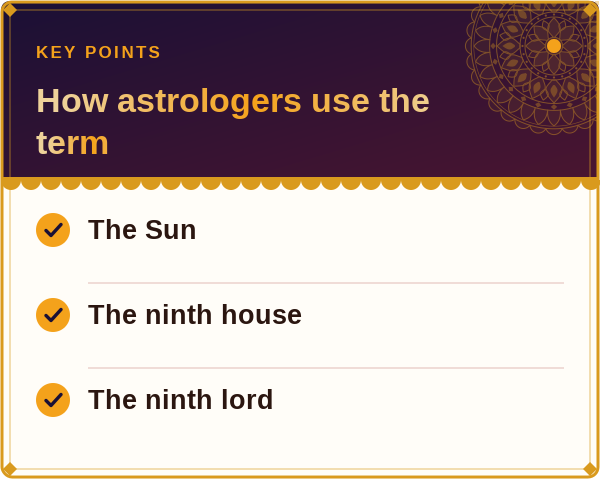
In astrology, the term is a later idea, and practitioners define it differently. Common readings look at:
- The Sun, which signifies the father and the paternal line, especially when it sits with Rahu, Ketu or Saturn.
- The ninth house, the house of father, ancestors, fortune and dharma, when it holds or is aspected by those planets.
- The ninth lord, when it is weak or badly placed.
Because so many combinations are counted, a large share of all charts could be said to have some version of it. That alone is a reason not to panic. A Vedic birth chart reading looks at the whole chart, where any single combination is one thread among many.
What pitru dosha is not
- It is not a curse placed on you by an angry ancestor.
- It is not proof that your family did something wrong.
- It is not the cause of every delay in marriage, children, money or health.
- It is not a reason to pay large sums for a ceremony under pressure.
Online lists of so-called symptoms include family quarrels, marriage delays, childlessness, debts and illness. These are ordinary human difficulties with ordinary causes. A doctor, a counselor, a financial adviser or a frank family conversation will help with them far more than any label.
How families respond
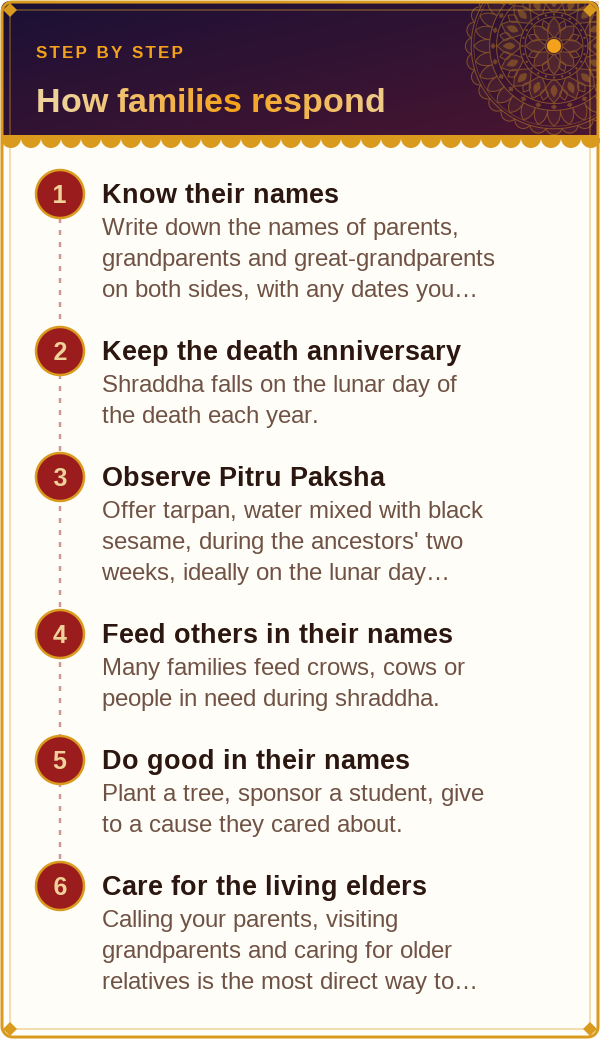
The traditional response is remembrance, and most of it costs little or nothing:
- Know their names. Write down the names of parents, grandparents and great-grandparents on both sides, with any dates you know. Many families have lost this in one or two generations of moving.
- Keep the death anniversary. Shraddha falls on the lunar day of the death each year. A priest can perform it, or you can offer food, water and prayer at home. Dates must be worked out for Central Time, not copied from an Indian calendar.
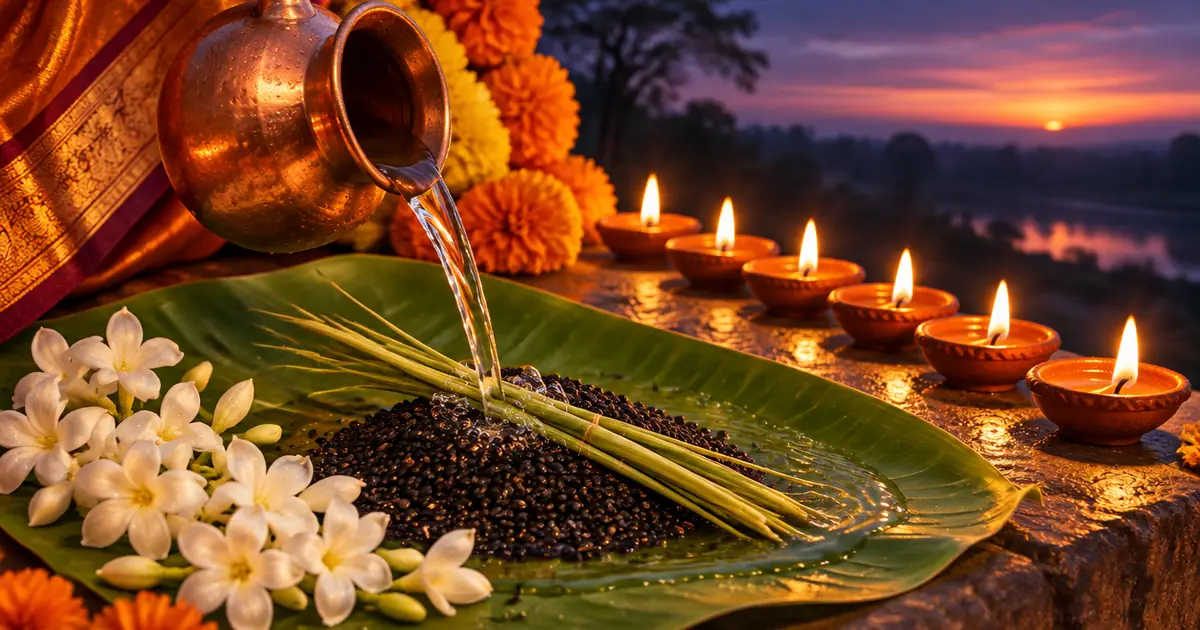
- Observe Pitru Paksha. Offer tarpan, water mixed with black sesame, during the ancestors' two weeks, ideally on the lunar day matching each ancestor's death.
- Feed others in their names. Many families feed crows, cows or people in need during shraddha. In Chicago, a donation to a food pantry or a temple kitchen in an ancestor's name keeps the same spirit.
- Do good in their names. Plant a tree, sponsor a student, give to a cause they cared about.
- Care for the living elders. Calling your parents, visiting grandparents and caring for older relatives is the most direct way to honor the ancestral line.
Larger rites, such as a shraddha at a pilgrimage site in India, are optional. They are meaningful for many families, but no one should be frightened into them. The post on questions to ask before paying for a dosha puja applies here too.
Guidance, calmly given
If you would like help working out shraddha and Pitru Paksha dates for your family, or a calm explanation of what your chart actually shows, ancestral prayers (Pitru) guidance runs by phone, WhatsApp or video. Nothing is sold through fear.
What the observances cannot do
Remembering ancestors cannot fix a medical condition, a legal problem or a debt, and no rite can guarantee children, marriage or wealth. What it can do is keep a family connected across generations and continents. Astrologer and Psychic Vijayram explains the idea in exactly that light.
Common questions
How do I know if I have pitru dosha?
Only by having a chart read, and even then astrologers disagree about the combinations. Because several common placements are counted, a large share of charts could be said to show it. A sensible reading treats it as a reminder to honor your ancestors, never as a verdict on your life.
An astrologer says my marriage delay is due to pitru dosha and I need an expensive puja. Is that true?
Be cautious. Delays in marriage, children or work have many ordinary causes, and no honest astrologer will tie them to a single dosha and demand a large fee. The post on how fear and growing fees are used to pressure people lists the warning signs.
My parent died recently. Should I be worried about pitru dosha now?
No. A death does not create a dosha. In the first weeks and months, lean on family, your faith community and, if you need it, a grief counselor. If grief brings thoughts of ending your life, contact the Suicide and Crisis Lifeline. The rites for your parent can be kept calmly, at your own pace.
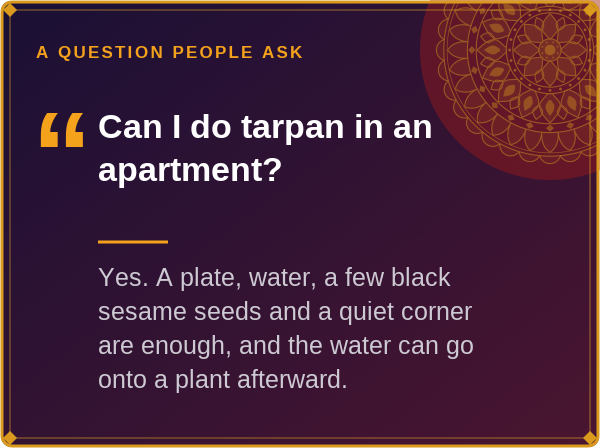
Can I do tarpan in an apartment?
Yes. A plate, water, a few black sesame seeds and a quiet corner are enough, and the water can go onto a plant afterward. The post on a simple Pitru Paksha practice in a Chicago apartment walks through it.
Related service
Keep reading
Ayurveda and Jyotish: Where They Meet and Where We Stop
Ayurveda and astrology share Vedic roots and pair planets with doshas. Where the two traditions meet, and why health questions go to licensed practitioners.
Read article →
Home From a Chicago Hospital: Mantra, Rest and Your Care Team
Prayer for recovery after surgery, for the weeks at home: following the discharge plan, quiet mantra in bed, family support and Chicago winter sense.
Read article →
Vastu for a Chicagoland Split-Level: Half-Floors, Basements and Entrances
Vastu for a split level house in the Chicago suburbs: the stair-facing entrance, half-floors, the kitchen level and finished basements, with no building work.
Read article →Quick answers
How will I know if an aura cleansing helped?
What is aura cleansing, and how do you know if it helped? What people describe afterward, the plain limits of a traditional practice, and when to see a doctor.
Read answer →Should I tell my doctor I am having spiritual healing sessions?
Is spiritual healing medical treatment? No. Why to tell your doctor about spiritual healing sessions, and how faith practice can sit beside your medical care.
Read answer →Talk to Astrologer and Psychic Vijayram
Tell us what you are facing. If a reading is unlikely to help, you will be told that plainly.