
Six Tastes for a New Year: Ugadi Pachadi and Gudi Padwa in Chicagoland
Ugadi and Gudi Padwa mark the lunar new year on the first day of the bright half of Chaitra, usually in March or April. In Chicago, Telugu and Kannada families make the six-taste Ugadi pachadi, Marathi families raise a gudi at a window, and many listen to the new year's panchang read aloud.
Key takeaways
- Ugadi and Gudi Padwa fall on the same day: Chaitra Shukla Pratipada, the first day of the waxing half of the lunar month of Chaitra, which lands in March or April.
- As a picture of the year, it is honest in a way many horoscopes are not.
- For Telugu families especially, Ugadi is the day of panchanga sravanam, listening to the new year's almanac being read.
- Chicagoland's Indian families get two "new years" within three months.
- Astrologer and Psychic Vijayram offers it by phone, WhatsApp or video, with times in Central Time, and families from the Aurora and Naperville area can find more about local life on the Aurora page .
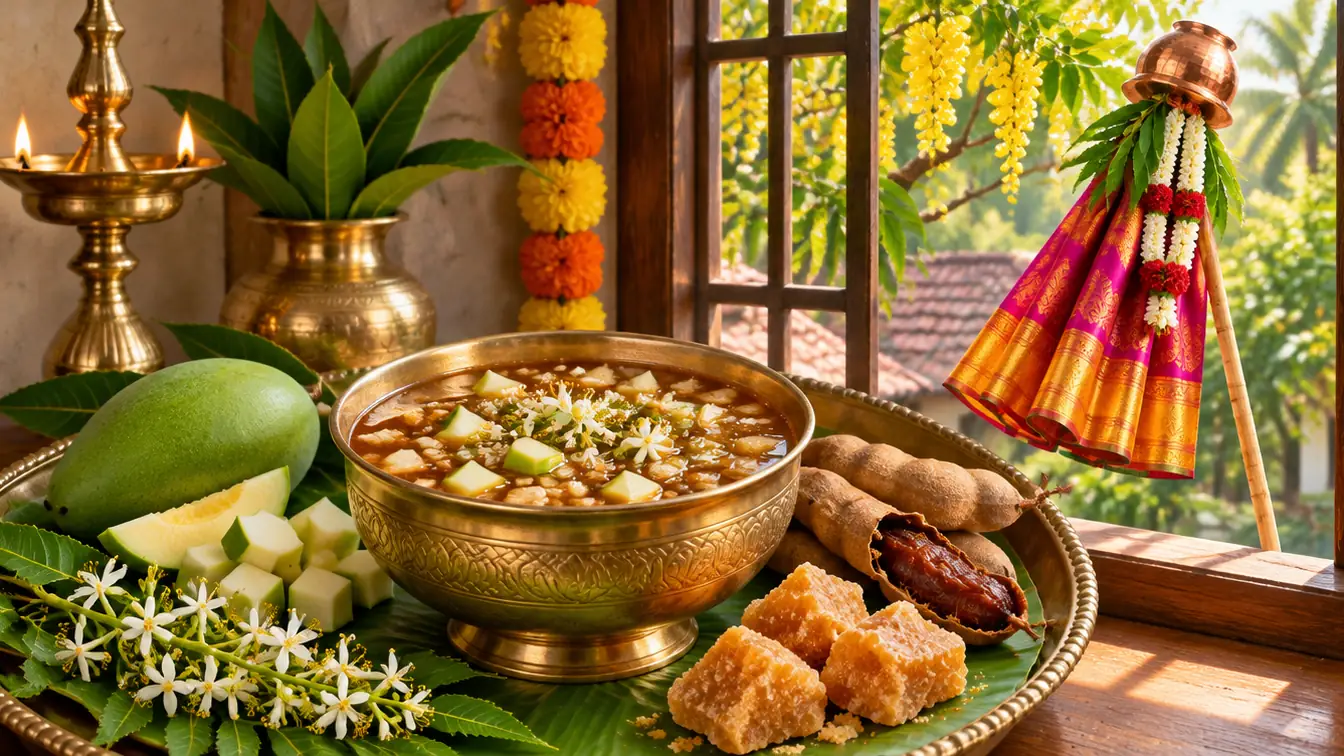
Bitter neem, sweet jaggery, sour tamarind, tangy raw mango, hot chili and a pinch of salt: stirred together in one small bowl, they make Ugadi pachadi, the first thing many Telugu and Kannada families taste on New Year's morning. The point is that you swallow all six. A year, the custom says, will hold every one of them.
One new year, several names
Ugadi and Gudi Padwa fall on the same day: Chaitra Shukla Pratipada, the first day of the waxing half of the lunar month of Chaitra, which lands in March or April. The overview of Ugadi describes it as the new year for people in Andhra Pradesh, Telangana and Karnataka; the account of Gudi Padwa covers its Marathi and Konkani forms. Sindhi families celebrate Cheti Chand at the same season. Across Chicagoland, these communities often live a few streets apart.
The Telugu community has deep roots in the area's temple life. The Sri Venkateswara Swami temple in Aurora, built in the 1980s and modeled on Tirupati, as the history of Hindus in Chicago records, remains a gathering point for many families around the new year.
The six tastes, and what they stand for
| Ingredient | Taste | The part of life it stands for |
|---|---|---|
| Neem flowers | Bitter | Sorrow and hardship |
| Jaggery | Sweet | Happiness |
| Tamarind | Sour | Things that sour or disgust us |
| Raw mango | Tangy | Surprise |
| Green chili or pepper | Hot | Anger and heat |
| Salt | Salty | Fear |
As a picture of the year, it is honest in a way many horoscopes are not. It does not promise only sweetness. It asks you to accept that the coming months will bring a mix, and to meet each taste with balance. That is close to how a careful astrologer would want any year-ahead reading to be heard.
Making it in a Chicago kitchen
Raw mangoes and tamarind are easy to find at Indian groceries. Fresh neem flowers are not, in a Chicago March; families use dried neem flowers when they can find them or leave the bitter note out. A small bowl per person is enough. Children often pull faces at the neem, which is rather the point.
Raising the gudi
In Marathi homes, the morning centers on the gudi: a bamboo staff topped with a bright silk cloth, neem and mango leaves, a garland of sugar crystals and an upturned copper or silver pot, raised at the right side of the entrance or at a window. It is a flag of victory and welcome for the year.
Chicago adds a few practical notes. Spring wind off the lake can be fierce, so secure the staff well. In a high-rise, tie it inside a window facing out rather than on an open balcony. In a suburban house, the front window or the porch rail works; check HOA rules if you want it outside for the day. Take it down before sunset, as tradition asks.
Reading the year's panchang
For Telugu families especially, Ugadi is the day of panchanga sravanam, listening to the new year's almanac being read. The reading names the year in the sixty-year cycle, the planet that rules the year as its "king" (traditionally the lord of the weekday on which the year begins) and its "minister" (the lord of the weekday when the Sun enters Aries), along with seasonal tendencies and rainfall. Many temples and community associations hold a reading; check their own schedules.
Two points are worth keeping in mind:
- Location matters. A panchang printed for Hyderabad or Pune gives Indian times. For local tithi changes, sunrise and daily windows, use one calculated for Chicago; the post on reading a Chicago panchang explains why.
- The year's reading is general. It speaks about the year for everyone. Your own year depends on your chart and running dasha.
Families who keep several calendars, Telugu, Marathi, Gujarati and Bengali, often under one roof, will find more in lunar calendars on Devon Avenue.
Spring versus January
Chicagoland's Indian families get two "new years" within three months. Makar Sankranti in January follows the Sun; Ugadi follows the Moon. Some people use Sankranti for gratitude and Ugadi for planning, a rhythm described in keeping Makar Sankranti in Chicago. For the year's broad transits, see a Vedic look at 2027.
A personal panchang reading
If you would like the year read for you rather than for everyone, a year-ahead Varshaphal reading uses your own chart and maps the months ahead. Astrologer and Psychic Vijayram offers it by phone, WhatsApp or video, with times in Central Time, and families from the Aurora and Naperville area can find more about local life on the Aurora page.
What the six tastes cannot tell you
The pachadi is a lesson, not a prediction. Neither it nor any panchang can say what your year will bring. It can remind you, on the first morning, that bitterness and sweetness both pass, and that balance is something you practice, not something you are given.
Common questions
Why does Ugadi sometimes fall on a different day in Chicago than in India?
Festival days follow the lunar day current at local sunrise. Because Chicago's sunrise comes many hours after India's, the new lunar day is sometimes already running there and not yet here, which can shift the observance by a day.
Can I make Ugadi pachadi without fresh neem flowers?
Yes. Dried neem flowers work when you can find them, and some families leave the bitter element out rather than substitute. The idea of accepting every taste matters more than the exact ingredient.
Where should a gudi go in an apartment?
Traditionally it is raised at the right side of the main entrance or at a window facing outward. In a high-rise, tie it securely inside a window rather than on a windy balcony.
What is panchanga sravanam?
It is the custom of listening to the new year's almanac being read aloud on Ugadi: the year's ruling planets, seasons and general tendencies. Many temples and community associations hold one.
Related service
Keep reading

Abhijit Muhurta and Choghadiya: Daily Time Windows on a Chicago Panchang
How a panchang for Chicago works out Abhijit Muhurta, Choghadiya and Rahu Kalam from local sunrise and sunset, and how to use them for ordinary plans.
Read article →
Visible or Not? Deciding on Grahan Customs When an Eclipse Crosses Chicago's Sky
Grahan rules in the USA start with one question: can the eclipse be seen from Chicago? How visibility decides sutak, meals and temple closures.
Read article →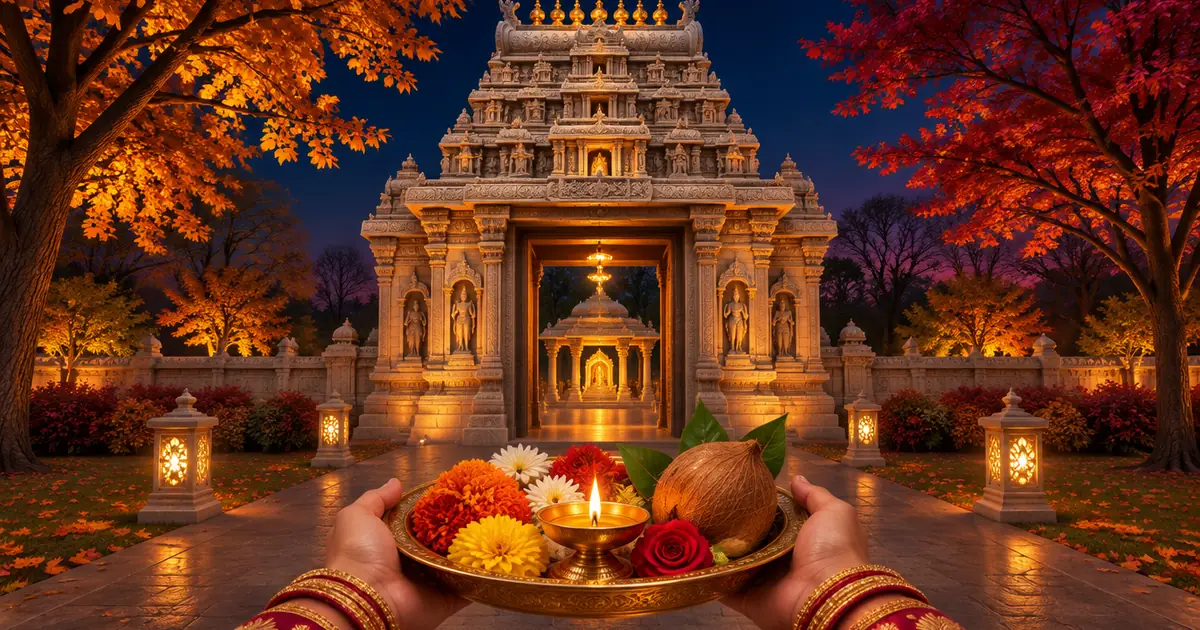
Visiting Chicago-Area Temples After a Reading: Lemont, Aurora, Bartlett
Hindu temples near Chicago in Lemont, Aurora and Bartlett: how a temple visit fits a remedy suggested in a reading, what to ask for and what to check first.
Read article →Quick answers
Can a Western birth chart printout be turned into a kundli?
What is a kundli, and can a Western birth chart printout become one? Yes, from the same birth data. Here is what the sidereal shift and Indian layout change.
Read answer →How exact does my birth place need to be: city, hospital or village?
The birth chart reading details needed: date, clock time and town. Why the nearest city is usually close enough, and when a more exact birthplace helps.
Read answer →Talk to Astrologer and Psychic Vijayram
Tell us what you are facing. If a reading is unlikely to help, you will be told that plainly.