
Wedding Shopping on Devon Avenue: Dates Families Like to Start
Many families begin wedding shopping on Devon Avenue on a chosen day: a first purchase of gold, a sari or the bride's outfit made on a favorable weekday, tithi or nakshatra, often outside Rahu Kalam. The custom marks a good start. It is optional, and the rest of the shopping can follow whatever schedule works.
Key takeaways
- In many Hindu households, the first purchase for a wedding is treated as the start of the new household itself.
- Within a chosen day, families often avoid Rahu Kalam, a daily window of about an hour and a half that is calculated from local sunrise and sunset.
- The custom and the calendar can fight each other.
- Chicago winters are cold and snowy, and the wedding shopping that falls in December or January means carrying garment bags through slush.
- A first-purchase day is a lighter check than a wedding muhurta.
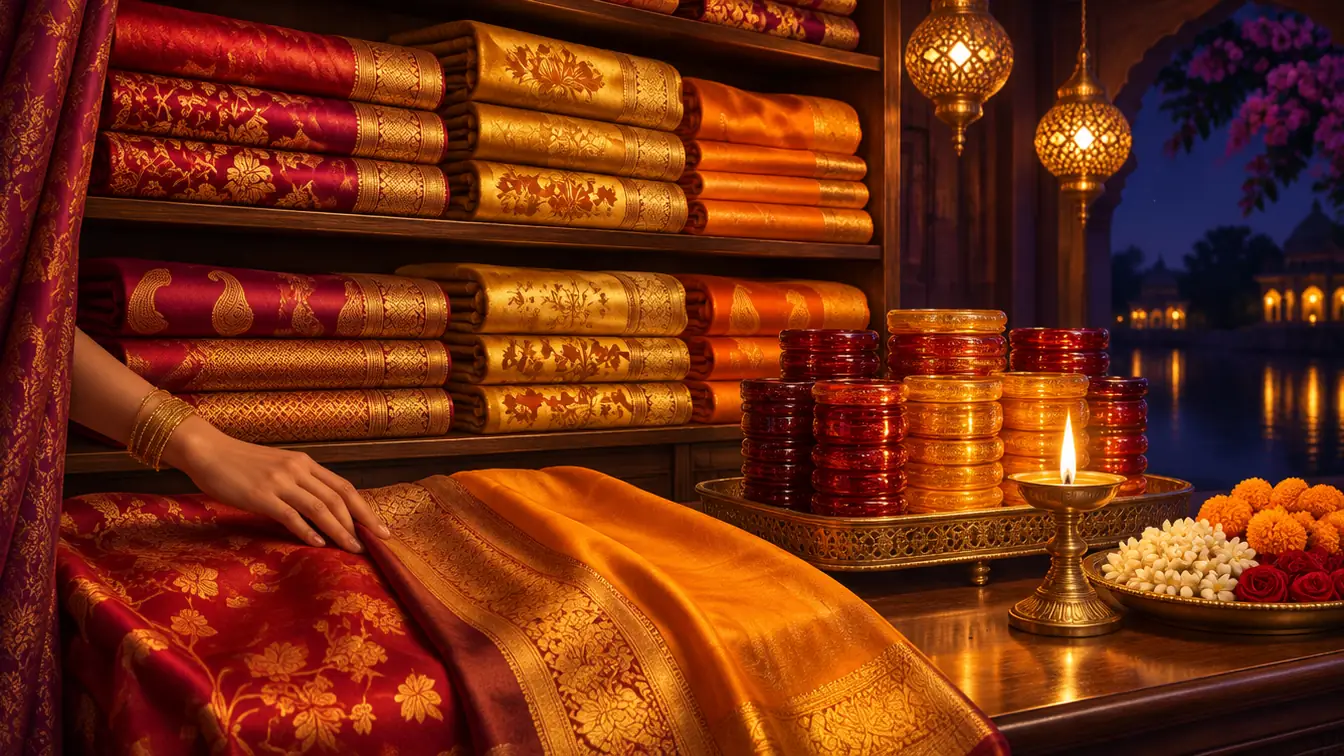
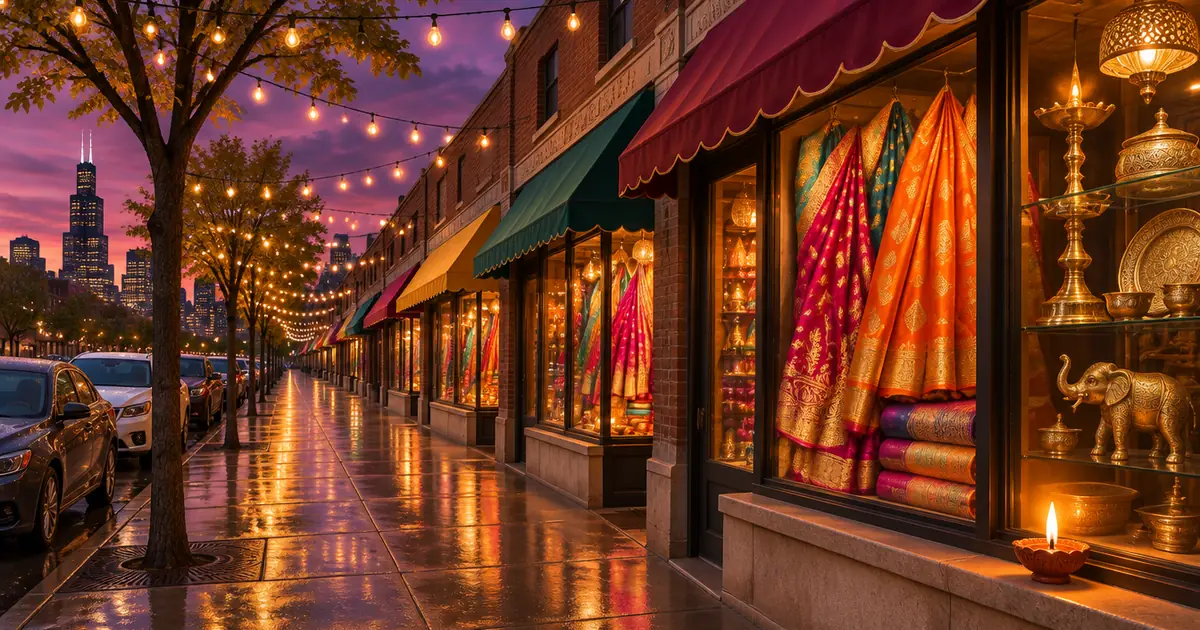
On a Saturday in wedding season, Devon Avenue is a street of garment bags, jewelers' counters and families comparing shades of red in daylight at the shop door. The South Asian shopping district runs for about a mile through West Ridge on the far North Side, and among its grocers and restaurants are the sari and jewelry shops that draw families from across the region, as WBEZ's history of the street describes.
That trade goes back to the street's beginnings as a South Asian destination. According to ABC7's account of Devon's early stores, the first Indian store was India Sari Palace, opened in the early 1970s, and a jewelry store followed later the same year. Long before that, West Ridge was largely Jewish, and the street is still home to many communities. Stretches carry honorary names such as Gandhi Marg, Mohammed Ali Jinnah Way and Sheikh Mujib Way, reflecting Indian, Pakistani and Bangladeshi neighbors, as noted in the overview of Devon Avenue.
Why some families start on a chosen day
In many Hindu households, the first purchase for a wedding is treated as the start of the new household itself. So the first gold, the mangalsutra, the bride's wedding sari or lehenga, or the first set of kitchen vessels is bought on a day the family considers auspicious. People sometimes call this a shubh muhurat for shopping. It is a small ritual of intention: begin well, and let the rest follow.
The custom varies widely. Some families take it seriously and ask an astrologer for a date. Others simply avoid a day they consider unlucky. Many skip it entirely. None of these choices affects whether a marriage goes well.

Days families often favor
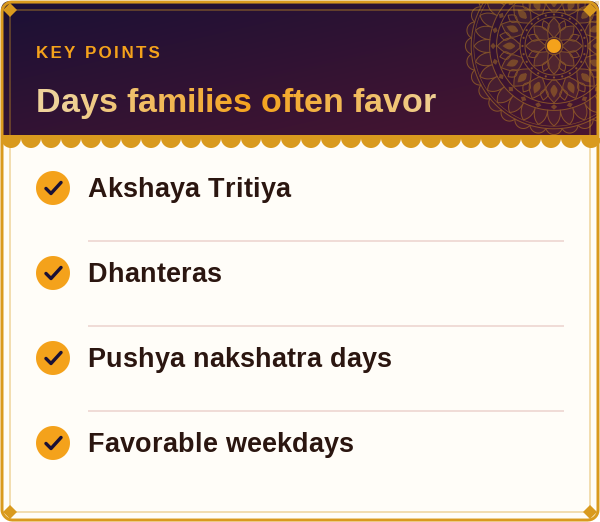
- Akshaya Tritiya. The spring day most associated with buying gold, covered in detail in Akshaya Tritiya and gold shopping on Devon.
- Dhanteras. The festival day shortly before Diwali, when buying metal and household items is traditional.
- Pushya nakshatra days. The Moon's passage through Pushya is widely treated as good for purchases, especially when it falls on a Thursday or a Sunday.
- Favorable weekdays. Many families prefer Thursday for gold and Friday for clothing and jewelry, linking the days to Jupiter and Venus.
Within a chosen day, families often avoid Rahu Kalam, a daily window of about an hour and a half that is calculated from local sunrise and sunset. The post on how much to worry about Rahu Kalam explains how to find it for Chicago and why it should not cause anxiety.
Turning the custom into a workable plan
The custom and the calendar can fight each other. Custom blouses, lehengas and sherwanis need fittings and alterations, and jewelry may need sizing. If the auspicious day is close to the wedding, there may not be time to have everything made. A practical approach used by many families:
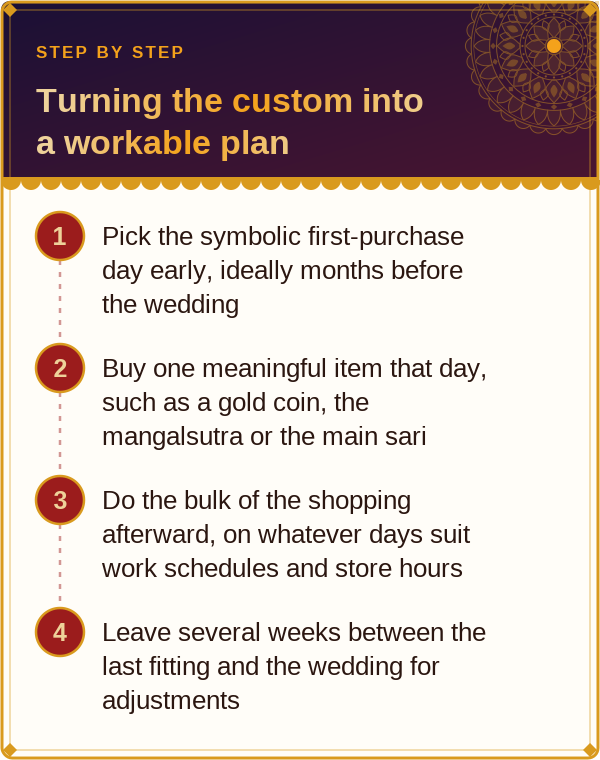
- Pick the symbolic first-purchase day early, ideally months before the wedding.
- Buy one meaningful item that day, such as a gold coin, the mangalsutra or the main sari.
- Do the bulk of the shopping afterward, on whatever days suit work schedules and store hours.
- Leave several weeks between the last fitting and the wedding for adjustments.
For gold, ask about karat, weight and any hallmark, and keep receipts. That is ordinary consumer sense on any jewelry counter, Devon or elsewhere.
Weather and the street
Chicago winters are cold and snowy, and the wedding shopping that falls in December or January means carrying garment bags through slush. Families who shop in winter often go once for the symbolic purchase and come back in milder weather for fittings. If the wedding itself is a winter date, the guide to winter wedding muhurta dates covers which weeks tradition allows.
Choosing the date itself
A first-purchase day is a lighter check than a wedding muhurta. A reader looks at the weekday, the tithi, the nakshatra and, if the family wishes, the Moon's position relative to the bride's or groom's birth Moon. It takes a few minutes inside a fuller wedding muhurta consultation, which also sets the engagement and ceremony times. Similar logic applies to other large purchases, as described in choosing a date for a car or a big purchase.
Families living near Devon, or anywhere on the North Side, can find more local context on the North Side readings page and the West Ridge and Devon Avenue astrologer page. Sessions are held by phone, WhatsApp or video, so the shopping trip and the consultation never have to happen on the same afternoon.
What a shopping muhurta cannot do
A well-chosen first purchase is a gesture of hope, not a promise about the marriage. It will not make a budget stretch further or settle a disagreement about who pays for what. Astrologer and Psychic Vijayram treats it as an optional custom: worth keeping if it means something to your family, and fine to skip if it does not.
Common questions
Does every purchase have to be made on the muhurta day?
No. The custom is about the first purchase. Many families buy one meaningful item on the chosen day, such as a piece of gold or the bride's main outfit, and finish the rest of the shopping over the following weeks.
Is Akshaya Tritiya the only good day to buy wedding gold?
It is the best known, but not the only one. Families also choose Dhanteras, Pushya nakshatra days and favorable weekdays. Akshaya Tritiya falls in spring, so it suits couples marrying later in the year.
We cannot get to Devon on the chosen day. Does the purchase have to happen there?
No. The day matters to the custom, not the street. A store near home, or an order placed on the chosen day, serves the same purpose for families who keep this practice.
Our family is not Hindu. Does any of this apply?
Only if you want it to. Devon's shops serve Hindu, Muslim, Sikh, Christian and other families, and each brings its own customs to wedding preparations.
Related service
Keep reading

Winter Weddings in Chicago: Muhurta Dates From December to February
Winter wedding muhurta for Chicago couples: which weeks from December to February tradition sets aside, which it allows, and indoor planning for the cold.
Read article →
The Eight Kootas Weighed: Why Nadi Counts Eight and Varna Counts One
Guna Milan explained: how the 36 points split across the eight kootas, why Nadi counts eight and Varna one, and why the weighting matters more than the total.
Read article →
Nadi Dosha Came Up in Matching: Next Steps for a Chicago Family
Nadi dosha came up in your kundli matching? What the eight-point Nadi koota measures, the exceptions astrologers check, and how a family can talk it through.
Read article →More from North Side
Privacy on a Busy Street: Why Many Devon Avenue Clients Choose Phone Readings
In a close-knit shopping district where neighbors know each other, a private phone reading keeps your questions to yourself. How Devon Avenue clients book one.
Read article →
Lemon-and-Chili Charms at Shop Doors: The Nimbu Mirchi Custom
Nimbu mirchi meaning, told from Devon Avenue: why some South Asian shopkeepers hang a lemon and seven chilies at the door, and how to keep one.
Read article →
Lunar Calendars on Devon Avenue: Hindu, Islamic and Sikh Dates Side by Side
Why festival dates change every year: how Hindu, Islamic and Sikh calendars are set, and where a Chicago panchang fits on Devon Avenue's shared street.
Read article →Local pages
Indian Astrologer Near Devon Avenue, West Ridge
An Indian astrologer for West Ridge and Devon Avenue, Chicago: Vedic charts, kundli matching and muhurta dates by phone, WhatsApp or video, in Central Time.
View location →
Astrologer in Rogers Park
Astrologer in Rogers Park, Chicago: Vedic birth charts, tarot and psychic readings by phone, WhatsApp or video for Loyola students, families and renters.
View location →
Psychic Reading and Astrology in Edgewater
Psychic reading for Edgewater, Chicago, plus Vedic astrology and tarot by phone, WhatsApp or video, for residents of the Sheridan Road towers and side streets.
View location →Quick answers
Can a wedding muhurta fall late at night or before dawn?
How to choose a Hindu wedding date when the muhurta falls late at night or before dawn: why the lagna sets the hour, and how couples plan the day around it.
Read answer →What is Guna Milan?
What is Guna Milan? The eight kootas behind the 36-point kundli matching score, what each one compares, and what the number cannot tell a couple or family.
Read answer →Talk to Astrologer and Psychic Vijayram
Tell us what you are facing. If a reading is unlikely to help, you will be told that plainly.