
A Low Matching Score: What Now?
A low kundli matching score, under 18 of 36, means the Moon-based comparison found several mismatches. It is a prompt to check birth data, see which kootas scored zero, apply traditional exceptions and read both full charts. Many astrologers would not judge a match on the total alone, and the couple still decides.
Key takeaways
- A wrong birth time or a time zone slip can move a Moon into a different nakshatra, and that alone can swing the score by eight points or more.
- Consider a report that reads 16.5 out of 36, broken down like this: Varna 1, Vashya 2, Tara 1.5, Yoni 0, Graha Maitri 5, Gana 0, Bhakoot 7, Nadi 0.
- Sometimes the data is right, no exceptions apply and the full charts also raise questions.
- Families here often span several generations and several opinions.
- Matching is one part of Hindu astrology , which has always relied on interpretation as much as arithmetic.
A number under 18 lands differently in every family. Some parents shrug. Some go quiet. Some start calling relatives. If you are holding a report that says 14, 16 or 17 out of 36, here is the honest framing: the total is the least informative thing on the page. It tells you there are mismatches somewhere in a comparison of two Moons. It does not tell you where, whether they matter, or what the rest of the two charts say.
A five-part check, in order
1. Is the data right?
A wrong birth time or a time zone slip can move a Moon into a different nakshatra, and that alone can swing the score by eight points or more. Confirm both times from the best record you have, and check that each was entered for its own birthplace.
2. Which kootas scored zero?
Look at the breakdown, not the sum. A zero in Varna (worth 1) and a zero in Nadi (worth 8) are entirely different situations. The guide to how the 36 points are weighted explains which kootas carry the most weight.
3. Do exceptions apply?
Classical rules cancel or soften several zeros, especially in Nadi and Bhakoot. Many apps show the raw score without applying them. The Moon-sign exceptions are set out in the guide to Bhakoot and the 6-8, 9-5 and 2-12 pairs.
4. What do the full charts say?
The kootas compare only the Moons. The seventh house and its lord, Venus, the navamsa, Mars placement and each partner's planetary periods are part of the full kundali and often matter more.
5. What do you already know?
If the couple has spent real time together, their experience is evidence too. A reading that contradicts everything you know about how you treat each other deserves scrutiny, not obedience.
A worked example
Consider a report that reads 16.5 out of 36, broken down like this: Varna 1, Vashya 2, Tara 1.5, Yoni 0, Graha Maitri 5, Gana 0, Bhakoot 7, Nadi 0. Both Moons sit in the same sign but in different nakshatras.
At first glance, a Nadi zero plus a total under 18 looks like a double problem. But the same sign with different nakshatras is the most widely accepted exception to the Nadi rule, so many astrologers would not treat that zero as a concern. Read that way, the comparison looks closer to 24.5. What remains are the Yoni and Gana zeros, which tradition reads as differences in instinct and temperament. That is a conversation worth having: how each of you handles conflict, rest, closeness and stress. It is not a reason to end anything.
The details of the Nadi exceptions are in next steps after a Nadi result.
When the low score holds up
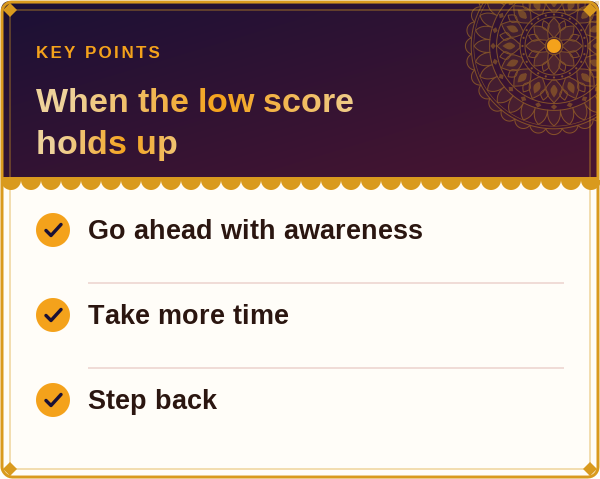
Sometimes the data is right, no exceptions apply and the full charts also raise questions. Even then, there are honest options rather than a single verdict:
- Go ahead with awareness. Many couples choose this, using the reading to identify areas to work on deliberately.
- Take more time. A longer engagement lets two people see how the differences play out in ordinary life.
- Step back. If the reading confirms doubts the couple already had, it may help them say so out loud.
Any of these can be the right choice. What should never happen is a decision driven by fear, or by someone selling an expensive ritual as the only way forward.
How Chicago families tend to handle it
Families here often span several generations and several opinions. A grandparent in India may weigh the score heavily; a parent in the suburbs may see it as one factor; the couple may barely look at it. A single joint conversation, where everyone hears the same explanation at the same time, usually lowers the temperature more than any number of separate phone calls. The kundli matching consultation is set up for that kind of call, by phone, WhatsApp or video.
For couples who want to go beyond the Moon comparison entirely, the two-chart compatibility reading reads both charts as a whole, and synastry and kundli matching compared explains how Western and Vedic methods differ.
Where the tradition itself stands
Matching is one part of Hindu astrology, which has always relied on interpretation as much as arithmetic. The classical authors who listed the kootas also listed the exceptions, which tells you they did not intend the total to be read mechanically.
What a score cannot decide
No score can measure kindness, honesty or commitment. A reading with Astrologer and Psychic Vijayram can show where two charts differ and suggest what to talk about. The choice to marry remains with the two people involved, made with their families' blessing if possible, and never under pressure from a number.
Common questions
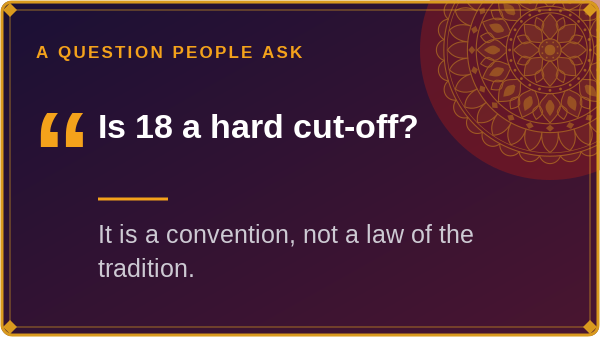
Is 18 a hard cut-off?
It is a convention, not a law of the tradition. Many astrologers treat 18 as the point below which a closer look is needed, and they also know that a single zero in Nadi or Bhakoot can pull a well-suited pair under it.
Should we get a second opinion?
It is reasonable, especially if the first result came from an app. Ask the second astrologer to explain which exceptions they applied, so you are comparing reasoning and not just numbers.
Can a puja raise our score?
No. The score is arithmetic based on two Moon positions, and nothing changes it. Some families choose prayers for peace of mind, which is a personal choice, but anyone promising to fix a score for a fee is selling something the tradition does not offer.
We are already engaged. Is it too late to worry?
It is never too late to understand your charts, but a score is not a reason to break a commitment two people made thoughtfully. Use the reading to talk about the areas it highlights.
Related service
Keep reading

Manglik Worries in Chicago Families: Five Things Parents Often Hear
Manglik dosha myths heard at Chicago family gatherings, checked against what astrologers actually say about cancellations, frequency and remedies.
Read article →
One Partner Manglik: Why Mars' House and Sign Change the Picture
Manglik and non-Manglik marriage: how astrologers weigh Mars by house and sign, what partial (anshik) Mangal dosha means, and why the full chart decides.
Read article →
Where Your Seventh Lord Sits: Twelve Placements and Marriage
The 7th house and marriage in Vedic astrology: where your seventh lord sits, house by house, with Venus and Jupiter as significators, read as tendency.
Read article →Quick answers
What is Guna Milan?
What is Guna Milan? The eight kootas behind the 36-point kundli matching score, what each one compares, and what the number cannot tell a couple or family.
Read answer →Is 18 out of 36 enough for marriage?
Is 18 out of 36 a good kundli matching score? Why 18 is the usual threshold, how doshas and cancellations change it, and why the full charts matter more.
Read answer →Talk to Astrologer and Psychic Vijayram
Tell us what you are facing. If a reading is unlikely to help, you will be told that plainly.