
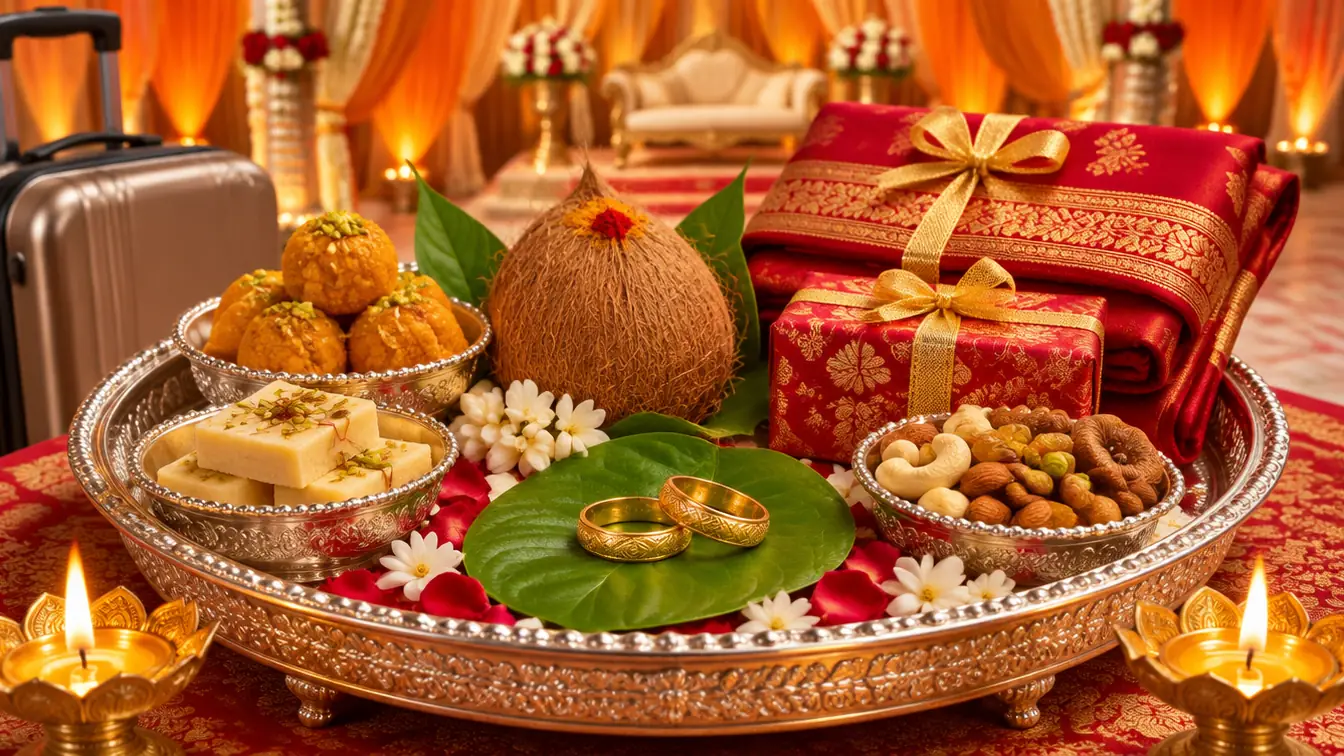
Engagement Dates When Relatives Fly In From India: A Chicago Planning Note
An engagement muhurat uses simpler checks than a wedding: a favorable weekday, tithi and nakshatra, the Moon's position for both partners, and a time window outside Rahu Kalam. For Chicago families with relatives flying in from India, choose a range of acceptable dates first, then fit flights, visas and the hall booking inside it.
Key takeaways
- Families call the engagement by different names.
- Choosing an auspicious time is the subject of muhurta , and for an engagement a reader typically looks at:
- Most engagement dates fail on logistics, not astrology.
- Working this way, the astrology never becomes the bottleneck, and nobody has to choose between an auspicious day and a grandparent's presence.
- A spring or early autumn engagement avoids the worst of winter travel through O'Hare.
An engagement in a Chicago family often involves more planning than the ceremony itself. Grandparents in Lucknow need visas renewed. An uncle in Bengaluru can only travel after his daughter's exams. The banquet hall in the suburbs has two Saturdays open in the spring. And somewhere in the middle of all this, someone asks: is the date auspicious? The good news is that the astrological part is the easiest piece to fit, provided it is asked about early and as a range rather than a single day.
Roka, sagai, ring ceremony: what is being dated
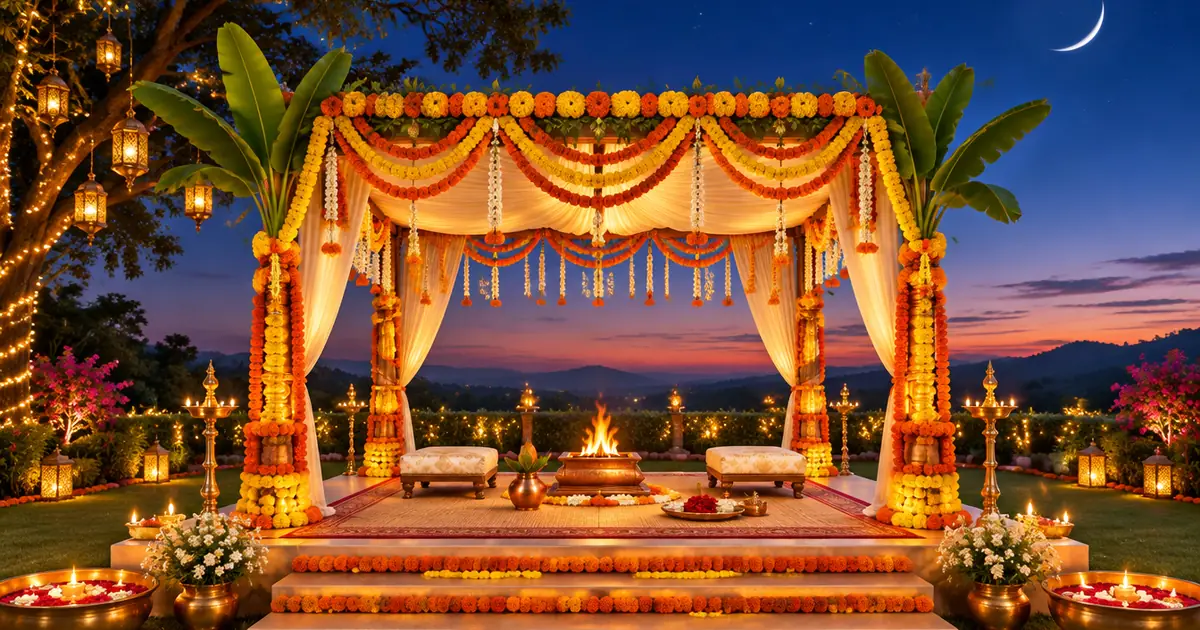
Families call the engagement by different names. A Punjabi family may hold a roka, the moment both families formally commit. Many North Indian families hold a sagai with an exchange of rings. Tamil families may hold a nischayathartham, Gujarati families a gol dhana. Others simply call it the ring ceremony. Each marks a promise rather than the marriage itself, which is why tradition usually applies a lighter set of checks than for a wedding. Many families also pick a good day to buy the rings or the first gold, a custom described in wedding shopping on Devon Avenue.
The simpler checks
Choosing an auspicious time is the subject of muhurta, and for an engagement a reader typically looks at:
- The weekday. Monday, Wednesday, Thursday and Friday are widely preferred; many families avoid Tuesday and Saturday for celebrations.
- The tithi. The lunar day. Many traditions avoid the fourth, ninth and fourteenth tithis and the new Moon.
- The nakshatra of the day. Steady or gentle stars such as Rohini, Mrigashira, Hasta, Anuradha, Revati and the three Uttaras are commonly favored.
- The Moon for both partners. The day's Moon is checked against each partner's birth Moon so that it is not in a traditionally difficult position for either.
- The time window. A slot that avoids Rahu Kalam and, for families who use it, falls in a favorable choghadiya.
Because the time windows are calculated from local sunrise, they must be worked out for Chicago, not copied from an Indian calendar. The post on reading a Chicago panchang explains why, and how much to worry about Rahu Kalam keeps that window in proportion.
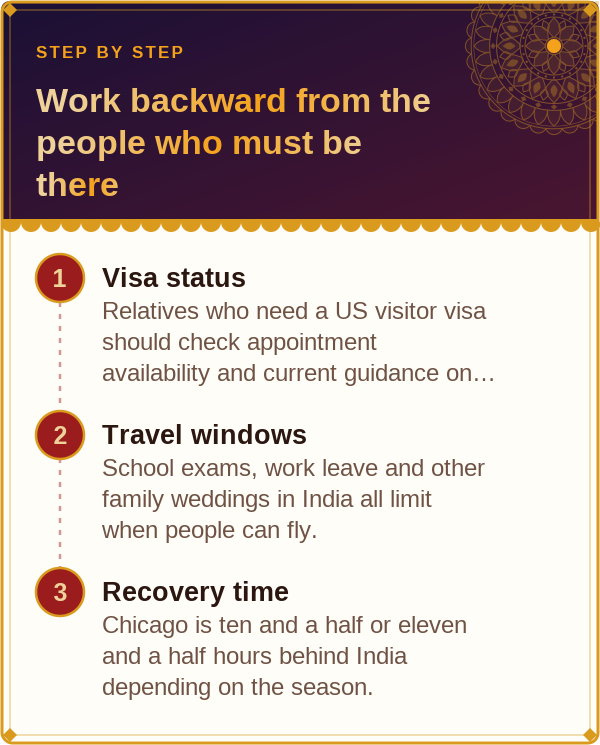
Work backward from the people who must be there
Most engagement dates fail on logistics, not astrology. Start with a list of the people whose presence matters most, then find out:
- Visa status. Relatives who need a US visitor visa should check appointment availability and current guidance on the U.S. Department of State visa pages before any date is fixed. Wait times vary by consulate and season.
- Travel windows. School exams, work leave and other family weddings in India all limit when people can fly.
- Recovery time. Chicago is ten and a half or eleven and a half hours behind India depending on the season. Elders arriving the night before a morning ceremony will be exhausted. Allow two or three days.
A planning sequence that works
- Agree on a season, say six to ten weeks, when the key relatives could realistically travel.
- Ask a reader for every acceptable engagement muhurat inside that window, not just the single best one.
- Check those dates against hall, temple or home availability.
- Book the venue for the best date that is actually open.
- Only then book flights, leaving buffer days on arrival.
- Keep one backup date on the list in case a visa or flight falls through.
Working this way, the astrology never becomes the bottleneck, and nobody has to choose between an auspicious day and a grandparent's presence.
Chicago weather and timing
A spring or early autumn engagement avoids the worst of winter travel through O'Hare. If the only workable window is in December or January, check whether your family observes the mid-December to mid-January pause, explained in winter muhurta dates from December to February, and decide whether it applies to an engagement in your tradition.
When someone cannot come
Sometimes the visa does not arrive in time. Families handle this in several gentle ways: a video link so elders can give their blessing live, a second small ceremony in India later, or a phone call at the moment the rings are exchanged. A reader can choose a time that is also reasonable in India, so grandparents are not asked to stay up past midnight.
Before the engagement: matching, if wanted
If the families want kundli matching, it normally comes before the roka. When elders in India want to take part, running a matching session by video with family in India explains how to set it up across the time gap.
The wedding muhurta consultation with Astrologer and Psychic Vijayram can set the engagement and wedding times together, which helps families plan both trips at once. Sessions are held by phone, WhatsApp or video.
What an engagement date cannot do
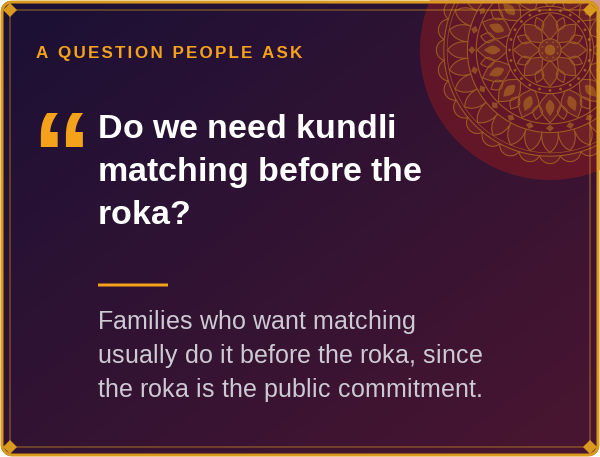
An auspicious time is a traditional blessing on a promise. It cannot speed up a visa, guarantee a flight or make two families agree on the guest list. Those are solved by planning, patience and good humor.
Common questions
Does an engagement need as careful a muhurta as the wedding?
Usually not. Most families use a lighter set of checks for a roka or ring ceremony, focusing on the day and a good time window. The wedding muhurta, which also weighs the rising sign at the moment of the ritual, is more detailed.
Can the engagement fall in a month when weddings are avoided?
Customs differ. Some families hold rokas or ring ceremonies in periods they would not choose for a wedding, while others apply the same restrictions to both. Ask your elders and your priest which rule your family follows.
Grandparents cannot travel. Should we delay?
Not necessarily. Many families hold the ceremony on schedule, connect elders by video, and plan a small blessing in India later. A reader can suggest a time that also falls at a reasonable hour in India.
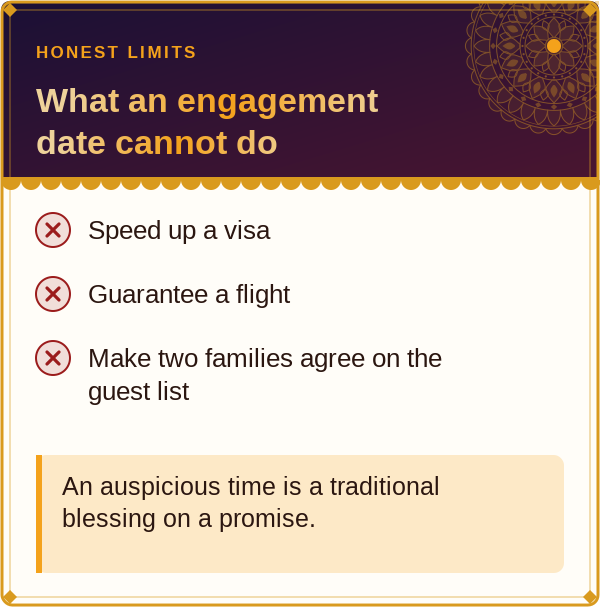
Do we need kundli matching before the roka?
Families who want matching usually do it before the roka, since the roka is the public commitment. If matching is planned, it is worth doing early so the engagement date is not held up.
Related service
Keep reading

Vivah Muhurta: What Makes a Wedding Date Auspicious
Vivah muhurat explained: the tithi, nakshatra and lagna checks behind an auspicious wedding date, and the months tradition sets aside, with Chicago notes.
Read article →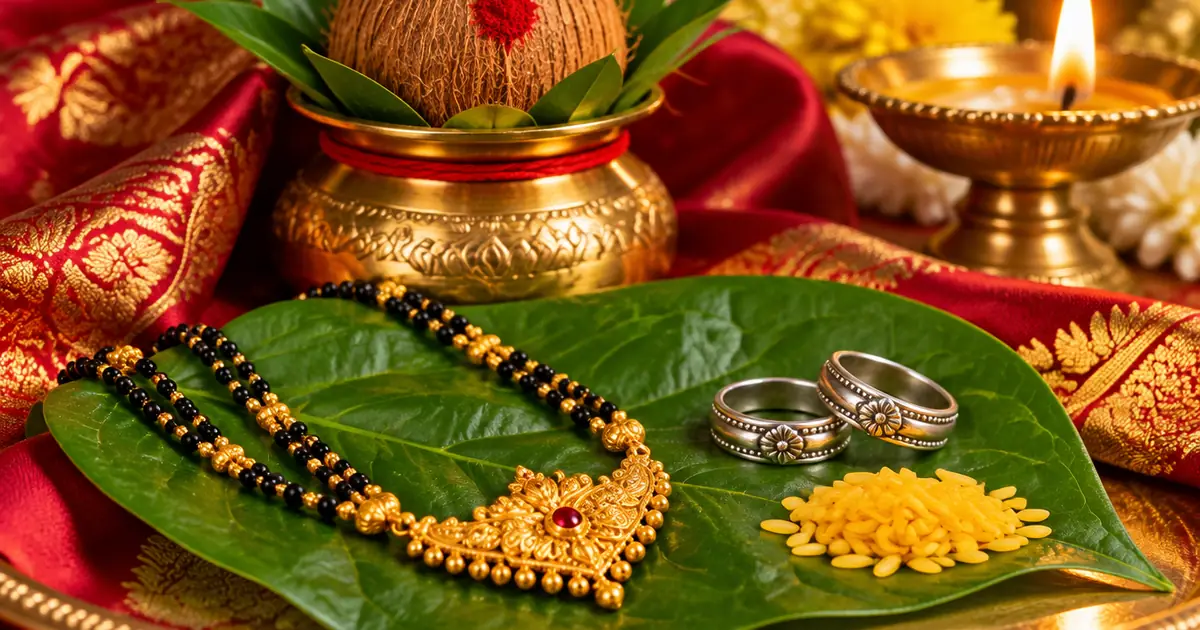
Upapada Lagna and the Second From It: What Sustains a Marriage
Upapada lagna in simple words: how this Jaimini point is found, why tradition reads the second house from it for a lasting marriage, and how to read it calmly.
Read article →
Reading Two Charts for the Year Ahead: A Married Couple's Annual Forecast
A couples yearly horoscope, done properly: how both partners' dashas and transits are laid side by side for the year ahead, so you can plan rather than worry.
Read article →Quick answers
Can a wedding muhurta fall late at night or before dawn?
How to choose a Hindu wedding date when the muhurta falls late at night or before dawn: why the lagna sets the hour, and how couples plan the day around it.
Read answer →What is Guna Milan?
What is Guna Milan? The eight kootas behind the 36-point kundli matching score, what each one compares, and what the number cannot tell a couple or family.
Read answer →Talk to Astrologer and Psychic Vijayram
Tell us what you are facing. If a reading is unlikely to help, you will be told that plainly.